
Imagine paying an Upwork freelancer $1,500 for 'ChatGPT SEO', only to realize they just spammed your site with AI-generated blogs while ignoring the fact that GPTBot has been blocked in your server settings the entire time - a scenario we see weekly with small service businesses.
The Upwork Trap: Paying for 'ChatGPT SEO' That Doesn't Work
Business owners are wasting money on shallow AI Visibility tactics that do not address how artificial intelligence bots actually read websites. Anyone can claim to be an AI optimization expert right now, and many traditional marketers are just taking their old keyword strategies and slapping a new label on them. They focus on adding words to your pages without looking at your robots.txt file (the instruction manual that tells search bots where they are allowed to go) to see if ChatGPT is even permitted to read your site.
A well-optimized website combined with consistent directory profiles creates a cross-reference loop that AI tools trust. The problem is not having a website. The problem is having an inconsistent web presence that AI cannot verify. If your hired help is just writing blog posts and ignoring how your business entity is structured across the web, your investment is wasted.
True Search Engine Optimization (SEO) for AI requires a fundamentally different approach. The bots powering these new search engines do not just scrape text. They extract structured data to verify facts. Paying someone to write daily blog posts will not fix a broken data layer.
The Data Shift: Why ChatGPT is Now Your Primary Crawler
AI search bots are now visiting service business websites more frequently than traditional search engines. I analyzed data across the LovedByAI platform to see exactly how bots are behaving right now. Across the professional services firms I have tracked, average AI crawls grew 33x, jumping from 565 in December 2025 to 18,483 in March 2026.
In March 2026, AI crawlers visited the average service business site 20 percent more than Google. These sites hit 18,483 AI bot visits compared to 15,380 Google crawler visits per site. The traditional search monopoly is visibly shifting in the server logs.
Over the last three months, ChatGPT-related bots (specifically GPTBot, ChatGPT-User, and OAI-SearchBot) were the most active AI crawlers, averaging 11,191 visits per site. This is a massive shift in how information is discovered. It means that if you want to appear in ChatGPT results, you have to optimize for the exact bots that are currently doing the reading. If you ignore these specific user-agents, you are entirely invisible to the platforms your future clients are using.
Should You Hire Someone to Get Your Business in ChatGPT Results?
Yes, hiring help makes sense if the person focuses on server-level access and entity structuring rather than just writing more content. When you ask whether to hire someone to get your business in ChatGPT results, the answer depends entirely on what that person intends to do. You do not need someone to write generic blogs. You need someone who understands Answer Engine Optimization (AEO) - the process of making your business data clear, consistent, and machine-readable.
AI bots are not reading your site to learn about you. They are reading it to verify what other sources already say about you. If those sources and your site disagree, you lose.
A true specialist will audit your server logs to confirm that ChatGPT-User is successfully reaching your pages. They will ensure your local directory listings perfectly match the schema markup on your website. Schema markup is a specific code format (like JavaScript Object Notation for Linked Data, or JSON-LD) that acts as a direct data feed to search engines, explaining exactly who you are and what you do.
| Focus Area | Traditional SEO Agency | AI Search Optimization (AEO) Expert |
|---|---|---|
| Primary Metric | Keyword density and rankings | Entity relationships and citation trust |
| Off-Site Strategy | Building backlink volume | Securing unlinked brand mentions |
| Technical Focus | Googlebot crawl logs | ChatGPT-User and GPTBot access |
| Content Goal | Ranking for search queries | Becoming the definitive factual answer |
What a Real AI Search Specialist Actually Fixes
A qualified expert fixes the technical data layer of your website so AI systems can cross-reference your business facts without guessing. A real specialist starts with entities. An entity is a distinct, well-defined concept or thing - in this case, your business. This is why entities matter more than keywords. If your website says your business is located on "First Street" but your local chamber of commerce profile says "1st St", a traditional search engine might figure it out. An AI engine might flag it as a contradiction and recommend a competitor with cleaner data instead.
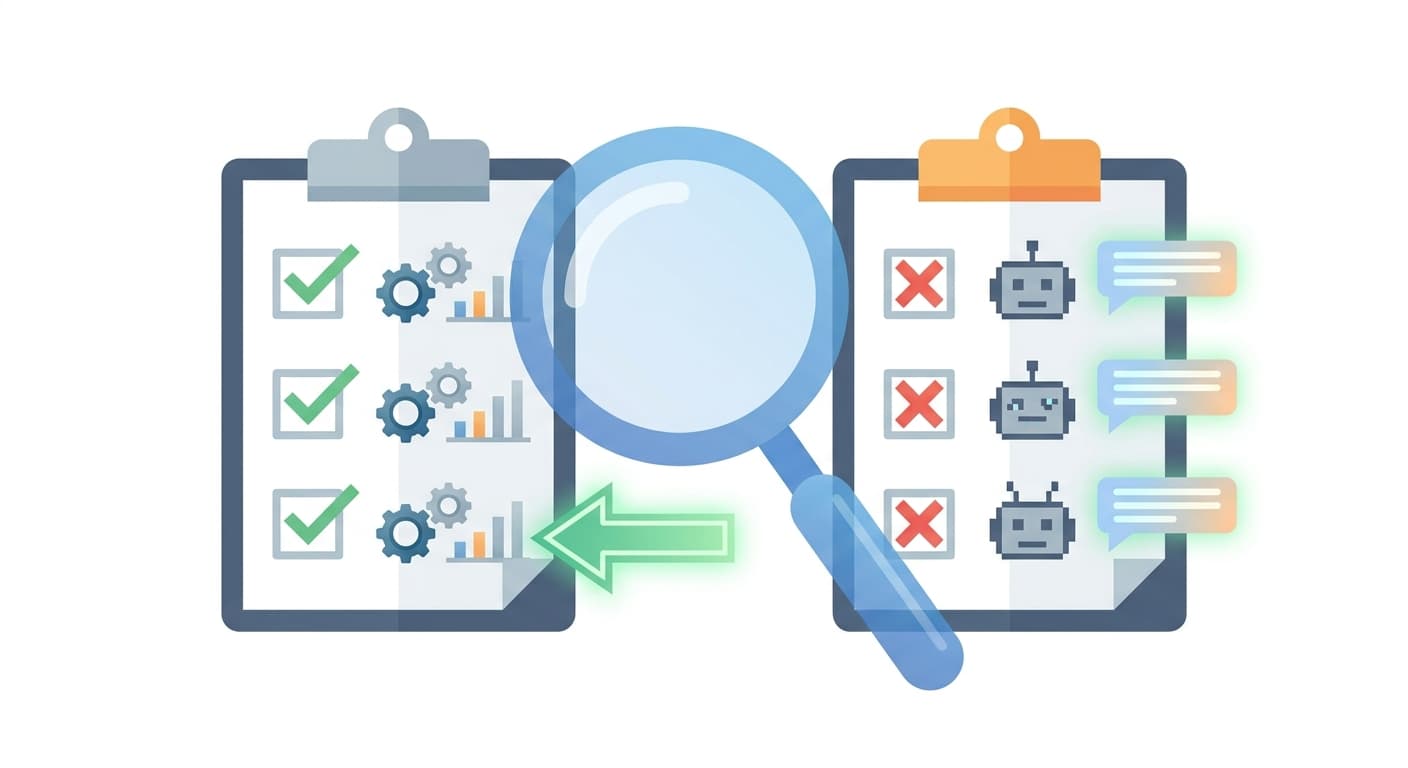
The fix requires aligning every mention of your business across the internet. The expert will update your site's LocalBusiness schema markup to reference external databases. They use the official Schema.org specification to prove you are a real, verified entity. They do not guess at the code.
| Feature Evaluated | What Google Looks For | What ChatGPT Looks For |
|---|---|---|
| Crawling Behavior | Continuous discovery of new pages | Targeted fetching triggered by user prompts |
| Structured Data | Uses it for rich snippets in search results | Relies on it to extract absolute facts |
| Trust Signals | Historical PageRank and backlink authority | Real-time web citations and consensus |
Red Flags: How to Spot a Fake 'ChatGPT Optimization' Expert
Avoid anyone who guarantees mentions in ChatGPT or focuses exclusively on generating new website content. The easiest way to spot a fake is their promise. No one can guarantee that an AI tool will mention your business because the AI generates answers dynamically based on the user's specific prompt. If an agency promises a guaranteed spot, they are selling an illusion.
Another major red flag is a refusal to touch your code. If the agency only wants to rewrite your service pages but will not inspect your <head> section (the invisible part of your website code where schema markup lives), they do not understand AI search. They are just selling you traditional marketing under a new, trendy name.
Listen to the questions they ask during the discovery call. A fake expert will ask about your target keywords and blog schedule. A real expert will ask where your business is currently listed online, whether your Name, Address, and Phone number (NAP) are consistent, and if you have access to your domain registrar or server control panel.
DIY Foundation: What to Check Before Handing Over Your Credit Card
You can verify your own baseline AI visibility using free tools before paying a consultant to do it for you. Before you spend thousands of dollars on a contract, check your own site. Start by looking at your robots.txt file. You can do this by typing your website address followed by /robots.txt into your browser. Look for lines that mention GPTBot or ChatGPT-User. If you see Disallow: / next to those names, your site is blocking AI crawlers entirely, a common issue noted in Google's official documentation on crawlers.
Next, verify your schema markup. You can use the official Schema Markup Validator to see if your homepage clearly identifies your business type, address, and contact information. If the tool returns errors or finds nothing at all, that is the very first thing your new hire needs to fix. You do not want to pay them to write articles until the basic data layer is functional.
If you manage your own site, a complete WordPress AI Search Optimization strategy is something you can start yourself. You can also check your site using our free tool to see exactly what AI bots can read about your business right now. Once you know your baseline, you can hire an expert to fix the specific gaps, rather than paying them to guess.
