

When a local business owner opens ChatGPT to ask 'who is the best tax strategist near me,' the AI actively triggers real-time bot visits to accounting websites to formulate a highly accurate, up-to-date answer. The search landscape has shifted from static indexes to live synthesis. If you are trying to figure out why is my cpa firm Missing from chatgpt answers in 2026, the issue is rarely about how many blog posts you publish. It is about how clearly those bots can verify your firm's credentials the moment a prospect asks a question.
Traditional search optimization is not broken. It still builds the foundation of authority that AI tools rely on. The gap happens when a well-established firm with a strong Google presence lacks the specific machine-readable signals that AI engines need to confidently cite them.
To get recommended by an AI, your practice needs to complete a cross-reference loop. Your website is your source of truth. When an AI crawler visits, it expects the facts on your site to perfectly match the facts scattered across business directories, state board listings, and professional profiles.
AI bots are not reading your site to learn about your firm from scratch. They are reading it to verify what other trusted sources already say about you. If your site and your external footprint disagree, the AI loses confidence and cites someone else.
Why Is Your CPA Firm Missing from ChatGPT Answers?
I analyzed crawler behavior across accounting firm sites on the LovedByAI platform to understand how these systems evaluate professional services. Between January and April 2026, the average accounting and tax services site saw a massive shift in traffic. In January, these sites received an average of 1,391 AI bot visits. By April, that number had jumped to 2,210 AI bot visits per site.
That two-fold increase represents a fundamental change in how clients find tax professionals. AI systems are no longer just scraping data to train models in the background. They are actively evaluating your pages to answer immediate client questions. When a business owner asks for a forensic accountant, the AI scans its known entities and visits those sites to confirm they still offer the service.
If your site is difficult for these bots to parse, they will skip you. This happens frequently when core business details are buried in long paragraphs of text or locked inside PDF brochures instead of being structured clearly in the code.
The Shift in Bot Priority
In the data I reviewed from April 2026, the average accounting firm site received 2,210 AI bot visits compared to just 1,253 Google crawler visits. That means AI crawlers now visit the average accounting site 76 percent more often than traditional search bots.
If your firm is Missing from AI recommendations, it is likely because your website was built exclusively for human readers and traditional crawlers. AI tools need structured facts. They look for specific entity relationships, clear service definitions, and consistent contact information. When you structure this data properly, you make it much easier to appear in ChatGPT results when a high-value prospect asks for a recommendation.
How ChatGPT Crawls Accounting Websites Compared to Google
Google and ChatGPT evaluate your website using entirely different scoring mechanisms. Google crawls your pages to understand topics and index keywords for future searches. It relies heavily on backlinks from other websites to determine if your firm is authoritative.
ChatGPT operates differently. It functions as an answer engine. It does not want to provide a list of ten possible websites. It wants to provide one definitive answer. To do that, it needs to be absolutely certain that the information it provides is accurate. It relies on entity confidence.
This is exactly why entities matter more than keywords for AI discoverability. An entity is a specific, unique concept, like your firm's legal name, a specific partner's credentials, or a defined service like corporate tax preparation.
| Search Engine Priority | Google Crawler Focus | ChatGPT Crawler Focus |
|---|---|---|
| Core Objective | Topic relevance and indexing | Fact extraction and entity confidence |
| Trust Signals | External backlinks and domain age | Cross-referenced facts and structured data |
| Content Format | Long-form articles and keyword density | Direct answers and bottom-line-up-front structure |
| Local Matching | Proximity and traditional map packs | NAP consistency across the entire web footprint |
Bridging the Gap Between Systems
You do not have to choose between optimizing for Google and optimizing for AI. The two approaches support each other. Google respects structured data just as much as ChatGPT does. The difference is that AI engines require it to function properly.
When you define your business using the official AccountingService schema vocabulary from Schema.org, you give both Google and ChatGPT a direct map of your firm. You eliminate the guesswork.
If your firm uses generic business schema, or worse, no structured data at all, the AI has to guess what you do based on unstructured paragraph text. When faced with a choice between a firm that explicitly declares its tax specialties in JSON-LD code and a firm that just mentions taxes in a blog post, the AI will recommend the firm with structured certainty every time.
The Role of ChatGPT-User in Answering Live Tax Queries
Not all AI bots serve the same purpose. Many business owners see OpenAI bots in their server logs and assume their content is just being absorbed for future model training. While the standard GPTBot does gather training data, there is a second, much more important crawler you need to watch for.
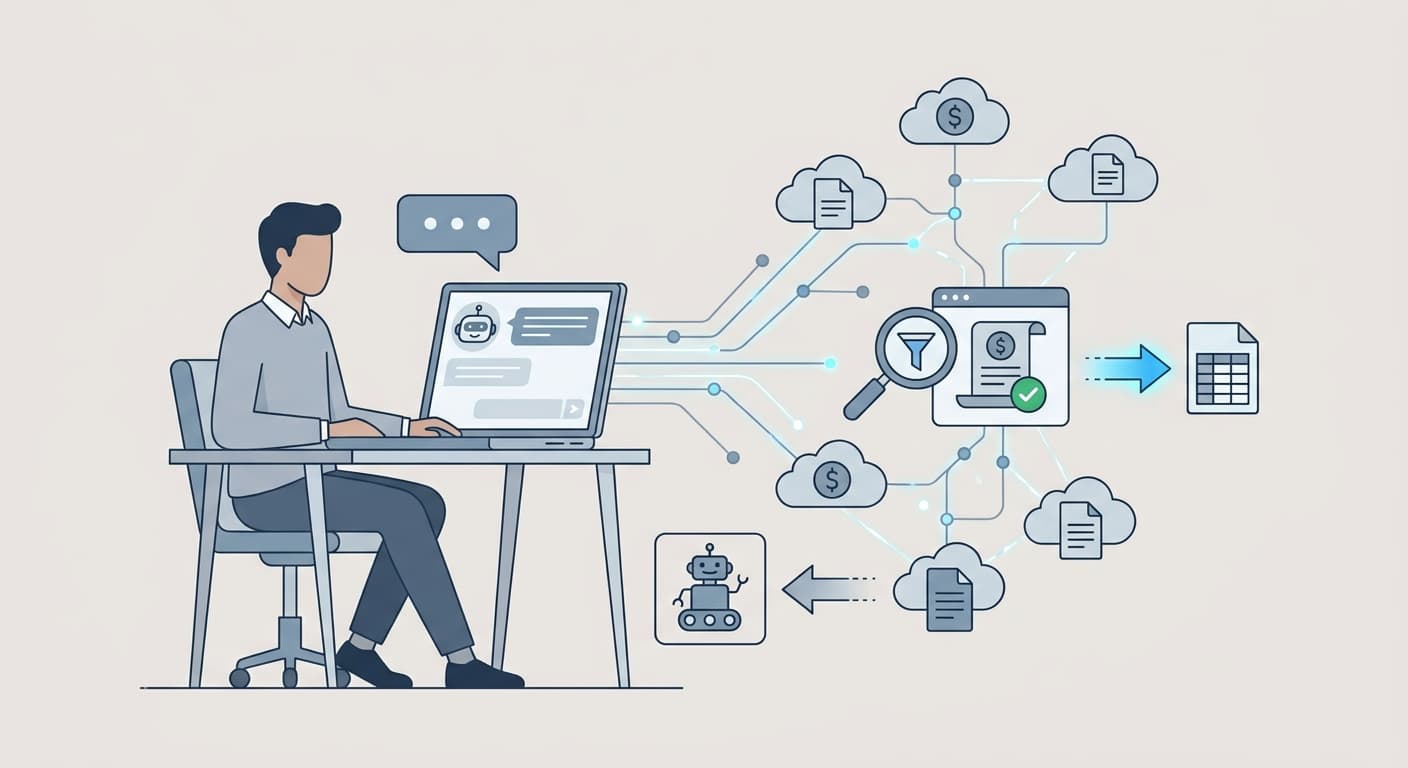
OpenAI Documentation on GPTBot and ChatGPT-User explains the distinction. The ChatGPT-User agent is deployed specifically to answer live, real-time questions from active users. When a prospect types a prompt asking for CPA recommendations, ChatGPT-User is the bot that visits your site to verify your current services.
In my analysis, ChatGPT-related bots averaged 5,267 visits per accounting and tax services site over the last three months. Crucially, the ChatGPT-User bot accounted for 2,634 of those visits per site. Half of the AI traffic hitting these accounting sites was driven by real people asking live questions.
Checking Your Bot Access
If your firm is not showing up in AI search, the first technical check is to ensure you are not accidentally blocking this live query bot. Some traditional security plugins block all new user agents by default.
To verify your configuration, look at your robots.txt file. You need to ensure that legitimate AI search bots have permission to read your public service pages. A restrictive file might look like the example below, which you would need to correct.
User-agent: ChatGPT-User
Disallow: /
If you block ChatGPT-User, the AI cannot verify your firm's details in real time. It will simply return to the user and recommend a competitor whose site allowed the bot to extract the necessary facts.
Steps to Make Your Accounting Services Visible to AI Search Engines
The fastest path to AI visibility is completing the trust loop. Start by documenting exactly how your firm's name, address, and phone number appear on your official state board of accountancy listing and your Google Business Profile.
Once you have that exact text, you must mirror it perfectly on your own website. AI bots are highly sensitive to variations. If your state board lists "Smith & Associates CPA LLC" but your website footer says "Smith Tax Services", the AI sees two different entities. It lowers its confidence score and moves on.
After aligning your public footprint, the next step is structuring the data on your site. You need to wrap your business details, specific tax services, and partner credentials in JSON-LD schema markup. This code sits invisibly in the <head> section of your pages.
Implementing Structured Data
If you manage your site manually, you can use the official WordPress Developer Resources to understand how to output valid JSON structures using wp_json_encode().
{
  "@context": "https://schema.org",
  "@type": "AccountingService",
  "name": "Smith & Associates CPA LLC",
  "address": {
    "@type": "PostalAddress",
    "streetAddress": "100 Financial Way",
    "addressLocality": "Chicago",
    "addressRegion": "IL",
    "postalCode": "60601"
  },
  "knowsAbout": ["Corporate Tax Preparation", "Forensic Accounting"]
}
Writing and maintaining this code manually can be tedious, especially when you need to nest multiple entities like partners, specific financial services, and frequent client questions. This is where dedicated tools save time. LovedByAI can scan your existing service pages and automatically inject the correct, nested JSON-LD schema without requiring you to write custom code.
By handling the technical formatting, you ensure the bots can read your credentials perfectly every time. If you want a complete roadmap on updating your entire site structure, review this WordPress AI Search Optimization framework to prioritize your next steps. AI search is a reliable channel for accounting firms, provided you give the engines the structured facts they need to trust you.
