Search is no longer just about ranking on Google. Our 2026 AI traffic study sets the baseline this stack is built to move, and the free GEO checker tells you where your own site currently sits against it.
Small business customers are now asking ChatGPT for recommendations. They compare service providers in Gemini. They use Perplexity to research vendors. They ask Copilot for options before they ever visit a website.
That means small businesses need to think beyond traditional SEO.
The new goal is to be understood, trusted, cited, and recommended by AI search engines, not just to rank.
This is where AI search optimization, often called GEO, becomes important. GEO stands for Generative Engine Optimization. In simple terms, it means making your business easier for AI systems to read, understand, summarize, and include in answers.
AI search is not solved by one tool.
A strong AI search presence usually needs a stack. You need a clear website. You need structured content. You need reviews. You need local signals. You need third-party mentions. You need crawlable pages. You need fast performance. And you need a way to see whether AI tools are actually mentioning your business.
For small businesses, the right stack should be practical, affordable, and easy to manage. You do not need a large enterprise SEO platform to get started.
Here is the ultimate AI search stack for small businesses in 2026.
Quick Stack Overview
| Layer | Tool | Why it matters |
|---|---|---|
| AI search optimization | LovedByAI | Makes WordPress sites easier for AI systems to understand and mention |
| AI visibility tracking | Otterly.AI | Shows whether your brand appears in AI answers |
| Local business data | Google Business Profile | Gives Google and AI systems clear local business information |
| Local listings | Semrush Local | Keeps business information consistent across directories |
| Reviews | NiceJob | Helps generate and display customer trust signals |
| Authority building | Featured.com | Helps earn third-party expert mentions |
| Technical SEO | Ahrefs Webmaster Tools | Finds crawl, backlink, and site health issues |
| WordPress SEO basics | Yoast SEO | Handles metadata, schema, sitemaps, and readability basics |
| Website performance | Jetpack Boost | Improves speed and Core Web Vitals for WordPress sites |
| Indexing | Bing Webmaster Tools + IndexNow | Helps search engines discover updated pages faster |
1. The AI Search Optimization Layer: LovedByAI
The first layer is the website layer.
If your website is confusing, thin, slow, or hard for AI crawlers to understand, the rest of the stack has a weaker foundation.
LovedByAI is built for small businesses using WordPress. It helps turn a regular WordPress site into something more readable for AI systems.
The plugin can add AI-friendly structure, schema, llms.txt, FAQs, machine-readable formatting, bot monitoring, and AI visibility reporting. The idea is simple: make it easier for AI engines to understand what the business does, who it serves, where it operates, and why it should be recommended.
This is especially useful for small businesses that do not have an SEO team or a technical GEO specialist.
LovedByAI does not replace traditional SEO tools. It works as an AI search layer on top of the existing site. A business can still use Yoast, Rank Math, Google Business Profile, review tools, and local SEO tools alongside it.
For WordPress small businesses, this is the core GEO layer of the stack.
LovedByAI reports that across 116 sites and 108,834 pages, optimized pages earned 11 times the AI referral visits per page of untouched pages on the same sites over 90 days. The plugin also holds a 4.7 rating on G2 at the time of writing.
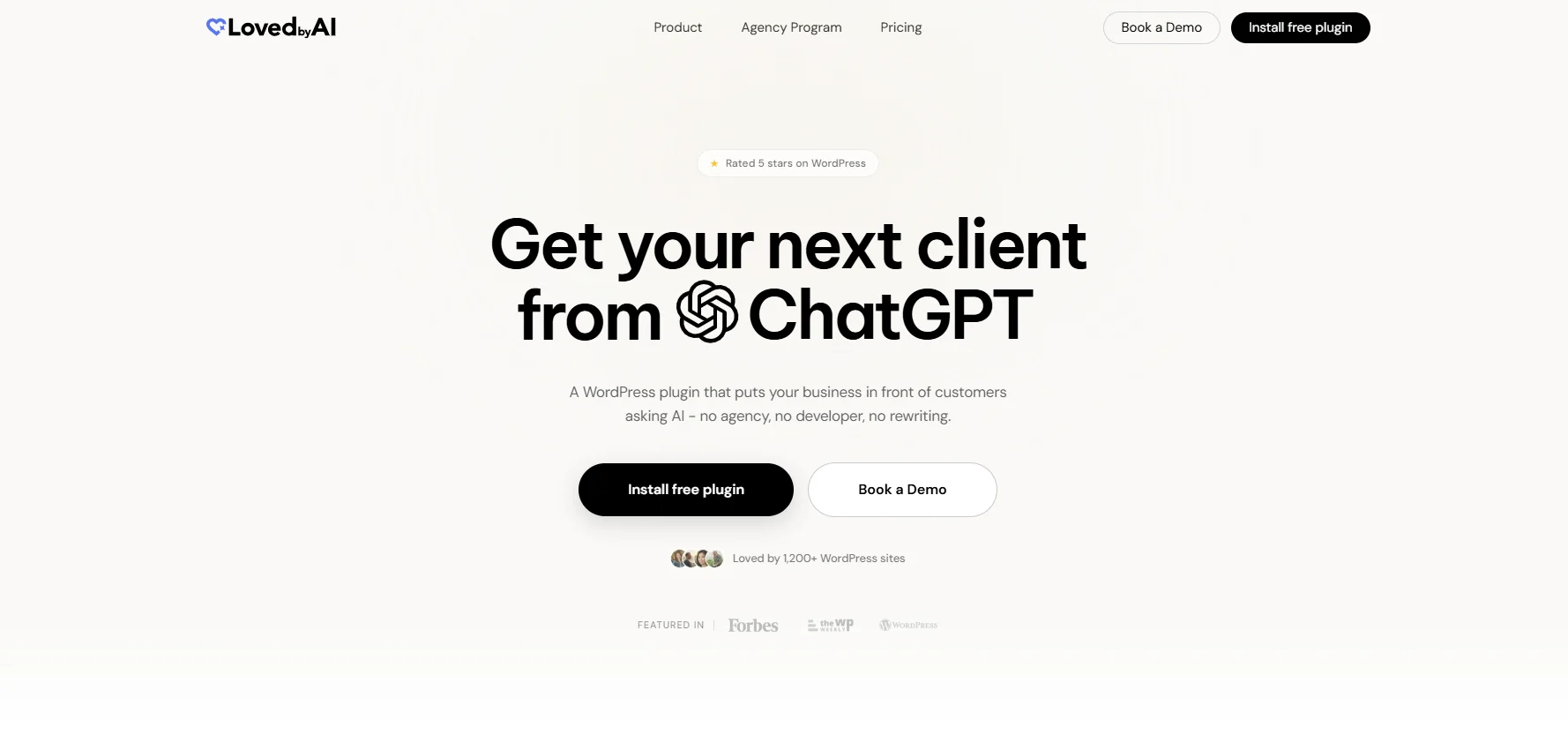
Best for: WordPress small businesses that want AI search optimization without rebuilding their site.
Stack role: AI search readiness and WordPress GEO.
Starting point: Free for one page, with paid plans for full-site optimization.
2. The AI Visibility Layer: Otterly.AI
Once your site is optimized, you need to know whether AI tools are actually mentioning your business.
That is where Otterly.AI fits.
Traditional SEO tools show rankings, keywords, traffic, backlinks, and technical issues. AI search visibility is different. Your business might appear in a ChatGPT answer, a Perplexity citation, a Google AI Overview, or a Copilot recommendation without showing up in a normal rank tracker.
Otterly.AI helps monitor brand mentions, website citations, competitors, prompts, and share of voice across AI search platforms.
This helps small businesses answer practical questions:
- Are we showing up in AI answers?
- Are competitors showing up more often?
- Which prompts trigger our brand?
- Are AI tools citing our website or only mentioning us?
- Did our AI visibility improve after we updated our site?
Otterly.AI is not the tool that fixes your website, reviews, or local presence. Its role is measurement. It tells you where you stand and whether your work is moving in the right direction.
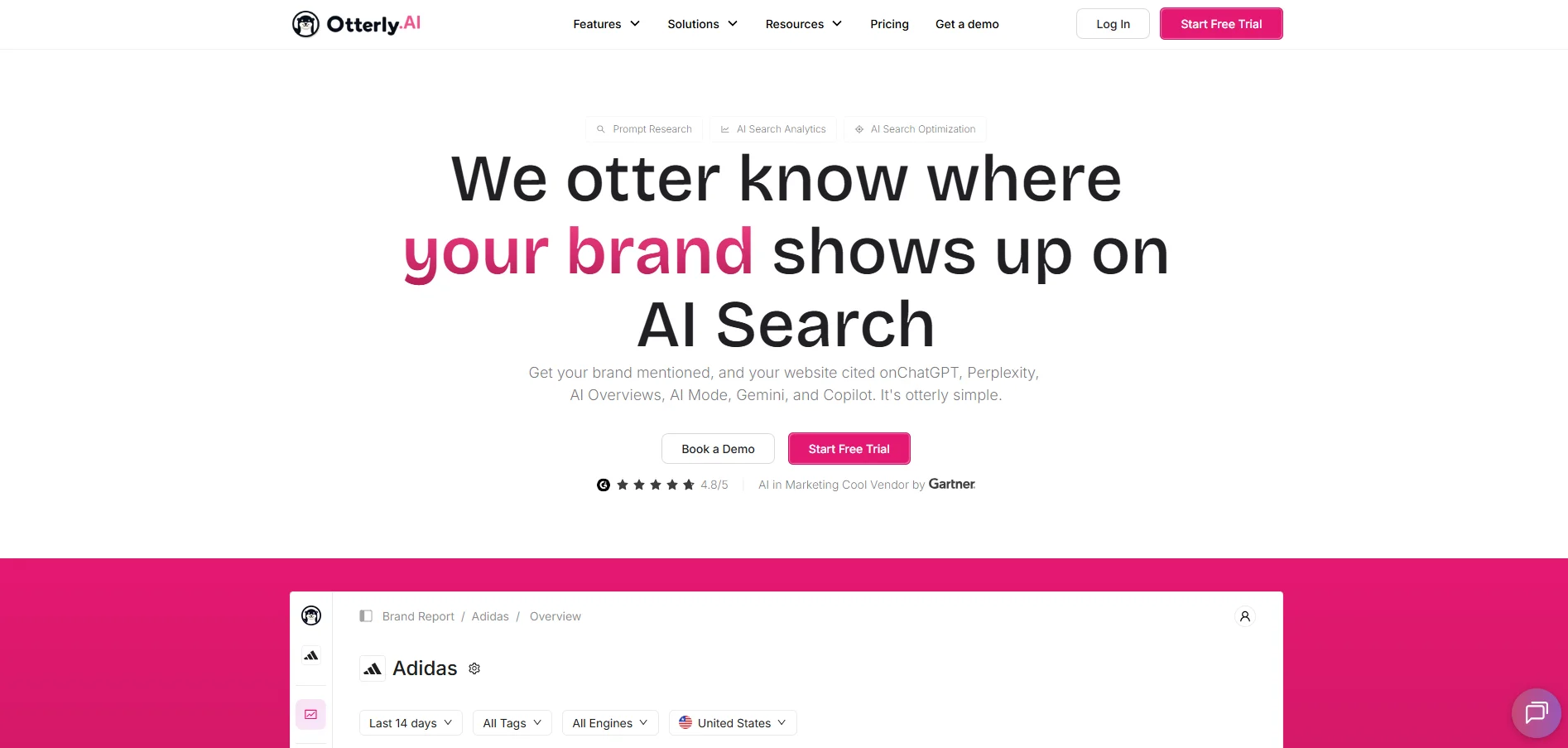
Best for: SMBs that want to track AI visibility and competitor presence.
Stack role: Monitoring and reporting.
Starting point: Paid plans from around $29/month.
3. The Local Trust Layer: Google Business Profile
For local businesses, Google Business Profile is still one of the most important parts of the stack.
It is free, widely used, and directly connected to Google Search and Google Maps.
A complete Google Business Profile helps search systems understand your business name, category, address, service area, phone number, hours, photos, reviews, services, and location.
That matters for AI search because local AI recommendations depend on clear, reliable business information.
If someone asks an AI tool for a dentist nearby, a family lawyer in Chicago, a plumber in Hoboken, or a print shop in Delhi, the system needs trusted local data before it can recommend anyone.
A strong Google Business Profile gives AI and search systems more confidence about who you are, what you do, and where you operate.
Best for: Local businesses, service-area businesses, IT support companies, clinics, restaurants, lawyers, contractors, med spas, accountants, and agencies.
Stack role: Local identity and Google trust data.
Starting point: Free.
4. The Local Consistency Layer: Semrush Local
Google Business Profile is the main local profile, but your business information also appears across many other directories.
That creates a problem.
If your phone number, address, business name, hours, categories, or services are inconsistent across the web, search systems may trust you less.
Semrush Local helps manage listings, monitor reviews, track map rankings, and keep business information consistent across local directories.
For small businesses that depend on "near me" searches, map visibility, and local AI recommendations, this layer matters.
AI search engines often rely on multiple signals to understand whether a business is real, relevant, and trustworthy. Consistent local data makes that easier.
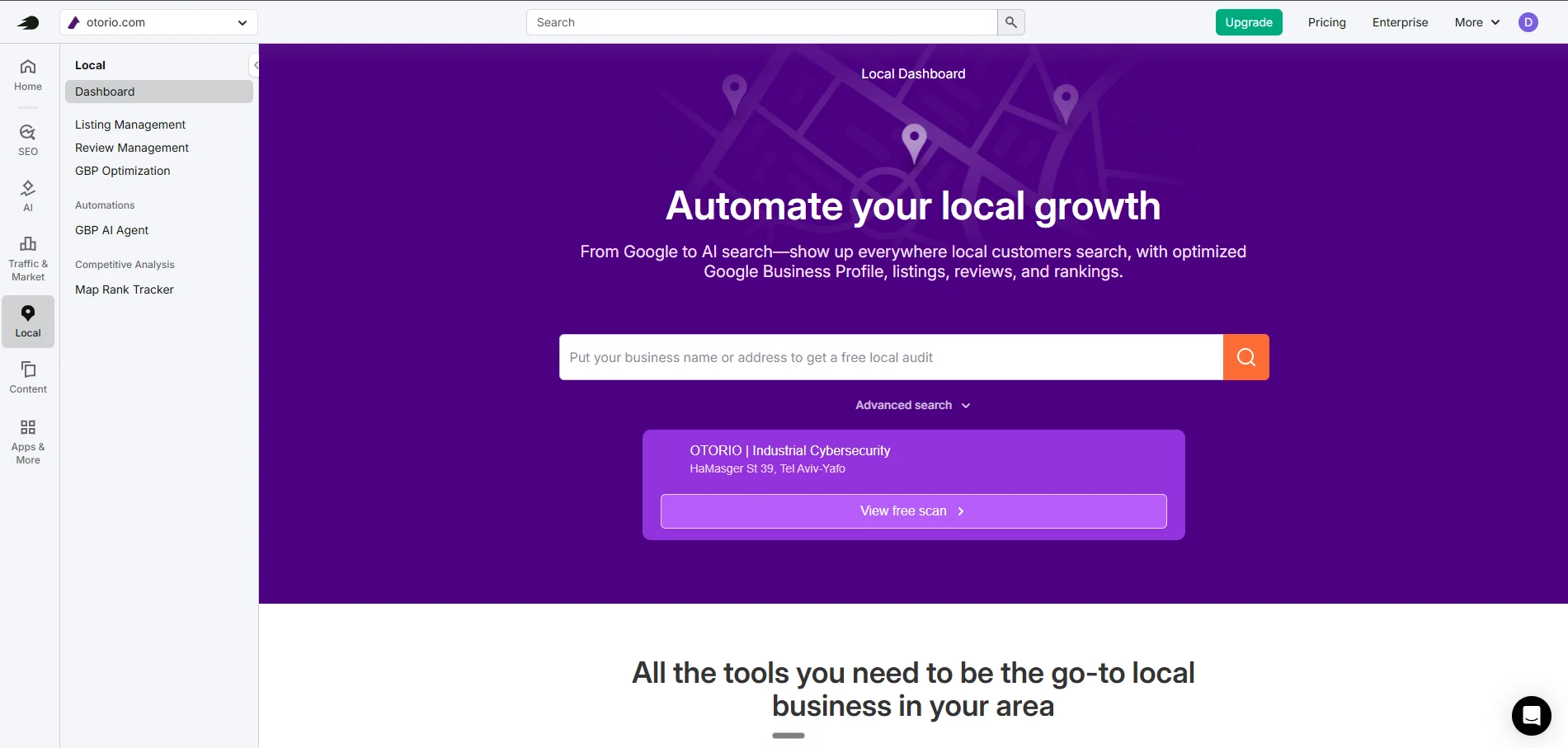
Best for: Local SMBs that depend on Google Maps, directories, and local search.
Stack role: Local listings and map visibility.
Starting point: Paid plans usually start around $30/location/month.
5. The Review Layer: NiceJob
Reviews are not just social proof for humans.
They are also useful public signals for AI systems.
Reviews describe your business in real customer language. They mention services, outcomes, problems solved, locations, staff, pricing, speed, quality, and trust.
For example, a cleaning company's reviews may mention "move-out cleaning," "last-minute booking," "office cleaning," or "great attention to detail." That language helps AI systems understand what the business is actually known for.
NiceJob helps businesses collect, manage, and display reviews. It can automate review requests, send reminders, monitor review activity, and add review widgets to a website.
This is especially valuable for service businesses that already deliver a good experience but do not consistently ask customers for reviews.
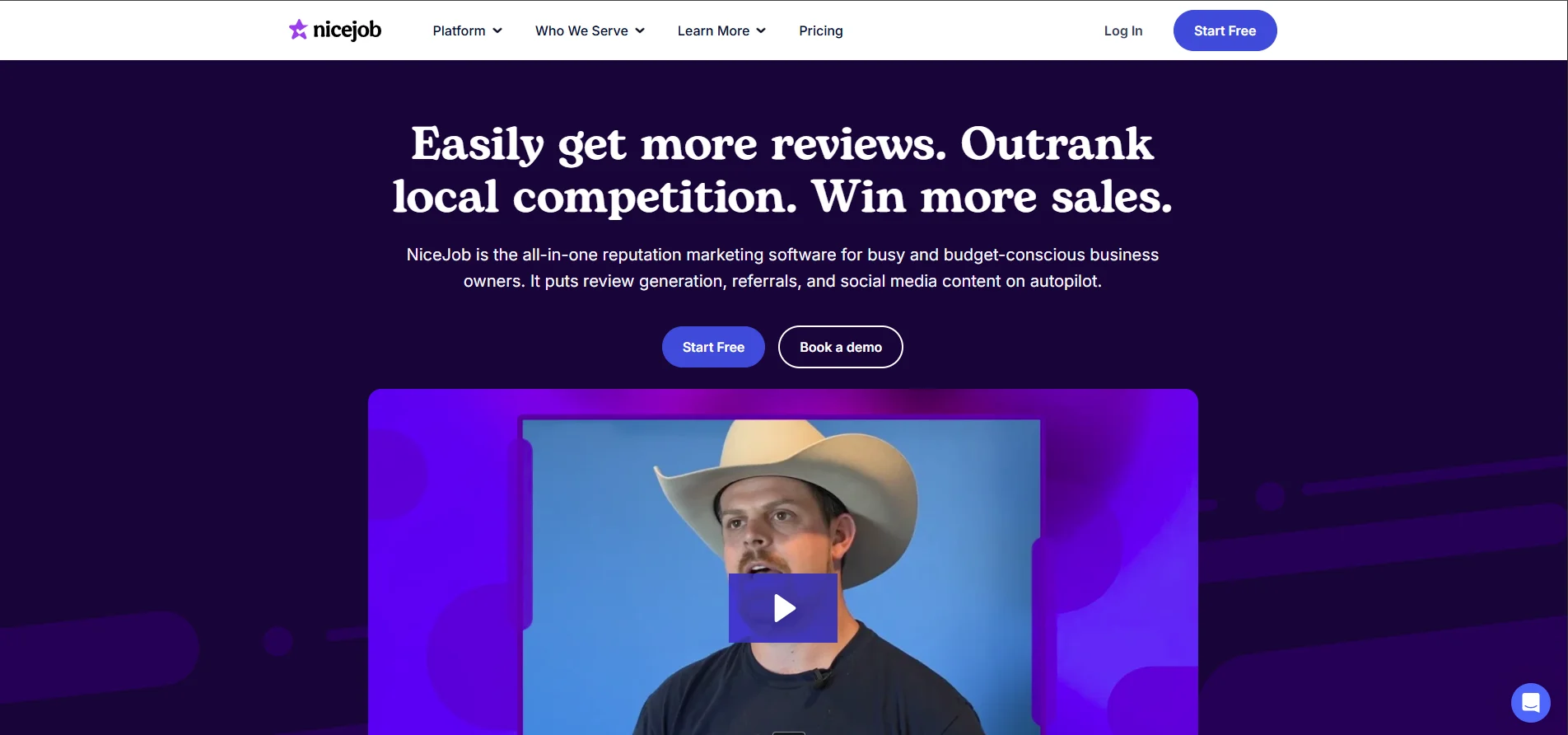
Best for: Home services, clinics, agencies, contractors, med spas, consultants, and other trust-based businesses.
Stack role: Reputation and customer proof.
Starting point: Paid plans usually start around $75/month.
6. The Authority Layer: Featured.com
AI systems do not only look at your own website.
They also look at what other websites say about you.
That is why third-party mentions are important. If your business, founder, or team is mentioned on relevant external sites, that can strengthen your authority footprint.
Featured.com helps business owners, consultants, founders, and experts respond to publisher and journalist requests. The goal is to earn quotes, mentions, and expert contributions on third-party websites.
This is useful for businesses that have real expertise but very little visibility outside their own site.
It does require effort. You need to answer relevant questions well. But for many SMBs, it is a practical way to build authority without hiring a PR agency.
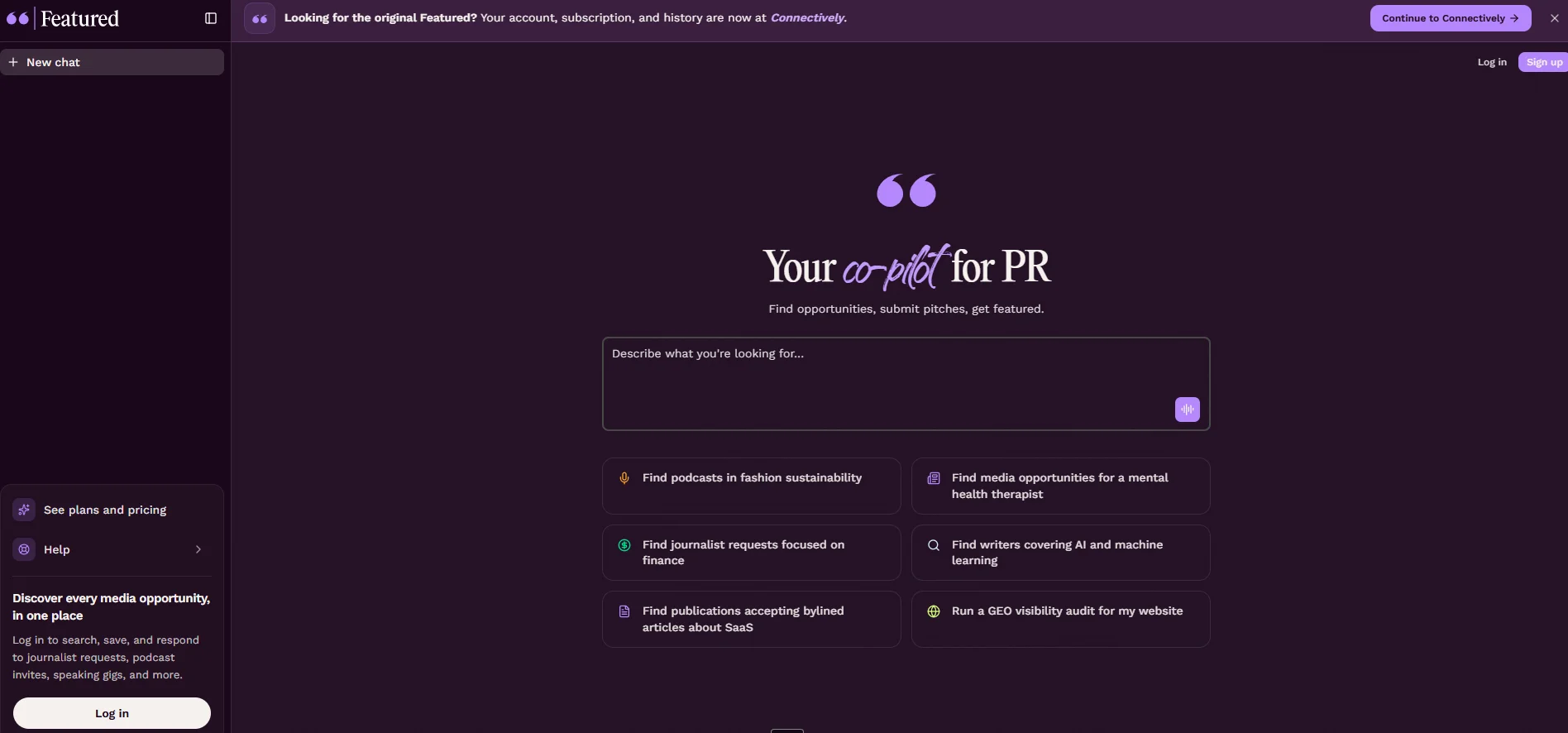
Best for: Founders, consultants, agencies, SaaS companies, expert-led services, and niche businesses.
Stack role: Off-site authority and expert mentions.
Starting point: Free plan available, with paid plans for more access.
7. The Technical SEO Layer: Ahrefs Webmaster Tools
AI search may feel new, but technical SEO still matters.
If your site has broken pages, crawl issues, missing titles, weak internal links, poor structure, or backlink problems, search systems may have a harder time discovering and trusting your content.
Ahrefs Webmaster Tools gives verified website owners free access to site audits, backlink data, and organic visibility insights.
This is a strong free layer for small businesses because it helps find hidden problems before they become expensive.
It is not a dedicated AI search tool, but it supports the foundation that AI visibility often depends on: crawlability, authority, and site health.
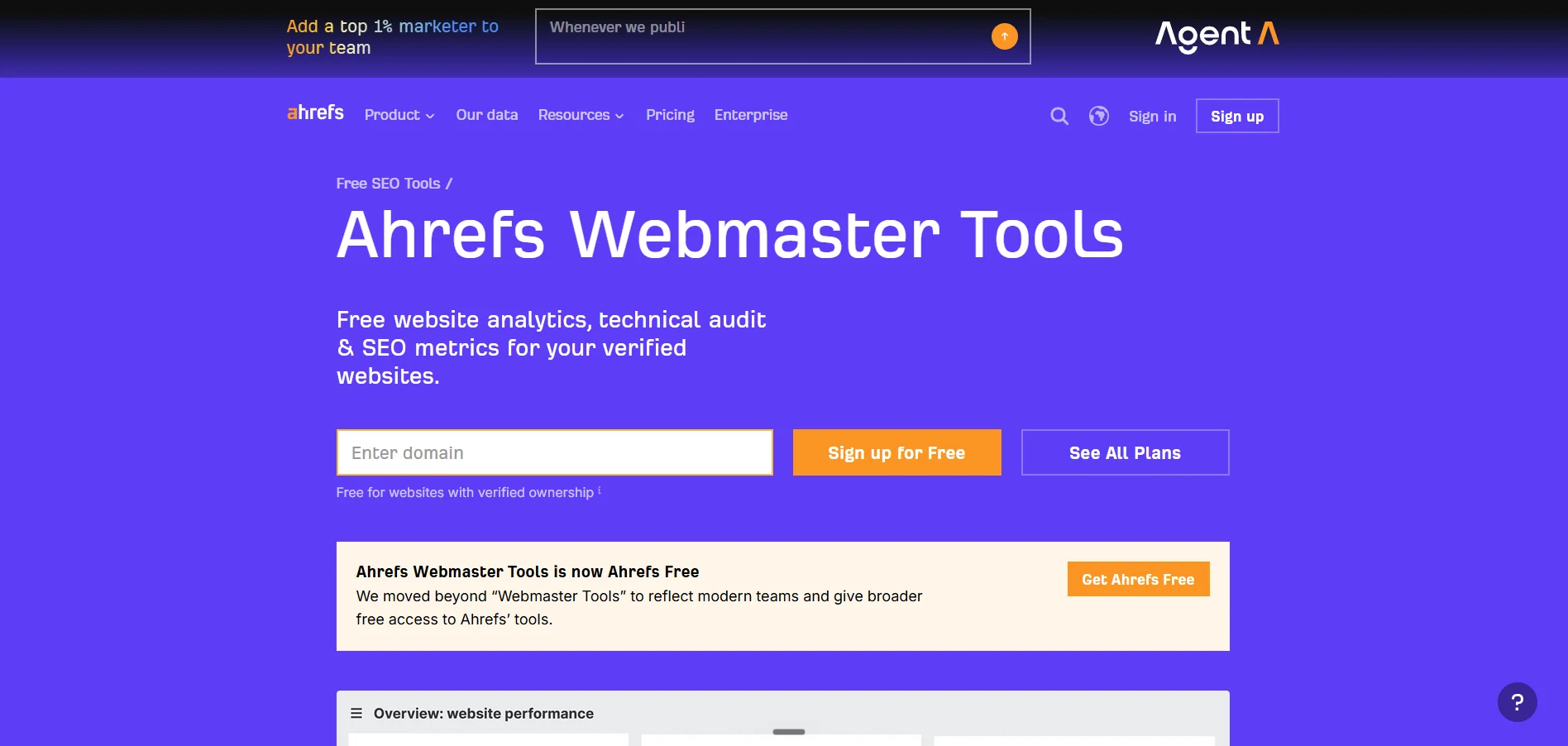
Best for: SMBs that want a free technical SEO and backlink health check.
Stack role: Technical health and backlink visibility.
Starting point: Free for verified websites.
8. The WordPress SEO Layer: Yoast SEO
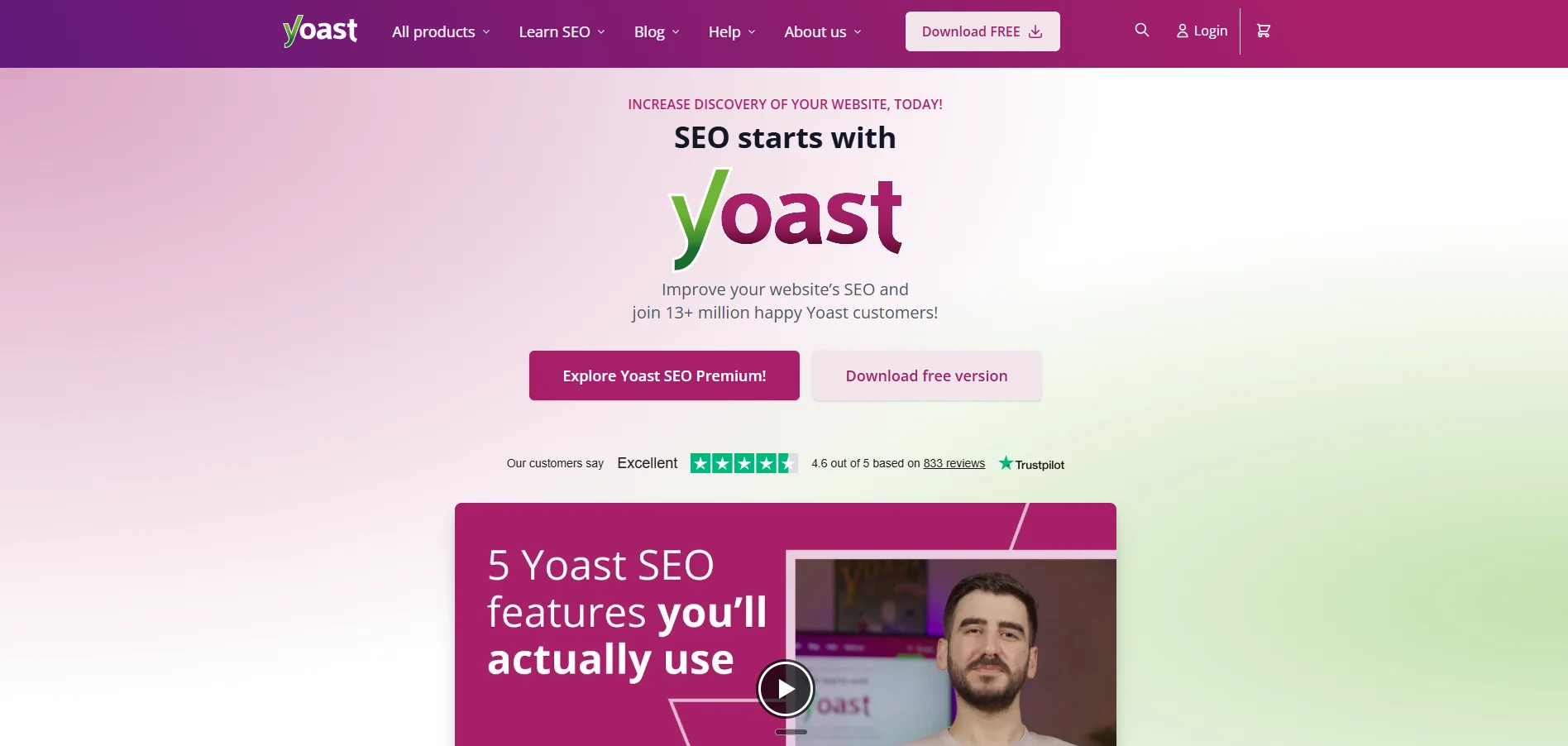
Yoast SEO is still one of the most useful WordPress plugins for basic SEO structure.
It helps with titles, meta descriptions, XML sitemaps, schema, breadcrumbs, readability, and on-page SEO guidance.
For AI search, this matters because AI systems need clean, structured, understandable content. Clear page titles, useful metadata, proper schema, and readable pages can all help your website become easier to interpret.
Yoast is not a full AI search optimization tool. It is better seen as the traditional SEO base layer.
For many small businesses, a practical WordPress setup would be:
- Yoast SEO for SEO basics
- LovedByAI for AI search optimization
- Jetpack Boost for performance
That gives the website a much stronger foundation than relying on content alone.
Best for: WordPress businesses that need reliable SEO basics.
Stack role: Traditional SEO structure.
Starting point: Free plugin, with premium plans available.
9. The Performance Layer: Jetpack Boost
A slow website creates problems for users and crawlers.
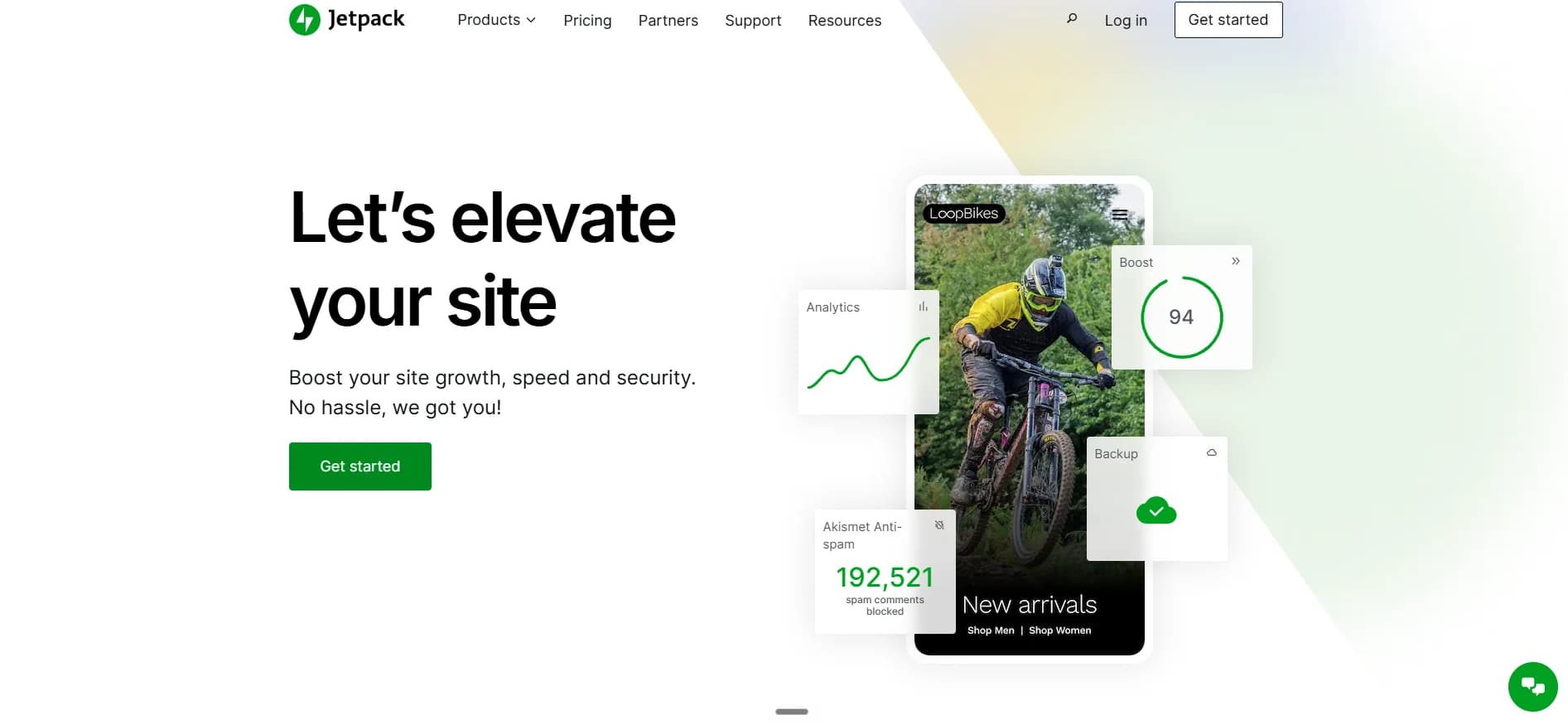
Jetpack Boost helps improve WordPress performance by addressing issues related to speed, Core Web Vitals, CSS, JavaScript, and images.
Speed alone will not make a business appear in ChatGPT or Google AI Overviews. But it is part of the technical foundation.
Many small business sites become slow because of heavy images, too many plugins, bloated themes, or weak hosting. Jetpack Boost gives business owners a simple way to improve performance without hiring a developer for every small issue.
A fast but unclear site will still struggle. But a fast, structured, useful site has a better chance of performing well across both traditional and AI search.
Best for: WordPress small businesses with slow websites or heavy pages.
Stack role: Website speed and technical experience.
Starting point: Free plan available.
10. The Indexing Layer: Bing Webmaster Tools + IndexNow
The final layer is discovery.
If your business publishes new pages, updates services, changes locations, adds pricing, or posts new content, search engines need to find those changes.
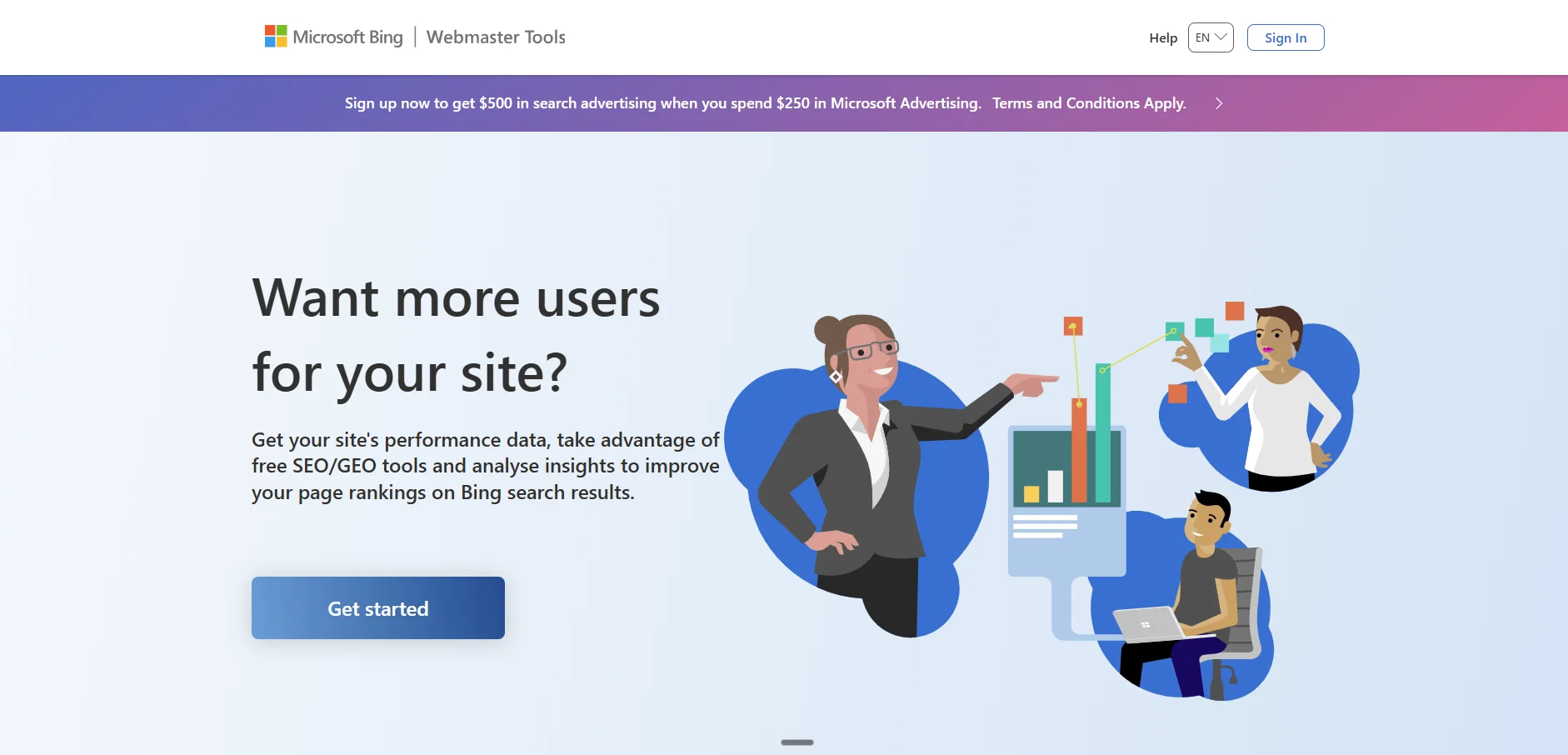
Bing Webmaster Tools helps website owners monitor Bing performance, inspect URLs, submit sitemaps, and analyze search visibility.
IndexNow is a protocol that lets websites notify participating search engines when pages are added, updated, or deleted.
This matters because AI search depends on fresh, discoverable information. If your website changes but search systems do not find those updates quickly, your AI visibility may lag behind.
Bing is also connected to parts of the Microsoft search ecosystem, which makes it worth including in an AI search stack.
Best for: Businesses that update pages, publish content, add locations, or maintain active service pages.
Stack role: Discovery and indexing.
Starting point: Free.
How to Build Your AI Search Stack Without Overcomplicating It
The biggest mistake is trying to buy every tool at once.
Small businesses should build the stack in stages.
Start with the website. If your site is on WordPress, make sure your SEO basics are handled with a tool like Yoast SEO. Then add an AI search optimization layer like LovedByAI so your business information is easier for AI systems to understand.
If your site is slow, add Jetpack Boost or fix performance issues another way.
If you are a local business, claim and complete your Google Business Profile before doing anything complicated. Then focus on reviews and local consistency.
If you do not know whether AI tools mention you, add Otterly.AI or another AI visibility tracker.
If your website has technical issues, use Ahrefs Webmaster Tools to find crawl, backlink, and site health problems.
If your business lacks external authority, start earning third-party mentions through Featured.com or similar platforms.
If you publish or update pages often, set up Bing Webmaster Tools and IndexNow.
The stack does not need to be complicated. It just needs to cover the right layers.
Recommended Starter Stack by Business Type
For a WordPress Service Business
Use LovedByAI, Yoast SEO, Google Business Profile, NiceJob, Jetpack Boost, and Bing Webmaster Tools.
This setup covers AI search structure, SEO basics, local trust, reviews, speed, and indexing.
For a Local Business That Depends on Maps
Use Google Business Profile, Semrush Local, NiceJob, LovedByAI if the site is on WordPress, and Otterly.AI if you want visibility tracking.
This setup focuses on local trust, consistency, reputation, and AI search measurement.
For a Consultant, Agency, or Expert-Led Business
Use LovedByAI, Otterly.AI, Featured.com, Ahrefs Webmaster Tools, Yoast SEO, and Bing Webmaster Tools.
This setup focuses on clear website content, AI visibility, authority, technical health, and discoverability.
For a Business With a Weak Website
Start with Yoast SEO, LovedByAI, Jetpack Boost, and Ahrefs Webmaster Tools.
Fix the foundation before spending money on advanced reporting or PR.
Common AI Search Stack Mistakes
Publishing More Content Without Fixing Structure
More blog posts will not solve a messy website.
If your services, locations, FAQs, schema, and page structure are unclear, more content may only create more confusion.
Ignoring Reviews
Reviews are one of the clearest public trust signals for small businesses. They help customers trust you and help search systems understand what real customers say about you.
Treating AI Search as Separate From SEO
AI search is new, but it still depends on many SEO fundamentals: crawlability, clarity, authority, speed, relevance, and trust.
Not Tracking AI Visibility
Many small businesses have no idea whether ChatGPT, Perplexity, Gemini, Copilot, or Google AI Overviews mention them. Without tracking, it is hard to know what is working.
Focusing Only on Your Website
Your own site matters, but AI systems also look at third-party mentions, reviews, local profiles, directories, and external authority signals.
Final Thoughts
AI search visibility is not built from one tactic.
It comes from making your business easier to understand, easier to verify, and easier to trust.
For small businesses, the winning approach is a practical stack. Start with the website. Add local data if location matters. Build reviews. Keep business information consistent. Monitor AI visibility. Fix technical issues. Earn third-party mentions. Make sure search engines can discover your updates.
The businesses that win in AI search in 2026 will not necessarily be the ones with the biggest SEO budgets.
They will be the ones with the clearest information, strongest trust signals, and most complete search foundation. If you want the implementation detail rather than the tool list, our on-page GEO guide covers the structure work and our tested comparison of GEO plugins for WordPress covers what each one automates.