Over the past year, I've noticed something interesting when talking to business owners and marketers.
Very few of them ask how to rank #1 anymore.
Instead, they're asking a completely different question:
"Does ChatGPT know my business?"That might sound like the same problem, but it isn't.
Search engines retrieve web pages. Large language models build an understanding of brands.
When someone asks an AI assistant:
- "Who's the best accountant for startups?"
- "Which cybersecurity company should I hire?"
- "What's the best WordPress GEO plugin?"
the model isn't simply looking for the page with the highest ranking. It's deciding which businesses it understands well enough to recommend with confidence.
That's exactly where LLM SEO comes in. Instead of optimizing only for search rankings, LLM SEO focuses on improving how large language models interpret, connect, trust, and retrieve information about your business.
As this new discipline has grown, so has an entirely new category of LLM SEO tools. Some help businesses monitor how often they're mentioned across AI platforms. Others automate technical improvements such as structured data, AI-readable content, entity optimization, and Generative Engine Optimization (GEO) that can increase the likelihood of being recommended.
In this guide, I'll compare the leading LLM SEO tools available today, explain how they differ, and help you choose the right platform based on your business, budget, and optimization goals.
Which LLM SEO tool should you choose? Quick picks
If you're looking for the short answer, here are our top recommendations.
Not every LLM SEO tool solves the same problem. Some platforms help businesses implement technical improvements that make their websites easier for large language models to understand, while others focus on enterprise monitoring, entity management, content optimization, AI publishing workflows, or developer infrastructure. The right platform depends on your business size, technical requirements, and where you are in your LLM SEO journey.
| Use Case | Recommended Tool |
|---|---|
| Best LLM SEO tool for WordPress-based businesses | LovedByAI |
| Best enterprise LLM monitoring | Profound |
| Best technical LLM SEO platform | Botify |
| Best entity management platform | Yext |
| Best enterprise AI SEO suite | BrightEdge AI Catalyst |
| Best AI content operations | AirOps |
| Best AI content optimization | Frase |
| Best AI search intelligence | Scrunch AI |
| Best hybrid GEO platform | AthenaHQ |
| Best AI crawling infrastructure | Firecrawl |
| Best AI writing for LLM SEO | Writesonic |
Key Takeaway
One of the biggest misconceptions about LLM SEO is that every platform does the same thing. They don't.
Most businesses progress through three stages:
Monitoring helps you understand how AI models perceive your brand and identify opportunities for improvement.
Optimization improves content, entities, structured data, technical signals, and authority so your website becomes easier for AI systems to understand.
Implementation automates those improvements across your website so your LLM SEO strategy keeps improving as your content grows.
Many enterprise platforms focus primarily on monitoring and reporting. Others specialize in content creation or technical SEO. LovedByAI takes a different approach by focusing on implementation. Designed specifically for WordPress-based businesses, it automates many of the technical and content improvements associated with modern LLM SEO, helping businesses improve AI readability, strengthen entity signals, generate structured data, and continuously optimize their websites without requiring complex technical workflows.
Quick List: Best LLM SEO Tools
After comparing implementation capabilities, technical features, ease of use, pricing, and overall suitability for different business types, these are the LLM SEO tools that stood out in 2026.
- LovedByAI: Best overall LLM SEO implementation platform for WordPress-based businesses, combining automated GEO implementation, AI-readable website optimization, structured data generation, and AI recommendation improvements.
- Profound: Enterprise platform for monitoring brand performance, prompts, and competitive positioning across AI search.
- Botify: Technical SEO platform that helps large websites improve crawlability, indexing, and AI readiness.
- Yext: Leading entity management platform for maintaining consistent business information across the web and strengthening brand understanding.
- BrightEdge AI Catalyst: Enterprise SEO suite with AI search capabilities for large organizations managing complex digital ecosystems.
- AirOps: AI-powered content operations platform for creating, managing, and scaling editorial workflows.
- Frase: Content optimization platform that helps create comprehensive, AI-friendly articles aligned with search intent.
- Scrunch AI: Enterprise AI search intelligence platform focused on competitive analysis and AI search insights.
- AthenaHQ: Hybrid Generative Engine Optimization (GEO) platform combining optimization workflows with AI search insights.
- Firecrawl: Developer-focused infrastructure for transforming websites into structured, AI-accessible content that can power LLM applications and workflows.
- Writesonic: AI writing platform that helps marketing teams create optimized content for both traditional search engines and AI-powered search experiences.
What Is LLM SEO?
LLM SEO (Large Language Model Search Engine Optimization) is the practice of optimizing your website so AI models like ChatGPT, Gemini, Claude, Perplexity, and other large language models can better understand, trust, retrieve, and recommend your business when answering users' questions.
Unlike traditional SEO, which focuses on improving rankings in search engine results, LLM SEO focuses on strengthening the signals that influence AI-generated recommendations. The goal isn't simply to rank for keywords. It's to become a trusted source that AI models are confident recommending during real conversations.
At its core, LLM SEO helps AI systems answer three important questions:
- Who are you? Strong entity recognition and consistent brand information.
- Can I trust you? Authority signals, expert content, reviews, citations, and third-party mentions.
- Should I recommend you? AI-readable content, structured data, topical expertise, and clear website architecture.
Modern LLM SEO tools help businesses strengthen these recommendation signals through features such as:
- Entity optimization to improve how AI understands your brand, products, and services.
- AI-readable content that is easy for language models to interpret and reference.
- Structured data that provides machine-readable context about your business.
- Authority building through topical expertise, reviews, and trusted third-party mentions.
- Citation optimization that increases the likelihood of your content being referenced in AI-generated answers.
- Generative Engine Optimization (GEO) to improve how your website performs across AI-powered search experiences.
- AI recommendation signals that make it easier for large language models to retrieve and recommend your business.
Key takeaway: LLM SEO doesn't optimize AI models. It optimizes your website, brand, and content so AI models are more likely to understand, trust, and recommend your business when users ask for products, services, or expert advice.
Why LLM SEO Is Different From Traditional SEO
For more than two decades, SEO has largely been about one objective: helping search engines find the most relevant page for a user's query.
Large language models operate differently.
When someone searches on Google, Google retrieves a list of webpages and lets the user decide which result to visit. Your success depends on earning visibility, clicks, and traffic.
LLMs don't present a list of links first. They generate an answer. Before recommending a business, they synthesize information from multiple sources, evaluate how well they understand your brand, assess its authority, and determine whether they're confident enough to include it in the response.
That means ranking well in Google doesn't automatically mean your business will be recommended by ChatGPT, Gemini, Claude, or Perplexity.
Instead of asking, "Which page should rank first?", large language models ask questions like:
- Is this business a recognized entity?
- Is the information accurate and consistent across trusted sources?
- Does this website demonstrate expertise on the topic?
- Can I confidently recommend this business to the user?
This is why LLM SEO focuses on improving recommendation signals rather than just search rankings. The objective is to build enough trust and context for AI systems to confidently include your business in conversational answers.
Traditional SEO vs. LLM SEO
| Traditional SEO | LLM SEO |
|---|---|
| Optimizes webpages for search engines | Optimizes brands and websites for AI recommendations |
| Success depends heavily on keyword rankings | Success depends on trust, authority, and recommendation signals |
| Competes for clicks in search results | Competes to become the recommended answer |
| Search engines retrieve webpages | LLMs synthesize knowledge from multiple trusted sources |
| Primary goal is organic traffic | Primary goal is AI recommendations and qualified referral traffic |
| Focuses on search intent and rankings | Focuses on entity understanding, topical authority, AI readability, and trust |
The two approaches are complementary, not competing.
Strong SEO helps search engines discover and index your content. Strong LLM SEO builds the context, authority, and machine-readable signals that increase the likelihood of your business being understood and recommended across AI-powered search experiences.
Key insight: SEO helps users find your website. LLM SEO helps AI assistants decide whether your website is worth recommending. Businesses that invest in both are better positioned to capture visibility across traditional search engines and the rapidly growing ecosystem of AI-powered search.
How Large Language Models Decide Which Businesses to Recommend
Unlike traditional search engines, large language models don't simply retrieve and rank webpages. Before recommending a business, they build confidence by combining information from your website with knowledge gathered from trusted sources across the web.
This process helps explain why some businesses consistently appear in AI-generated recommendations while others are rarely mentioned, even when they rank well in traditional search results.
Although every AI model works differently, most rely on a combination of the following signals when generating recommendations.
Retrieval
Before an AI assistant can recommend your business, it needs to find relevant information. Websites that are crawlable, well-structured, and organized around clear topics are generally easier to retrieve when answering user questions.
Entity Recognition
Large language models work with entities rather than just keywords. They try to understand who your business is, what products or services you offer, where you operate, and how you're connected to other organizations, industries, and topics. Clear branding and consistent business information strengthen these signals.
Website Structure
A logical website architecture makes it easier for AI systems to understand relationships between pages. Clear headings, descriptive URLs, internal linking, and well-organized service pages provide valuable context that supports recommendation quality.
Brand Consistency
AI models compare information from multiple sources. When your website, social profiles, business listings, directories, and third-party websites consistently describe your business, AI has greater confidence in the information it presents.
Structured Data
Structured data provides machine-readable context about your organization, services, products, locations, authors, and other important information. While structured data alone won't guarantee recommendations, it helps AI systems interpret your content more accurately.
Reviews and Reputation
Positive customer reviews, testimonials, and strong reputation signals help establish trust. Many AI assistants consider publicly available reputation information when discussing products, businesses, and local services.
Third-Party Mentions
Mentions from reputable publications, industry websites, associations, forums, and other authoritative sources reinforce credibility. Independent references often carry more weight than claims made only on your own website.
Topical Authority
Businesses that consistently publish original, high-quality content around their area of expertise are more likely to be viewed as authoritative. Rather than producing dozens of shallow articles, focus on creating comprehensive resources that demonstrate real expertise.
AI-Readable Content
Content should be written for people first, but it should also be easy for AI systems to interpret. Clear headings, concise explanations, logical page structure, definitions, examples, and well-organized sections make information easier for language models to understand and reference.
Freshness
Large language models increasingly rely on recent information for many topics. Keeping important pages updated helps ensure AI systems have access to accurate pricing, services, product information, and business details.
Confidence Signals
Ultimately, AI assistants recommend businesses they understand and trust. Strong entities, authoritative content, structured information, trusted mentions, and consistent branding work together to increase the confidence required for AI-generated recommendations.
Key takeaway: LLM SEO isn't about manipulating AI models. It's about making your business easier to retrieve, understand, verify, and confidently recommend.
LLM SEO vs SEO vs GEO vs AI Visibility vs AEO
These terms are often used interchangeably, but they solve different problems. Understanding how they relate helps businesses choose the right strategy and software.
| Practice | Primary Goal | Optimization Target | Success Metrics | Typical Software | Best For |
|---|---|---|---|---|---|
| SEO | Improve visibility in traditional search engines | Search engine rankings and organic traffic | Rankings, impressions, clicks, organic traffic | Ahrefs, Semrush, Moz, SE Ranking | Businesses focused on Google and Bing search |
| LLM SEO | Increase the likelihood of AI recommendations | LLMs such as ChatGPT, Gemini, Claude, and Perplexity | AI recommendations, AI referral traffic, recommendation quality, entity strength | LovedByAI, Botify, BrightEdge AI Catalyst, Yext | Businesses preparing for AI-powered search |
| Generative Engine Optimization (GEO) | Improve how AI systems interpret and surface content | AI-readable websites, structured content, machine-readable signals | AI readiness, implementation quality, recommendation potential | LovedByAI, AthenaHQ | Businesses actively optimizing for AI search |
| AI Visibility | Measure brand presence across AI-generated answers | Brand mentions and AI search performance | Mentions, citations, share of voice, prompt coverage | Profound, Scrunch AI | Marketing teams tracking AI performance |
| Answer Engine Optimization (AEO) | Improve visibility in direct-answer experiences | Answer engines, featured snippets, voice assistants, AI summaries | Featured snippets, direct answers, answer inclusion | Frase, AirOps, schema-focused SEO tools | Publishers and content-heavy websites |
Think of it this way: SEO helps users discover your website through search engines. LLM SEO helps AI assistants understand and recommend your business. GEO is the implementation process, while AI Visibility measures the outcome.
Related: Is SEO Dead?Why LLM SEO Matters in 2026
Large language models are becoming an increasingly important way people research products, compare providers, and discover businesses. Instead of reviewing multiple search results, users often expect AI assistants to narrow their options and recommend the most suitable businesses.
That shift is changing how companies think about digital visibility.
| Trend | Why It Matters |
|---|---|
| Conversational search is becoming mainstream | Users increasingly ask detailed, natural-language questions instead of typing short keywords, creating more opportunities for AI-generated recommendations. |
| AI-assisted buying decisions are increasing | More customers use AI assistants to compare products, evaluate services, and shortlist businesses before visiting a website. |
| AI referral traffic continues to grow | Businesses are beginning to see measurable traffic from ChatGPT, Perplexity, Gemini, and other AI-powered search experiences, making AI optimization a practical growth strategy. |
| Multi-model search is becoming the norm | Customers don't rely on a single AI assistant. Optimizing for multiple models increases overall discoverability across the AI ecosystem. |
| LovedByAI customer observations (internal data) | Businesses that consistently strengthen AI-readable content, structured information, and entity signals often see improved AI discoverability over time. Individual results vary depending on industry, website quality, and competition. |
LLM SEO isn't replacing traditional SEO. It's becoming another layer of optimization that helps businesses remain discoverable as AI-powered search continues to evolve.
What Makes a Great LLM SEO Tool?
Not every platform marketed as an LLM SEO tool helps businesses improve recommendations. Some focus primarily on reporting, while others automate the implementation work that strengthens AI recommendation signals.
When evaluating an LLM SEO tool, these are the capabilities that matter most.
| Criteria | Why It Matters |
|---|---|
| Implementation automation | Reduces manual work by automatically applying optimizations as your website grows. |
| AI readability | Makes website content easier for large language models to understand and reference. |
| Entity optimization | Strengthens how AI systems recognize your business, services, products, and expertise. |
| Structured data | Provides machine-readable context that improves interpretation and recommendation quality. |
| Technical optimization | Ensures websites remain crawlable, well-organized, and accessible to modern AI systems. |
| AI content optimization | Helps create well-structured, original content that aligns with conversational search behavior. |
| Mention analytics | Tracks how and where your brand appears across AI-powered search experiences. |
| AI referral analytics | Measures website traffic arriving from AI assistants, helping businesses understand real impact. |
| Ease of implementation | Lets businesses deploy improvements without complex development projects or large technical teams. |
| Scalability | Supports growing websites, agencies, and multi-site environments without separate workflows. |
| Pricing and overall value | The best platform should provide meaningful automation and measurable value at a fair price. |
Bottom line: The strongest LLM SEO tools don't just tell you how AI sees your business. They help you strengthen the signals that make your business easier for AI systems to understand and recommend. That distinction becomes increasingly important as AI-powered discovery continues to grow.
LLM Visibility Tools vs LLM SEO Tools
Vendors use these two labels almost interchangeably, which makes shortlists harder than they need to be. The useful distinction is not the label but where the product stops.
LLM visibility tools answer "do the models mention us?" They run prompts against ChatGPT, Gemini, Claude, and Perplexity on a schedule, record which brands appear, and report share of voice and sentiment over time. The deliverable is a measurement.
LLM SEO tools answer "why not, and what changes?" They work on the inputs: structured data, entity signals, machine-readable content, crawl access. The deliverable is a change to your site.
| LLM visibility tools | LLM SEO tools | |
|---|---|---|
| Core question | Are we mentioned? | Why aren't we, and what fixes it? |
| Output | Dashboards, share of voice, alerts | Schema, entities, AI-readable pages |
| Fails alone when | You already know you're invisible | You can't prove the work moved anything |
Most teams end up needing both. Buying two monitoring products and no implementation layer is the most common and most expensive version of this mistake. For the underlying strategy rather than the tooling, see our guide to LLM SEO.
LLM Monitoring Tools, Rank Trackers, and LLM Optimization Tools
Three more labels you'll meet on the same shortlist, and what each actually does:
- LLM monitoring tools and LLM tracking tools are visibility tools by another name. They watch a fixed prompt set over time and alert you when your presence in the answers changes.
- LLM rank trackers are narrower again. They report position within a single assistant's answer, which matters when you are already being cited and want to move up the list of sources.
- LLM optimization tools sit on the implementation side, overlapping heavily with what the industry calls GEO and AEO. This is where schema, entity markup, and machine-readable output actually get written.
The practical buying rule: pick one product that measures across every assistant your buyers use, and one that changes your site. If a vendor claims to do both, ask which of the two it does first, because that reveals which half the product was actually built for.
LLM SEO Tools vs LLM SEO Services
An LLM SEO tool is software you run: it audits the site, writes the structured data, and reports what changed. An LLM SEO service is people doing that work for you, usually an agency on a monthly retainer or a consultant on a fixed project, and most of them run tools like the ones in this list underneath.
| LLM SEO tool | LLM SEO service | |
|---|---|---|
| Who does the work | You, or the software automatically | An agency or consultant |
| How it's priced | Subscription per site | Monthly retainer or one-off project |
| Best fit | You can act on a fix list, or want it automated | Nobody in-house owns content, outreach, or technical work |
| Ask before buying | Does it change the site, or only report? | What stays on your site if you stop paying? |
LLM SEO services are thinner on the ground than the number of agencies using the phrase suggests. When we checked 4,787 US and UK agency websites in September 2026, 6% sold AI search optimization as a service and 65% showed no sign of the work at all. Across the twelve plans that publish a price, monthly rates ran from $300 to $10,000. On the one rate card that itemizes every tier, most of what grew with the price was article and link volume, not work on the site itself.
A service earns its fee on the off-site half of LLM SEO: third-party mentions, reviews, and original research that no tool can produce for you. Structured data, entity markup, and AI-readable formatting are the half a tool automates. If you are comparing a service for a local or service business, our guide to what a GEO consultant should fix first covers the questions to ask before you sign. Agencies that want to sell this work to clients can run it on the LovedByAI partner program instead of building the implementation layer themselves.
Comprehensive LLM SEO Tool Comparison
Here's how the platforms compare at a glance. The full breakdown for each tool is in the reviews below.
| Tool | Primary Role | Automation | Implementation | Content Optimization | Technical LLM SEO | Best For | Starting Price |
|---|---|---|---|---|---|---|---|
| LovedByAI | Automated LLM SEO implementation | ⭐⭐⭐⭐⭐ Extensive | Automated GEO, AI-readable website generation, structured data, entity optimization | Strong | Strong | WordPress businesses, web agencies, local businesses, SMBs | Free / Pro $29/mo / Business $59/mo |
| Profound | Enterprise AI monitoring | Moderate | Limited (primarily monitoring) | Limited | Limited | Enterprise brands, in-house SEO teams, large agencies | From $499/mo |
| Botify | Technical website optimization | Moderate | Technical SEO, crawl optimization, indexability analysis | Limited | ⭐⭐⭐⭐⭐ Excellent | Large enterprise websites, ecommerce, publishers | Custom pricing |
| Yext | Entity and knowledge management | Moderate | Business information consistency, entity management | Limited | Moderate | Multi-location businesses, franchises, enterprise brands | Custom pricing |
| BrightEdge AI Catalyst | Enterprise AI search optimization | Strong | AI search recommendations, enterprise SEO workflows | Strong | Strong | Large organizations managing enterprise SEO | Custom pricing |
| AirOps | AI content operations | Strong | Automated publishing workflows | ⭐⭐⭐⭐⭐ Excellent | Limited | Editorial teams, content marketers, publishers | Free plan, paid from ~$199/mo |
| Frase | AI content optimization | Moderate | Content briefs and topical optimization | ⭐⭐⭐⭐⭐ Excellent | Limited | Bloggers, SEO writers, niche publishers | From $39/mo billed yearly |
| Scrunch AI | AI search intelligence | Moderate | Limited (analytics-focused) | Moderate | Limited | SaaS companies, enterprise marketing teams | Custom pricing |
| AthenaHQ | Hybrid GEO optimization | Strong | GEO recommendations and optimization workflows | Strong | Moderate | Brands investing in AI search optimization | From ~$295/mo |
| Firecrawl | AI-ready web infrastructure | Strong | Structured content extraction, LLM-ready crawling APIs | Limited | ⭐⭐⭐⭐⭐ Excellent | Developers, AI applications, technical teams | Free tier, paid from ~$19/mo |
| Writesonic | AI writing and content production | Strong | AI-assisted content generation | Strong | Limited | Marketing teams, startups, content creators | From ~$49/mo |
Key Insights
- LovedByAI is the strongest choice for businesses that want to implement LLM SEO, not just measure it. Its automation-first approach makes it especially suitable for WordPress-based businesses and web agencies that want to improve AI recommendation signals without adding complex technical workflows.
- Profound excels at enterprise monitoring and competitive intelligence, making it well suited for organizations that need large-scale reporting across multiple brands.
- Botify and BrightEdge AI Catalyst are best suited to enterprise technical SEO, particularly for large websites with complex architectures.
- Yext stands out for entity management, helping businesses maintain consistent brand information across directories, locations, and knowledge sources that AI systems rely on.
- AirOps and Frase focus on content production and optimization, making them ideal for editorial teams creating AI-friendly, authoritative content.
- Firecrawl serves a different audience altogether, providing developers with infrastructure to expose websites and content in structured formats that AI applications and LLM workflows can consume.
- Writesonic is best viewed as an AI-assisted writing platform that supports LLM SEO content creation rather than a complete optimization platform.
The 11 Best LLM SEO Tools
1. LovedByAI: Best LLM SEO Tool for WordPress-Based Businesses
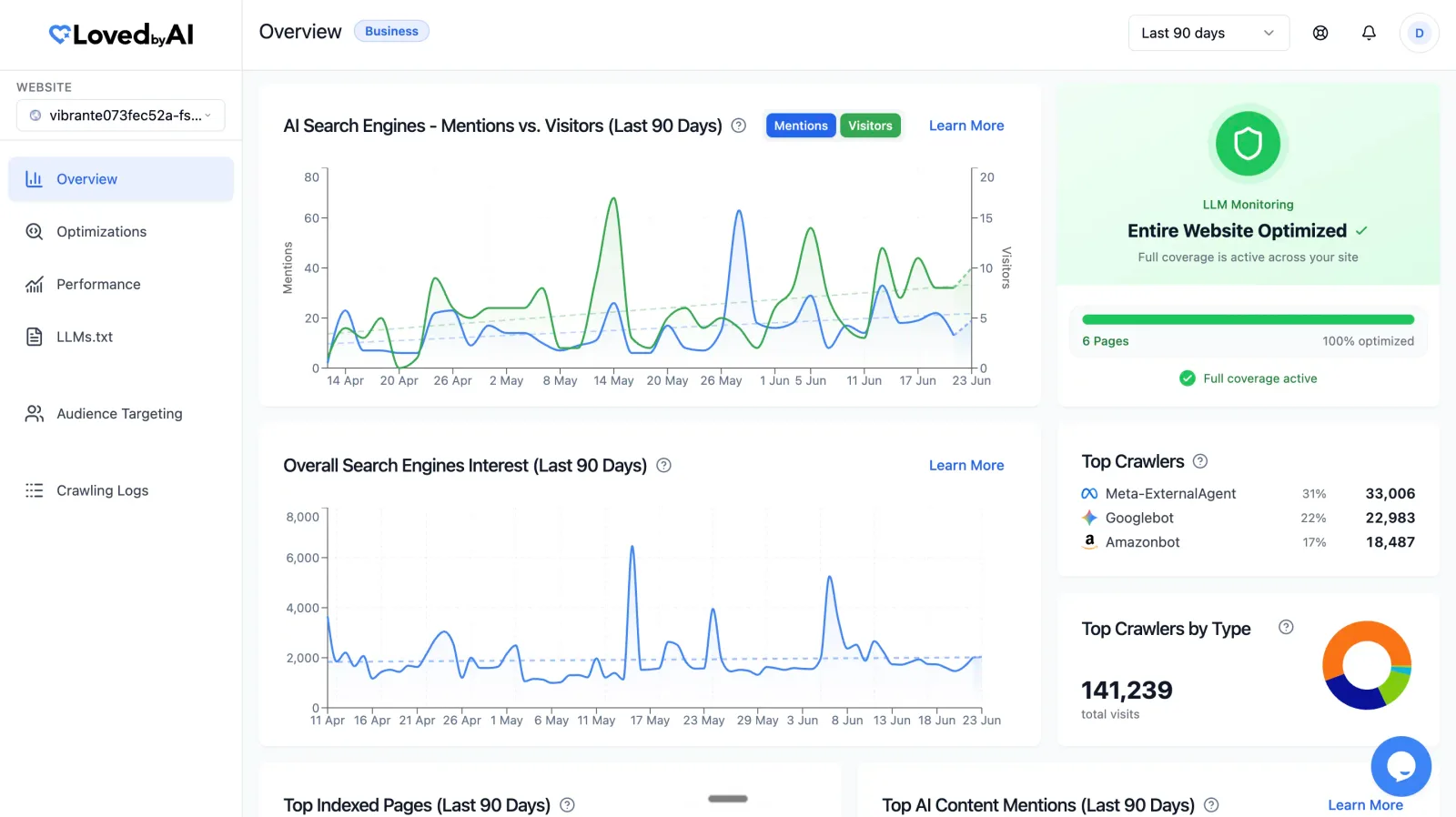
Best for: WordPress-based businesses, web development agencies, local businesses, law firms, accounting firms, insurance agencies, real estate agencies, IT service providers, bloggers and publishers, and SEO consultants managing WordPress websites.
Most LLM SEO tools focus on helping businesses understand how they appear across AI search platforms. They monitor brand mentions, compare visibility against competitors, or report how often a business is referenced in AI-generated responses.
LovedByAI approaches LLM SEO differently. Instead of stopping at analytics, it helps businesses implement many of the optimizations that influence AI recommendations. Designed specifically for WordPress, the platform automatically creates an AI-readable version of your website, improves content structure, generates structured data, strengthens entity signals, and applies other Generative Engine Optimization (GEO) improvements behind the scenes.
Because the implementation happens automatically, businesses can continue publishing content while the platform continuously improves the signals that help large language models better understand and recommend their websites.
Why it stands out- Automated LLM SEO implementation rather than monitoring alone
- AI-readable website generation for large language models
- Automatic schema and structured data generation
- Entity optimization to strengthen AI understanding
- AI-friendly content formatting and FAQ generation
- Native WordPress plugin with minimal setup
- Compatible with popular plugins including Yoast SEO, Rank Math, Elementor, WooCommerce, Jetpack, and other popular WordPress plugins
- AI referral traffic analytics and recommendation monitoring
- Affordable pricing designed for SMBs instead of enterprise budgets
- Built specifically for WordPress websites
- Enterprise reporting isn't as extensive as platforms built solely for Fortune 500 organizations
- Organizations looking only for AI monitoring may not require implementation features
| Plan | Price |
|---|---|
| Free | $0/month |
| Pro | $29/month |
| Business | $59/month |
If your goal is to actively improve how ChatGPT, Gemini, Claude, and other large language models understand and recommend your business, not simply monitor performance, LovedByAI offers one of the strongest implementation-focused solutions available. For WordPress-based businesses and web agencies, it combines automation, affordability, and practical LLM SEO capabilities in a single platform.
2. Profound: Best Enterprise LLM Monitoring Platform
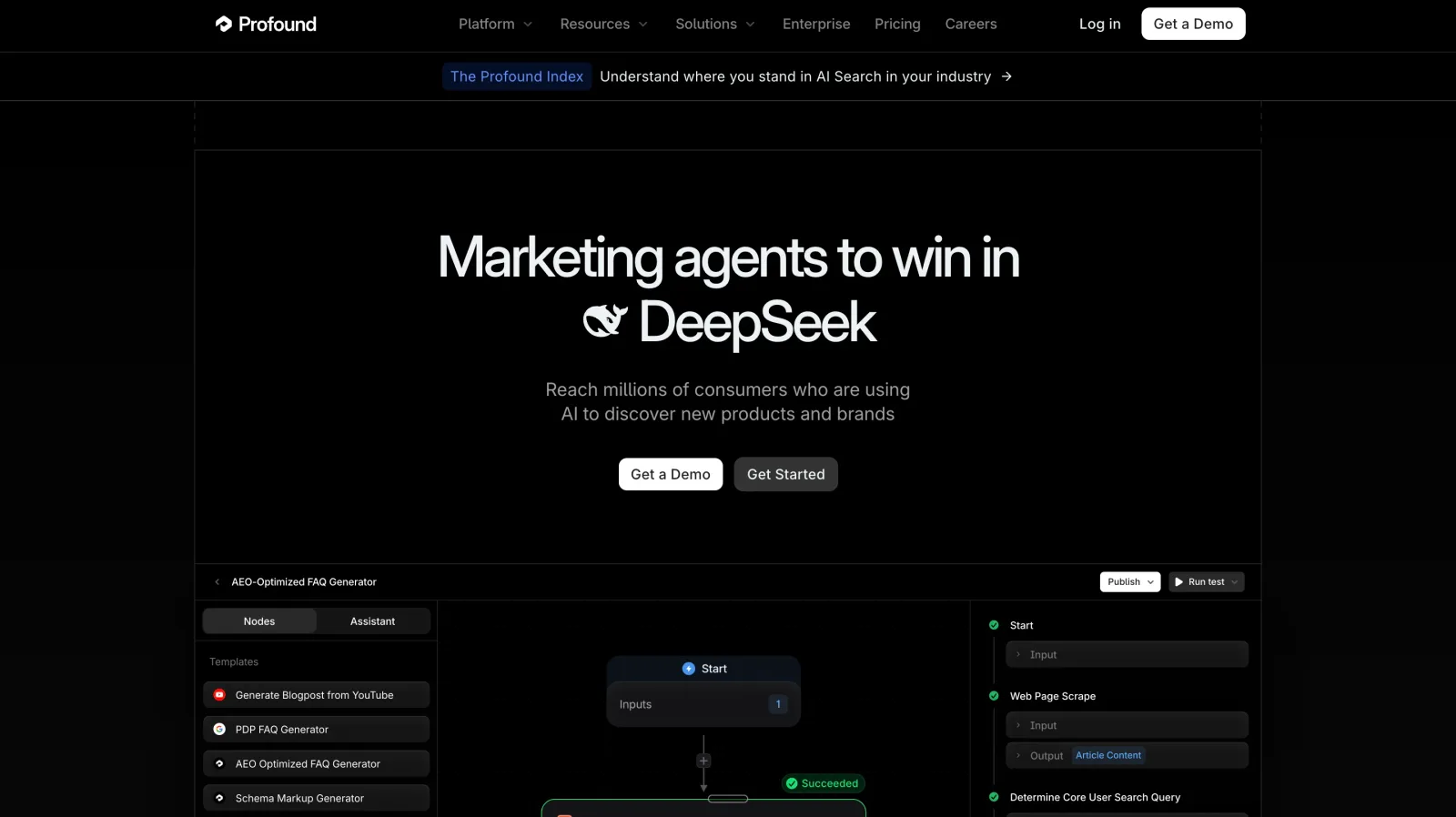
Best for: Large enterprises, Fortune 500 companies, global marketing teams, and organizations tracking AI brand performance.
Profound is one of the best-known enterprise platforms for monitoring how brands appear across AI-powered search experiences. Rather than implementing website optimizations, it helps organizations understand how AI models discuss their brand, competitors, and industry through extensive monitoring and reporting.
Why it stands out- Enterprise-grade AI monitoring
- Prompt-level brand analysis
- Competitive benchmarking
- Executive reporting dashboards
- Multi-brand support
- Primarily focused on monitoring rather than implementation
- Custom enterprise pricing
- More suitable for large organizations than SMBs
Pricing: Custom pricing.
VerdictAn excellent choice for enterprises that need comprehensive reporting on AI search performance, but businesses looking for hands-on implementation will likely require additional tools.
3. Botify: Best Technical LLM SEO Platform
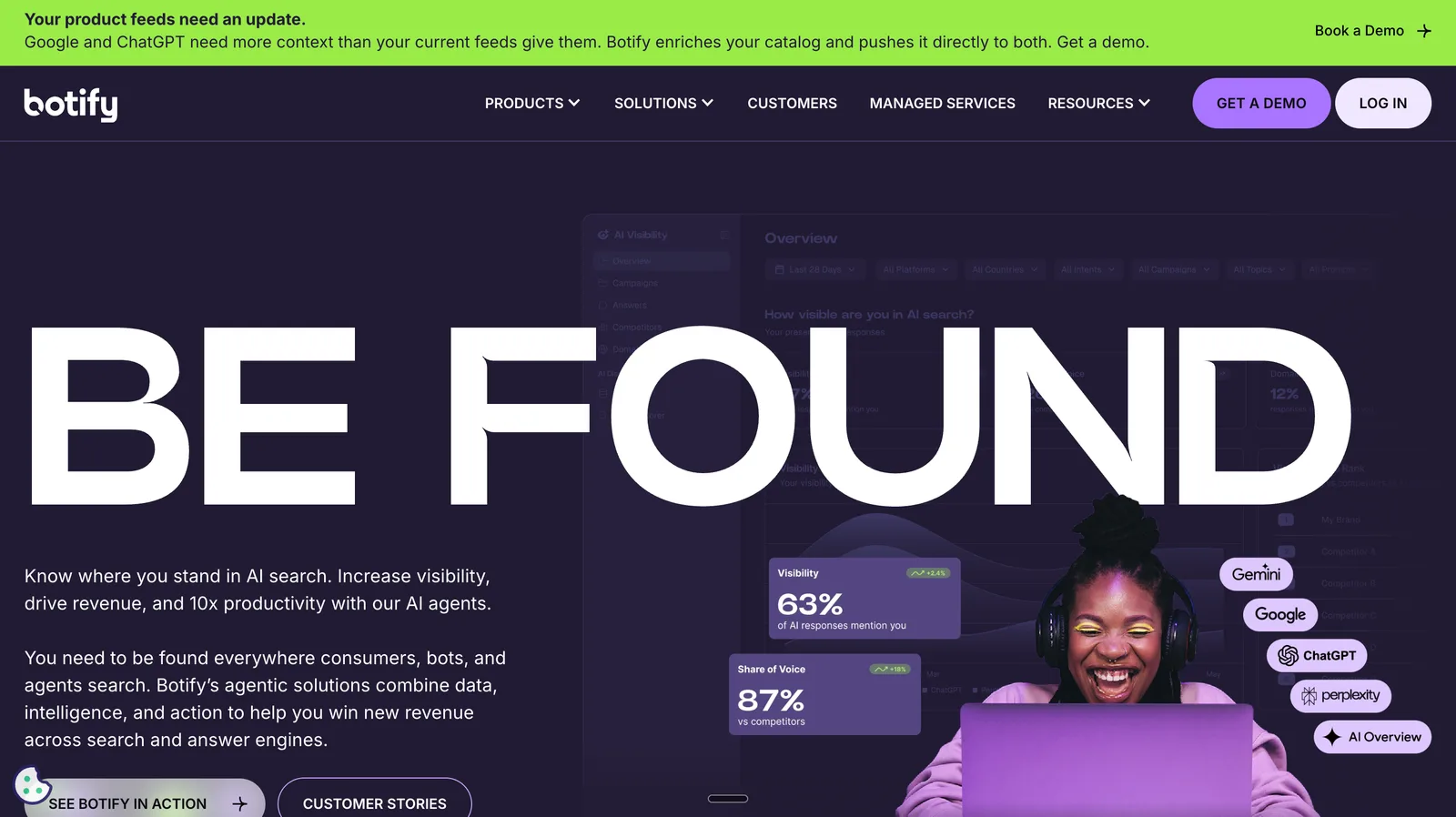
Best for: Large enterprise websites, ecommerce platforms, publishers, and technical SEO teams.
Botify has long been recognized as a technical SEO platform, and its strengths naturally extend into LLM SEO. By improving crawlability, indexability, internal linking, and website architecture, Botify helps ensure AI systems can efficiently access and interpret website content.
Why it stands out- Enterprise crawl analysis
- Technical SEO automation
- Internal linking optimization
- Website architecture insights
- Large-scale website management
- Limited content optimization features
- Requires technical SEO expertise
- Enterprise pricing
Pricing: Custom pricing.
VerdictBotify is ideal for organizations where technical website quality is a priority and large, complex websites require continuous optimization.
4. Yext: Best Entity Management Platform
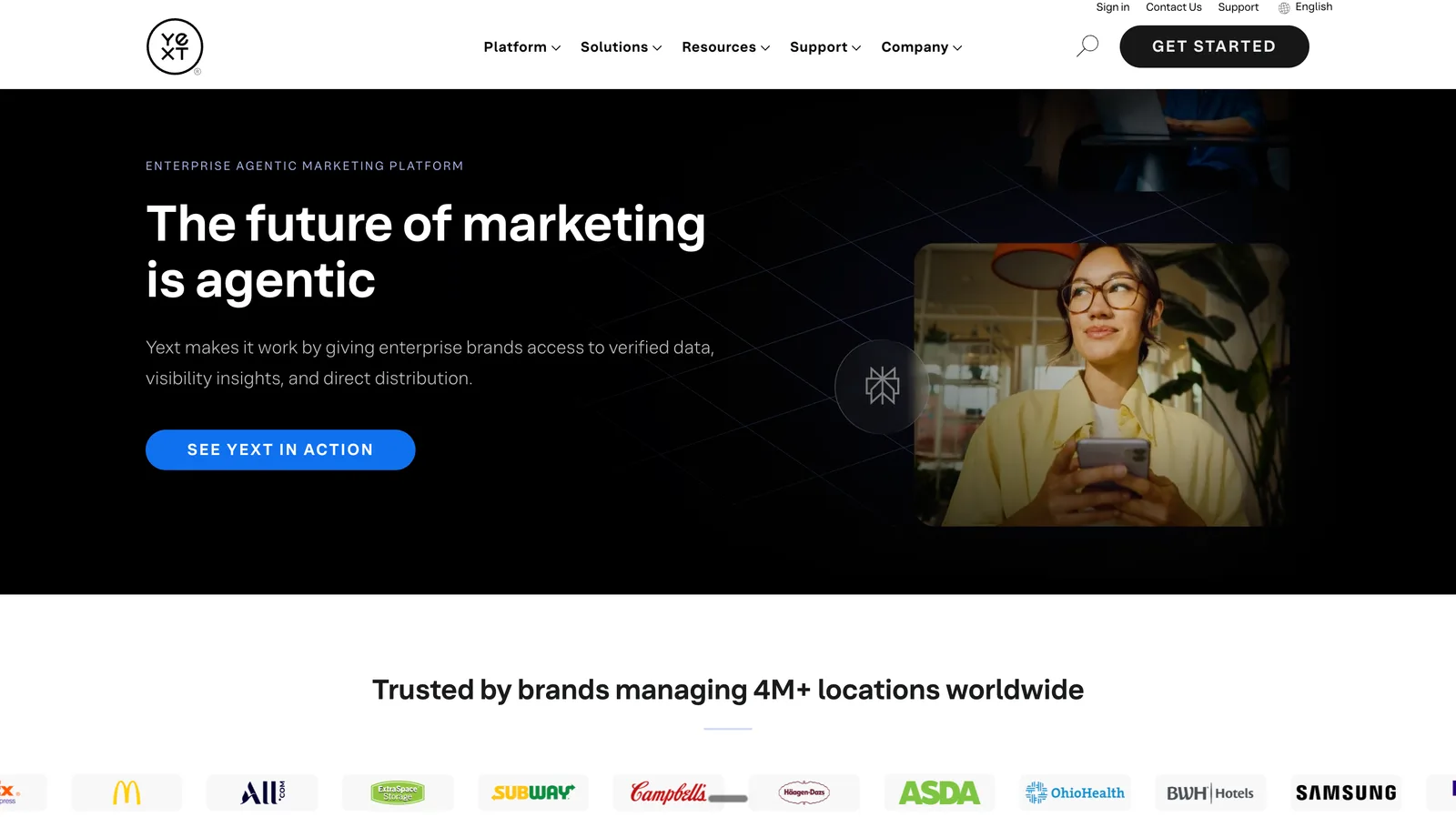
Best for: Multi-location businesses, franchises, healthcare providers, financial services, and enterprise brands.
LLM SEO depends heavily on entity understanding, and Yext specializes in exactly that. It helps businesses maintain accurate and consistent information across websites, directories, maps, and knowledge sources, strengthening the signals AI systems rely on to identify and understand brands.
Why it stands out- Knowledge Graph platform
- Entity management
- Multi-location consistency
- Business profile synchronization
- Brand knowledge management
- Not designed for content optimization
- Less suitable for small businesses
- Enterprise-oriented pricing
Pricing: Custom pricing.
VerdictFor organizations managing multiple locations or complex business data, Yext is one of the strongest platforms for improving entity consistency across the web.
5. BrightEdge AI Catalyst: Best Enterprise AI SEO Suite
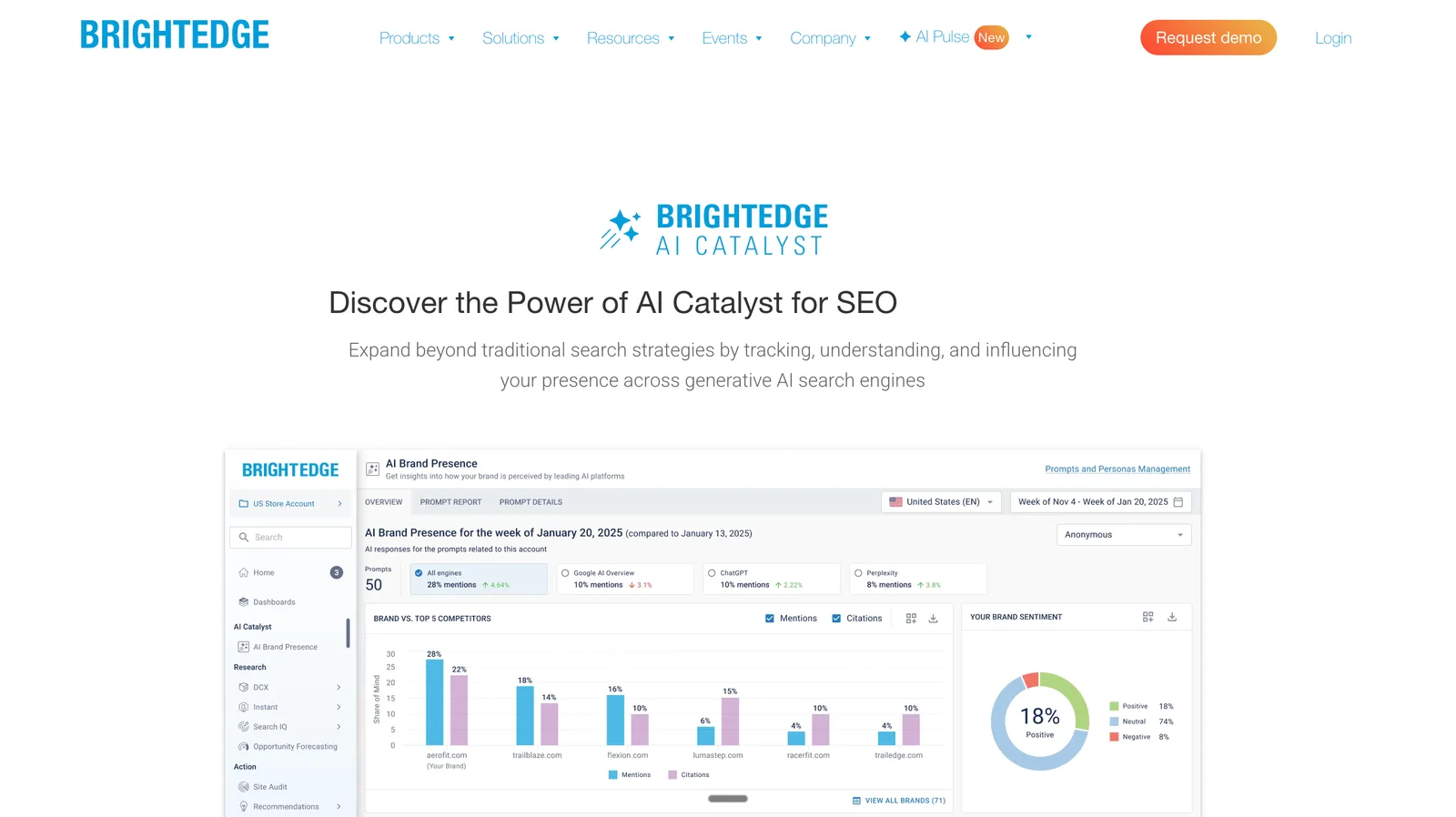
Best for: Large enterprises, global SEO teams, and enterprise content marketers.
BrightEdge AI Catalyst expands traditional enterprise SEO with AI search insights, helping organizations understand emerging AI search trends while improving large-scale content strategies.
Why it stands out- Enterprise AI search insights
- Large-scale content optimization
- SEO forecasting
- AI search reporting
- Executive dashboards
- Enterprise pricing
- Less suitable for small businesses
Pricing: Custom pricing.
VerdictA strong option for enterprises already investing heavily in SEO and looking to incorporate AI search into existing workflows.
6. AirOps: Best AI Content Operations Platform
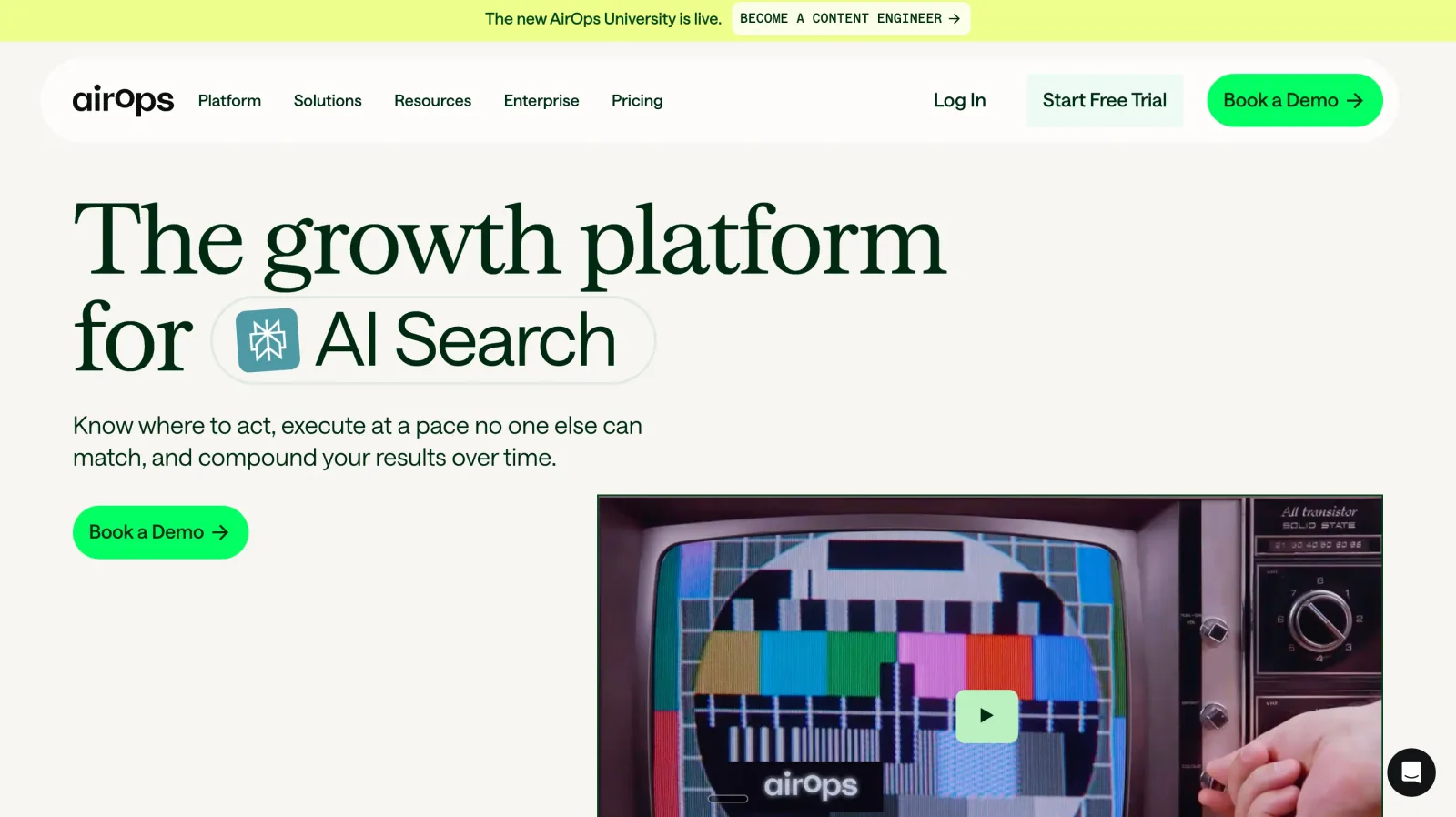
Best for: Editorial teams, agencies, publishers, and content marketing departments.
AirOps helps teams build scalable AI-powered editorial workflows. Instead of focusing on rankings, it streamlines planning, drafting, reviewing, and publishing content designed for both traditional search engines and AI-powered search experiences.
Why it stands out- Workflow automation
- AI-assisted publishing
- Content pipelines
- Team collaboration
- Prompt libraries
- Not a technical SEO platform
- Requires content strategy
Pricing: Free plan available. Paid plans start around $199/month.
VerdictAn excellent platform for organizations producing content at scale.
7. Frase: Best AI Content Optimization Tool
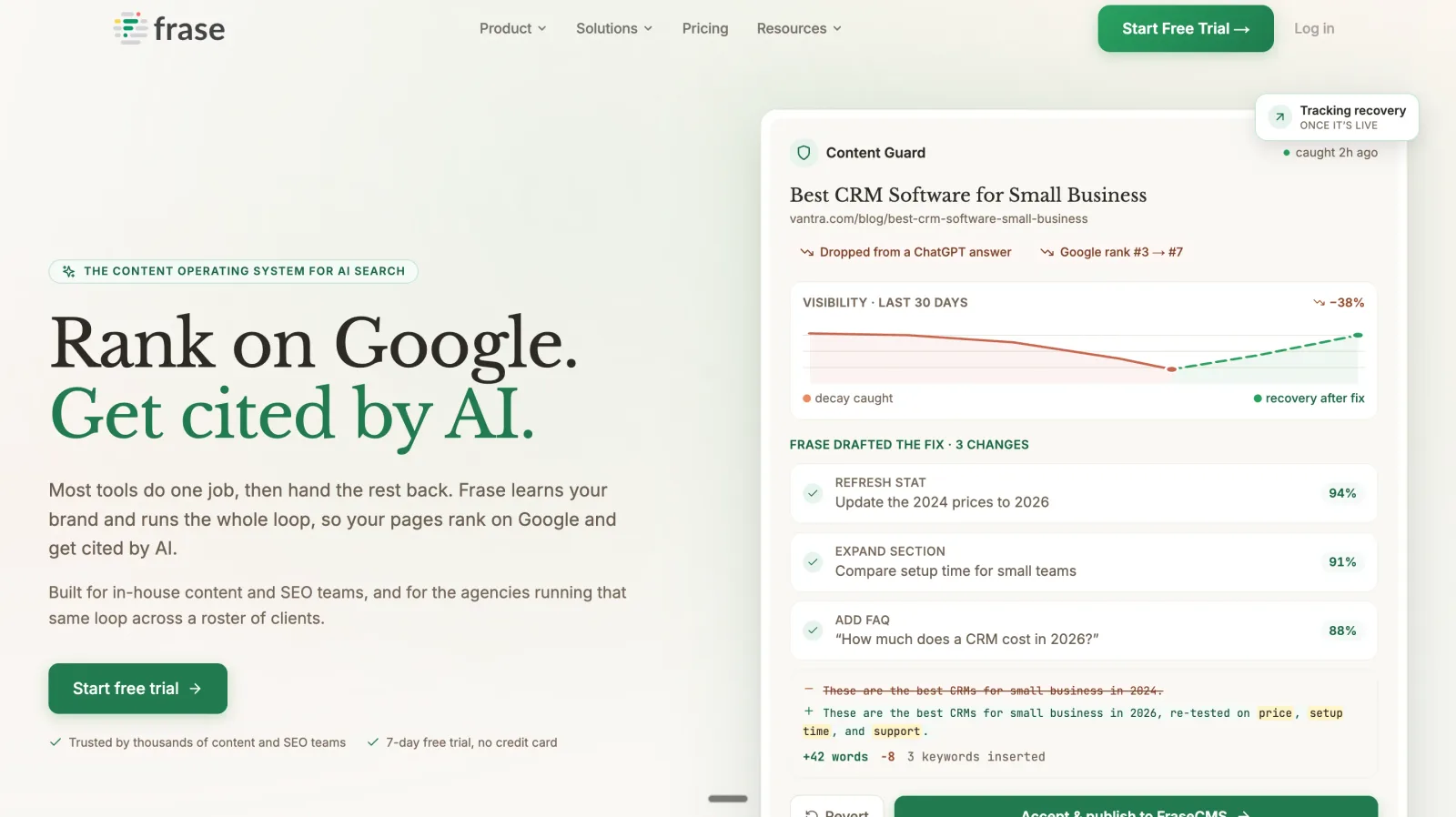
Best for: Bloggers, niche websites, content writers, and SEO professionals.
Frase focuses on helping writers produce comprehensive, search-intent-driven content through AI-assisted research, semantic optimization, and content briefs.
Why it stands out- AI content briefs
- Semantic optimization
- Search intent analysis
- SERP research
- AI-assisted writing
- Limited technical SEO capabilities
- No enterprise monitoring
Pricing: From $39/month billed yearly, or $49 month to month (Starter, October 2026).
VerdictA strong content optimization platform for publishers and marketers looking to improve topical depth.
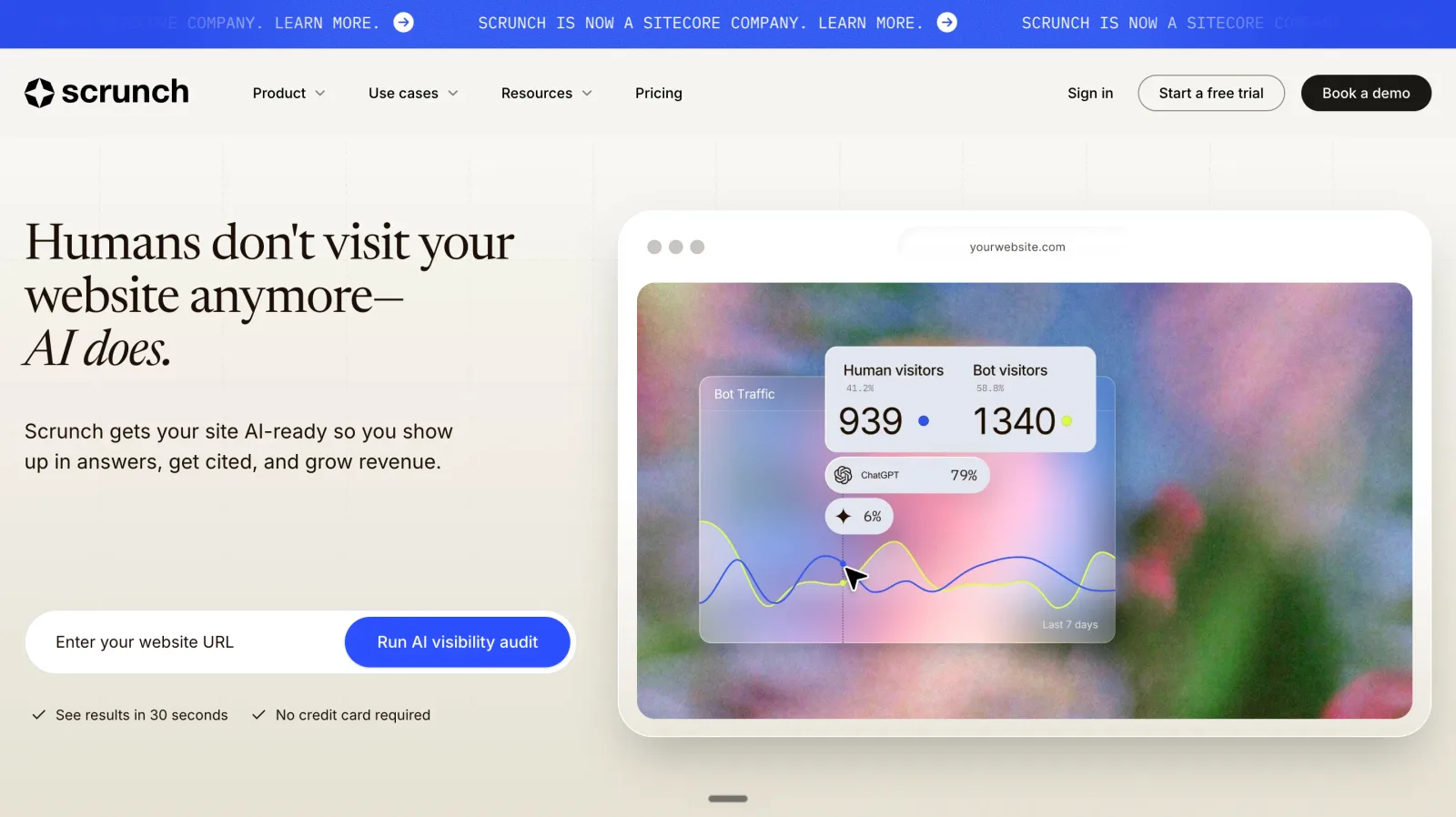
8. Scrunch AI: Best AI Search Intelligence Platform
Best for: Enterprise marketing teams, SaaS companies, and large brands.
Scrunch AI provides organizations with insights into how brands appear across AI-powered search, helping teams analyze competitors, identify opportunities, and understand emerging AI search trends.
Why it stands out- Enterprise AI insights
- Competitive analysis
- AI search reporting
- Brand intelligence
- Monitoring-focused
- Limited implementation capabilities
Pricing: Custom pricing.
VerdictBest suited to organizations seeking strategic intelligence rather than implementation.
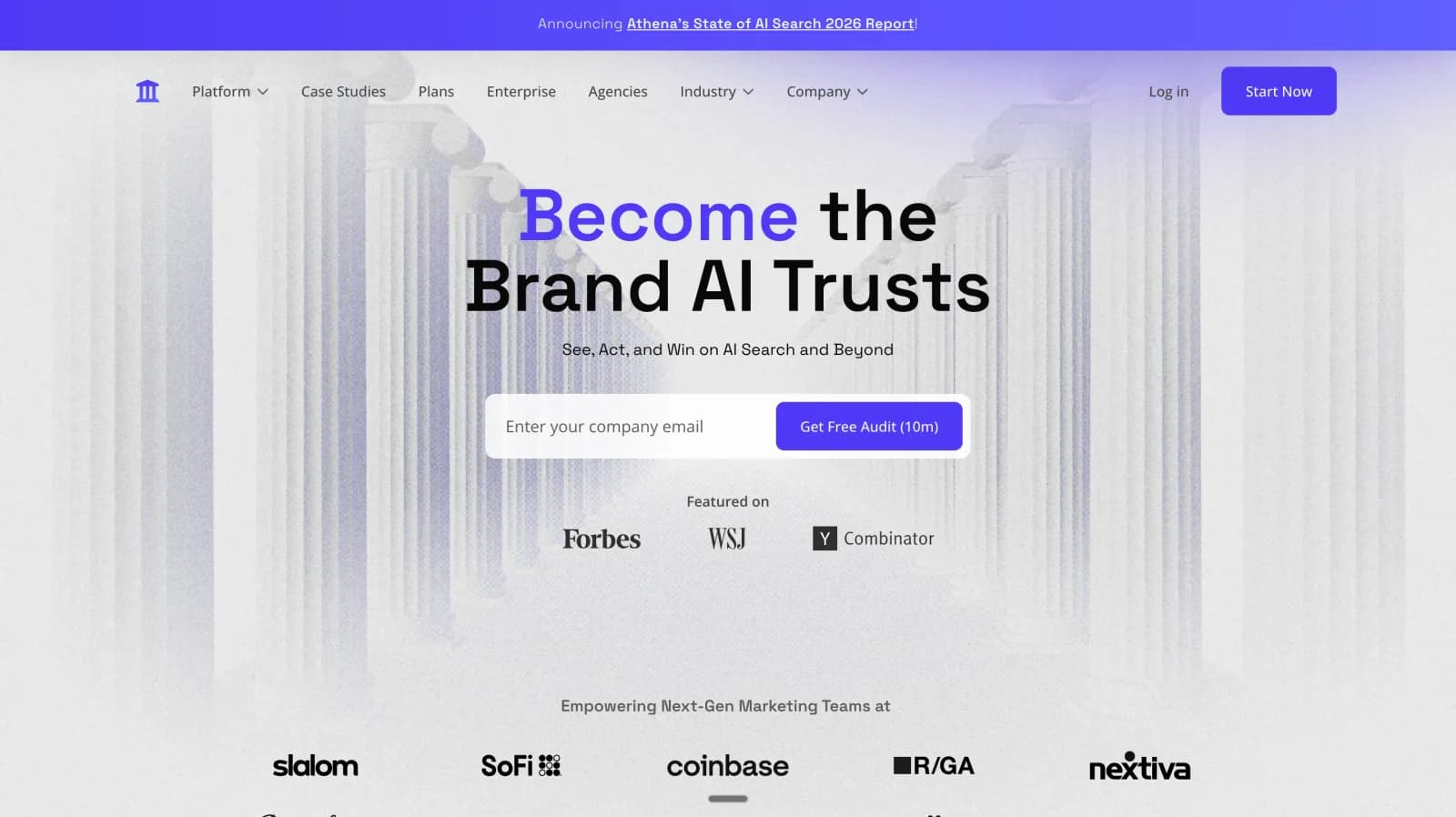
9. AthenaHQ: Best Hybrid GEO Platform
Best for: Growing businesses, agencies, and brands investing in Generative Engine Optimization.
AthenaHQ combines AI search insights with optimization workflows, giving organizations a balanced platform for improving content and monitoring GEO initiatives.
Why it stands out- GEO optimization workflows
- AI content recommendations
- Strategic planning
- Workflow management
- Less technical than enterprise SEO platforms
- Premium pricing
Pricing: Starting around $295/month.
VerdictA good fit for brands adopting GEO as part of a broader AI search strategy.
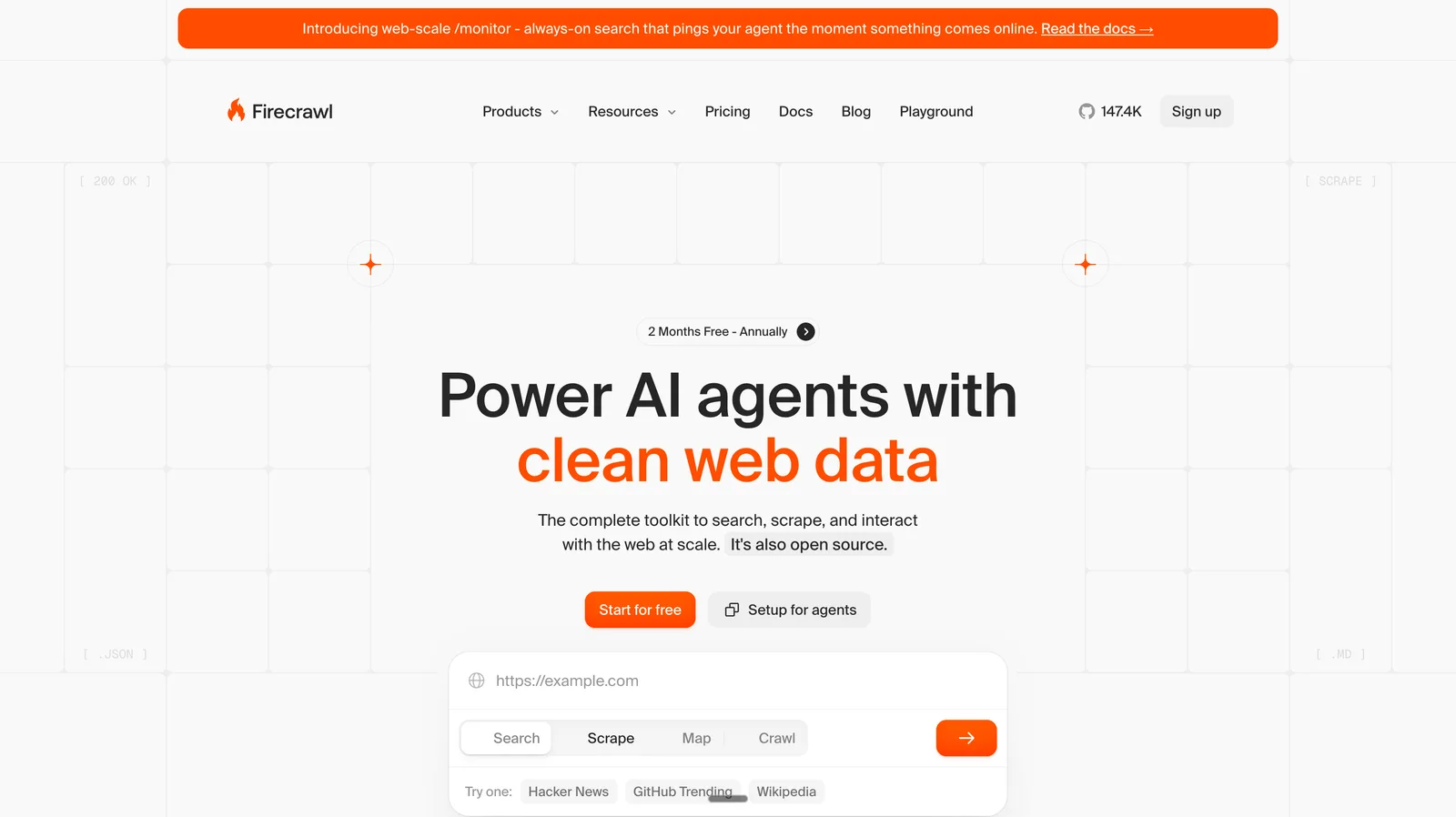
10. Firecrawl: Best LLM Crawling Infrastructure
Best for: Developers, AI startups, SaaS companies, and engineering teams building AI-powered applications.
Firecrawl isn't a traditional SEO platform, which is precisely why it deserves a place on this list. It enables developers to transform websites into structured, AI-ready data that can be consumed by LLMs, retrieval systems, and AI agents. As more organizations build AI-native products, developer infrastructure like Firecrawl is becoming an important part of the LLM SEO ecosystem.
Why it stands out- AI-ready web crawling
- Structured content extraction
- API-first architecture
- LLM integration
- High-performance data pipelines
- Built for developers rather than marketers
- Requires technical implementation
- Doesn't provide marketing analytics
Pricing: Free tier available. Paid plans start around $19/month.
VerdictIf you're building AI products or preparing content for retrieval-augmented generation (RAG) systems, Firecrawl provides one of the most flexible infrastructure solutions available.
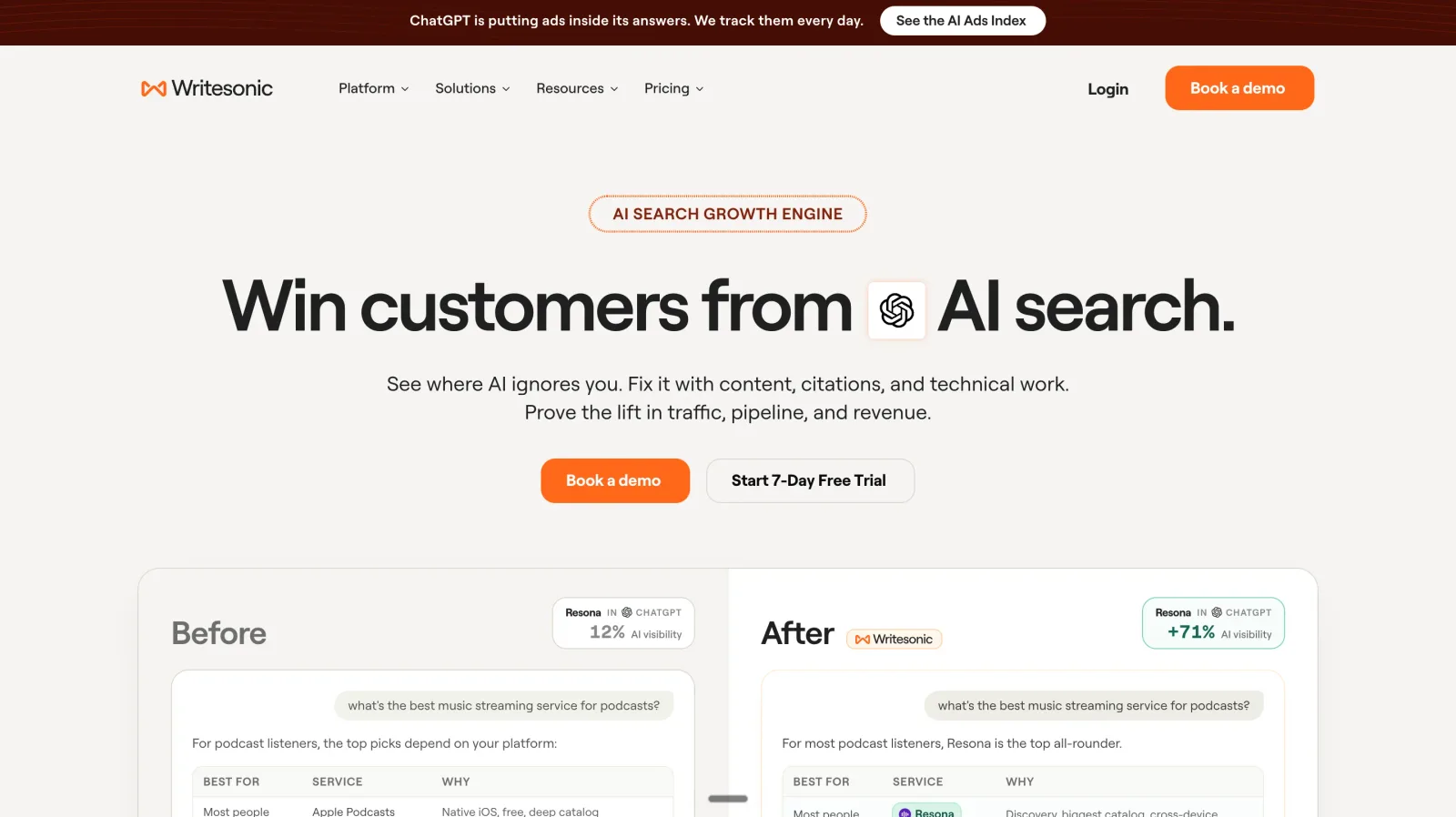
11. Writesonic: Best AI Writing Platform for LLM SEO
Best for: Marketing teams, startups, agencies, and content creators.
Writesonic combines AI writing, content generation, SEO assistance, and publishing workflows into a single platform. While it doesn't replace a dedicated LLM SEO implementation tool, it helps teams produce optimized content more efficiently.
Why it stands out- AI-assisted writing
- Blog generation
- SEO optimization
- Marketing workflows
- Multi-channel publishing
- Primarily a content creation platform
- Limited technical optimization features
Pricing: Plans start around $49/month.
VerdictWritesonic is best suited to teams looking to accelerate content production while supporting broader LLM SEO and content marketing initiatives.
Best LLM SEO Tools by Use Case
Choosing the right LLM SEO tool depends less on company size and more on the problem you're trying to solve. Some platforms automate implementation, while others specialize in technical SEO, content operations, or enterprise monitoring.
| Business Type | Recommended Tool | Why It's the Best Fit |
|---|---|---|
| WordPress-based businesses | LovedByAI | Automates LLM SEO implementation with minimal setup |
| Web development agencies | LovedByAI | Manage and optimize multiple client websites efficiently |
| SaaS companies | Scrunch AI | Monitor AI search performance and competitive positioning |
| Multi-location businesses | Yext | Maintain consistent business information across locations |
| Enterprise organizations | BrightEdge AI Catalyst | Enterprise-scale AI search and SEO strategy |
| Large technical websites | Botify | Improve crawlability and technical website health |
| Content teams | AirOps | Streamline AI-assisted editorial workflows |
| Publishers and bloggers | Frase | Produce comprehensive, search-focused content |
| Marketing teams | Writesonic | Accelerate AI-assisted content creation |
| Developers | Firecrawl | Build AI-ready data pipelines and retrieval workflows |
| Global brands | Profound | Monitor AI search performance across brands and markets |
How to Improve LLM SEO
LLM SEO isn't a one-time project. It's an ongoing process of making your business easier for AI systems to understand, trust, and reference. Focus on these areas first:
- Strengthen your entity by keeping your business information consistent across your website, directories, and social profiles.
- Publish original research, case studies, or proprietary insights that other websites and AI systems can reference.
- Answer real customer questions with comprehensive, well-structured content instead of publishing generic articles.
- Use structured data to provide machine-readable information about your business, products, services, and authors.
- Build topical authority by creating clusters of related content rather than isolated blog posts.
- Earn mentions from reputable websites through PR, partnerships, guest contributions, and industry publications.
- Improve internal linking so related pages reinforce each other's context and authority.
- Keep important pages updated as your products, services, pricing, and industry evolve.
- Track referral traffic from AI platforms to understand which content attracts AI-driven visitors.
- Measure, refine, and repeat. LLM SEO is iterative, and consistent improvements generally outperform one-time optimizations.
Common LLM SEO Mistakes
Many businesses approach LLM SEO using tactics that worked for traditional search but don't translate well to AI-driven discovery. Avoid these common mistakes:
- Treating LLM SEO as keyword optimization instead of brand optimization.
- Publishing generic AI-generated content with little original value.
- Building dozens of disconnected articles instead of topical clusters.
- Neglecting brand consistency across websites, directories, and social platforms.
- Ignoring technical issues that make content harder to access or interpret.
- Failing to earn third-party mentions that reinforce credibility.
- Measuring only search rankings instead of AI-driven traffic and business outcomes.
- Waiting until competitors establish authority across AI search before investing in LLM SEO.
The Future of LLM SEO
AI search is evolving from answering questions to completing tasks. Over the next few years, businesses should expect greater emphasis on:
- Agentic AI that researches and acts on behalf of users.
- AI browsers that summarize websites before users visit them.
- AI-assisted shopping that compares products and recommends purchases.
- Multi-model search, where users switch seamlessly between ChatGPT, Gemini, Claude, and other assistants.
- Autonomous buying agents that evaluate vendors and complete transactions.
- Personal AI assistants that tailor recommendations based on individual preferences and context.
As these experiences become more common, businesses that are well understood by AI systems will have a significant advantage.
Choosing the Right LLM SEO Tool
There isn't a single best LLM SEO tool for every business. The right choice depends on the role you need it to play.
- Choose an implementation platform if your priority is improving your website for AI search.
- Choose an enterprise monitoring platform if you need to measure brand performance across AI platforms.
- Choose a technical SEO platform if you manage large or complex websites.
- Choose an entity management platform if maintaining accurate business information across multiple locations is critical.
- Choose a content optimization platform if your strategy depends on publishing authoritative content at scale.
- Choose developer infrastructure if you're building AI-powered products or retrieval systems.
For WordPress-based businesses and web development agencies, LovedByAI stands out by focusing on implementation rather than reporting. Instead of simply showing how your business performs in AI search, it automates many of the technical and content improvements associated with LLM SEO, making it easier for large language models to understand and recommend your website over time.
Related: Best GEO Tools