
Not long ago, showing up on the first page of Google was enough to attract a steady stream of customers. Today, that's no longer the whole picture.
Millions of people now ask ChatGPT, Gemini, Claude, Perplexity, and Google AI Overviews for recommendations before they ever click on a search result. Instead of browsing ten blue links, they ask questions like "What's the best CRM for startups?", "Which accounting software should I use?", or "Who's the best personal injury lawyer near me?" and trust the answers they receive.
That shift is happening fast. Gartner predicts that traditional search volume could decline by 25% by 2026 as users increasingly turn to AI-powered search experiences. At the same time, Adobe reported a 1,200% increase in traffic from generative AI sources to U.S. retail websites, showing that AI has already become a meaningful discovery channel rather than an emerging trend. OpenAI also reports that ChatGPT now serves hundreds of millions of weekly active users, making it one of the fastest-growing ways people research products, services, and businesses.
This changes how brands compete online.
Ranking well on Google is still important, but it no longer guarantees that AI systems will mention, cite, or recommend your business. To earn visibility across modern AI search experiences, businesses need to optimize not only for traditional search engines but also for the generative engines that are increasingly shaping buying decisions.
That's where Generative Engine Optimization (GEO) tools come in.
Some GEO platforms help you monitor how often AI platforms mention your brand. Others help you identify visibility gaps, benchmark competitors, optimize content, strengthen entity signals, automate technical improvements, and increase your chances of being recommended across ChatGPT, Gemini, Claude, Perplexity, Google AI Overviews, and other AI search engines.
To help you find the right solution, I spent time evaluating the leading Generative Engine Optimization tools based on their optimization capabilities, AI search coverage, automation, reporting, ease of use, pricing, and overall value. Whether you're running a WordPress website, managing SEO for multiple clients, growing a SaaS company, or leading an enterprise marketing team, this guide will help you choose the GEO platform that best fits your goals.
TL;DR: Best Generative Engine Optimization (GEO) Tools
Not every GEO platform is built for the same audience. Some are designed for enterprise AI visibility and analytics, while others focus on helping businesses actually implement GEO improvements. If you're looking for the short answer, these are our top recommendations based on different business needs.
| Use Case | Best Tool |
|---|---|
| Best GEO Tool for SMBs | LovedByAI |
| Best Enterprise GEO Platform | Profound |
| Best GEO Analytics | Peec AI |
| Best AI Visibility Intelligence | Scrunch AI |
| Best GEO for Ecommerce | Yotpo Discover |
| Best GEO for Content Teams | AirOps |
| Best GEO for SEO Teams | Semrush AI Toolkit |
| Best Budget GEO Tool | Otterly AI |
Key Takeaway
Generative Engine Optimization is about more than tracking AI mentions. The best GEO platforms help businesses improve how AI systems discover, understand, cite, and recommend their brands across ChatGPT, Gemini, Claude, Perplexity, Google AI Overviews, and other AI-powered search experiences. The right tool depends on whether your priority is monitoring AI visibility, optimizing your website, automating GEO implementation, or combining both.
Quick List: Best Generative Engine Optimization Tools
If you want a quick overview before reading the detailed reviews, these are the GEO platforms that stood out based on AI search optimization capabilities, automation, AI visibility features, ease of use, pricing, and overall value.
- LovedByAI: Best for WordPress businesses looking to automate Generative Engine Optimization, improve AI search visibility, and track AI-driven traffic.
- Profound: Enterprise AI visibility platform with advanced prompt tracking, competitive intelligence, and share of voice reporting.
- Peec AI: Affordable AI visibility analytics platform with detailed GEO reporting and competitor benchmarking.
- Scrunch AI: Enterprise AI search intelligence platform built for large organizations managing AI visibility at scale.
- AthenaHQ: Combines AI visibility monitoring with actionable GEO recommendations and content optimization.
- Semrush AI Toolkit: A strong choice for existing Semrush users wanting AI search insights alongside traditional SEO.
- Similarweb AI Visibility: Excellent for competitive intelligence, AI traffic analysis, and market benchmarking.
- Otterly AI: Budget-friendly platform for monitoring AI mentions across major answer engines.
- AirOps: Ideal for content teams building AI-ready content and scaling Generative Engine Optimization workflows.
- Frase: Content optimization platform that helps create AI-friendly, well-structured content for modern search experiences.
- Writesonic: AI content creation platform with growing Generative Engine Optimization and AI search optimization capabilities.
Every platform on this list approaches Generative Engine Optimization differently. Some specialize in AI visibility monitoring, others focus on content optimization, while a few help businesses automate technical GEO improvements. Choosing the right platform depends on your business goals, technical requirements, and where you are in your AI search optimization journey. If your main priority is measurement rather than implementation, our companion guide to the best AI search visibility tools goes deeper on monitoring-first platforms.
What Is Generative Engine Optimization (GEO)?
For years, search optimization followed a simple formula. You identified a keyword, optimized a page, ranked on Google, and earned clicks from the search results.
That model still works, but it's no longer the only way people discover businesses.
Today, millions of users skip the traditional search results altogether and ask AI-powered search engines questions directly. Instead of comparing ten blue links, they expect a single, personalized answer.
For example, someone using Google Search might type "best accounting software." They'll receive a list of webpages, ads, and review sites, then decide which result to visit.
Now compare that to someone using ChatGPT or Gemini. They are more likely to ask, "What's the best accounting software for a small business with fewer than 20 employees?" Instead of returning links, the AI generates an answer, recommends specific products, explains why they fit the user's needs, and often cites only a handful of sources.
That's a completely different search experience, and it requires a different optimization strategy.
Traditional SEO focuses on helping your pages rank higher in search engines. Generative Engine Optimization (GEO) focuses on increasing the likelihood that AI-powered search engines can understand, trust, retrieve, cite, and recommend your business when users ask relevant questions.
The Evolution of Search
Traditional SEO follows a relatively straightforward journey:
Keyword → Google Rankings → Website ClicksGenerative search introduces another layer:
Question → AI Retrieval → AI Understanding → Brand Recommendation → Website VisitIn other words, your business is no longer competing only for rankings. It's competing to become part of the answer.
Why Generative Engine Optimization (GEO) Matters
Imagine two businesses that rank on the first page of Google for the same keyword.
One has strong brand authority, well-structured content, consistent entity signals, accurate business information, and content that AI systems can easily understand. The other relies solely on traditional SEO.
When someone asks an AI assistant for a recommendation, the first business is far more likely to be mentioned, cited, or recommended, even if both websites have similar Google rankings.
That's exactly what Generative Engine Optimization aims to improve.
What Does Generative Engine Optimization (GEO) Actually Optimize?
A strong GEO strategy goes beyond keywords and backlinks. It focuses on making your business easier for AI systems to understand and trust by improving areas such as:
- Brand and entity authority
- AI-readable content structure
- Original, experience-driven content
- Structured data and semantic markup
- Internal linking and topical authority
- Third-party mentions and trusted citations
- Business profile consistency across the web
- AI visibility and referral traffic
Together, these signals help AI search engines retrieve the right information, understand your expertise, and increase the likelihood of recommending your business when it matters most.
The goal of Generative Engine Optimization isn't simply to rank higher. It's to become the brand AI search engines confidently recommend when users ask the questions that lead to your products or services.
SEO vs GEO vs AI Visibility vs AEO: What's the Difference?
As AI-powered search continues to grow, you'll frequently hear terms like SEO, AEO, GEO, and AI Visibility used interchangeably. While they're closely related, they solve different problems and work best when used together.
The easiest way to think about them is this:
- SEO helps people find your website.
- AEO helps your content become the answer.
- GEO helps AI systems understand, trust, and recommend your business.
- AI Visibility measures whether those efforts are actually working.
| Category | SEO | AEO | GEO | AI Visibility |
|---|---|---|---|---|
| Full Form | Search Engine Optimization | Answer Engine Optimization | Generative Engine Optimization | AI Search Visibility |
| Primary Goal | Rank higher in traditional search engines | Become the direct answer to user questions | Increase the likelihood of being retrieved, understood, cited, and recommended by AI search engines | Measure and benchmark your brand's presence across AI search platforms |
| Optimizes For | Google, Bing, Yahoo, DuckDuckGo, Yandex | Featured Snippets, People Also Ask, voice search, AI answers | ChatGPT, Gemini, Claude, Perplexity, Google AI Overviews, SearchGPT, Copilot, Meta AI | ChatGPT, Gemini, Claude, Perplexity, Google AI Overviews, SearchGPT and other AI platforms |
| Focus Areas | Keywords, backlinks, technical SEO, content quality, Core Web Vitals | Question-and-answer content, structured content, concise explanations | Entity optimization, AI-readable content, structured data, topical authority, brand trust, citations, content architecture | AI mentions, citations, recommendation frequency, share of voice, competitor tracking, AI referral traffic |
| Success Metrics | Rankings, organic traffic, CTR, conversions | Featured snippets, answer box visibility, zero-click performance | AI recommendations, AI citations, AI mentions, AI referral traffic, entity authority | AI share of voice, citation rate, recommendation rate, AI brand presence, competitor visibility |
| Typical Tools | Semrush, Ahrefs, Moz, SE Ranking | Frase, Clearscope, Schema tools | LovedByAI, AirOps, Frase, Writesonic | Profound, Peec AI, Scrunch AI, Similarweb |
| Key Question It Answers | How do I rank higher on Google? | Can my content become the answer? | Will AI search engines recommend my business? | How often do AI platforms mention my brand? |
| Primary Outcome | More organic traffic | More answer visibility | More AI recommendations and AI-driven traffic | Better measurement and competitive insights |
Which Strategy Should You Prioritize?
The answer depends on your business goals.
| If your goal is... | Focus on... |
|---|---|
| Increase Google rankings | SEO |
| Win featured snippets and direct answers | AEO |
| Get recommended by ChatGPT, Gemini, Claude, and Perplexity | GEO |
| Measure AI mentions, citations, and share of voice | AI Visibility |
| Build a long-term AI search strategy | SEO + GEO + AI Visibility |
How They Work Together
Rather than replacing one another, these strategies build on each other.
SEO creates a strong technical and content foundation. AEO increases your chances of becoming the direct answer to specific questions. GEO helps AI systems understand your business, trust your expertise, and recommend you when users ask relevant questions. Finally, AI Visibility measures the outcome by tracking AI mentions, citations, recommendations, competitor performance, and AI-driven traffic.
The Biggest Misconception
One of the biggest misconceptions is that GEO replaces SEO.
It doesn't.
Without strong SEO, your content may never be discovered or indexed effectively. Without GEO, your business may struggle to become a trusted recommendation inside AI-generated answers. Without AI visibility tools, you'll have no reliable way to measure whether your optimization efforts are producing results.
The businesses seeing the strongest growth today aren't choosing between SEO, AEO, GEO, and AI Visibility. They're using all four together to build a stronger presence across both traditional search engines and modern AI-powered search experiences.
Why Generative Engine Optimization Matters in 2026
Generative search has fundamentally changed how businesses earn visibility online. Instead of presenting users with a list of webpages, AI search engines generate answers by retrieving, evaluating, and synthesizing information from multiple sources before recommending products, services, and brands.
This shift creates a new challenge for businesses. Ranking well in Google is no longer enough. Your content also needs to be understandable, trustworthy, and easy for AI systems to retrieve and cite.
Related: How to Show Up in AI SearchBusinesses investing in GEO today are seeing several advantages:
- Higher visibility across ChatGPT, Gemini, Claude, Perplexity, and Google AI Overviews.
- Increased AI-generated referrals and qualified traffic.
- More opportunities to be cited as a trusted source.
- Stronger brand recognition inside AI-generated recommendations.
- Better alignment with the future of search as AI assistants become a primary discovery channel.
While AI visibility tools help measure these outcomes, GEO platforms help businesses improve them through better content structure, stronger entity signals, technical optimization, and AI-friendly website architecture.
Why Businesses Are Investing in GEO
| Trend | Why It Matters |
|---|---|
| AI assistants are becoming a primary discovery channel | More buying journeys now begin with ChatGPT, Gemini, Claude, and Perplexity. |
| AI-generated answers influence purchasing decisions | Users increasingly trust recommendations instead of browsing dozens of websites. |
| AI referral traffic continues to grow | Businesses are seeing measurable traffic from AI platforms alongside traditional search. |
| Strong entity signals matter more than ever | AI systems favor businesses with clear authority, expertise, and consistent information. |
| GEO complements traditional SEO | Businesses combining SEO and GEO are better positioned for both search engines and AI-powered search. |
Internal customer data: LovedByAI reports that customers implementing its GEO recommendations have seen meaningful increases in AI-driven traffic and brand mentions, with many observing initial improvements within the first few weeks of implementation. Individual results vary depending on industry, competition, and website quality.
How Generative AI Chooses Which Brands to Recommend
One of the biggest misconceptions about AI search is that it's simply "Google with a chatbot."
It isn't.
When someone asks ChatGPT, Gemini, Claude, Perplexity, or another AI assistant for a recommendation, the model doesn't just look for the webpage with the highest keyword density. Instead, it evaluates multiple signals to determine which brands appear trustworthy, relevant, and helpful for that specific question.
While every AI model works differently, most generative search systems rely on a combination of the following factors.
1. Information Retrieval
Before an AI model can recommend a brand, it first needs to find information about it. Many modern AI search engines use retrieval techniques that pull information from search indexes, trusted websites, knowledge bases, and other public sources before generating an answer.
If your website is difficult to crawl, poorly organized, or lacks clear information, AI systems may struggle to retrieve it in the first place.
Questions to ask yourself:
- Can AI easily understand what my business does?
- Is important information easy to find?
- Is my content organized logically?
2. Entity Understanding
AI doesn't just read webpages. It tries to understand entities. An entity can be your company, product, founder, location, service, or even a specific topic your business is known for.
The stronger your entity relationships become across the web, the easier it is for AI systems to recognize your expertise. For example, if your accounting firm is consistently associated with terms like small business accounting, tax planning, and CPA services, AI models are more likely to connect your brand with those topics.
Strong entity signals often include:
- Consistent business information
- Clear service pages
- Organization schema
- About pages
- Author profiles
- External references
3. Brand Authority
AI systems don't just evaluate pages. They evaluate brands. Businesses that consistently publish helpful content, demonstrate expertise, and earn recognition across the web are generally more likely to appear in AI-generated recommendations.
Authority is built over time through expert content, industry recognition, original research, experience, and consistency.
4. Trusted Citations
Many AI-generated answers include citations or rely on information from authoritative sources. If respected websites regularly reference your business, AI systems gain stronger confidence that your brand is credible.
These citations can come from industry publications, news websites, research reports, business directories, government resources, and educational institutions.
The goal isn't simply to collect backlinks. It's to become a trusted source that AI systems repeatedly encounter across the web.
5. Structured Data & Machine-Readable Information
AI models are remarkably good at understanding natural language, but structured information still helps them interpret websites more accurately. Schema markup, organization details, FAQs, product information, reviews, authorship, and other structured elements make your content easier to understand and connect.
Think of structured data as additional context rather than a ranking hack.
6. Reviews & Reputation Signals
When AI assistants recommend local businesses, products, software, or service providers, they often consider reputation signals. These may include customer reviews, overall ratings, review quality, review consistency, and third-party review platforms.
Strong reputation signals increase confidence that your business deserves a recommendation.
7. Brand Mentions Across the Web
AI systems learn from more than your own website. They also observe how other websites talk about your brand. Consistent mentions across industry publications, podcasts, blogs, communities, forums, and social platforms help reinforce your expertise.
Not every mention needs to include a backlink. Simply being discussed by credible sources can strengthen your overall brand presence.
8. Content Freshness
AI search increasingly favors information that reflects the current state of a topic. Regularly updating important pages, refreshing outdated information, publishing new insights, and maintaining accurate business details all help AI systems trust your content.
Freshness is especially important in rapidly changing industries such as technology, finance, healthcare, and marketing.
9. Topical Expertise
Publishing dozens of unrelated articles rarely builds authority. AI systems are becoming much better at recognizing topical depth. Instead of asking "How many articles do they have?" they're increasingly asking "Are they genuinely an authority on this subject?"
Businesses that comprehensively cover a niche often outperform websites producing shallow content across hundreds of unrelated topics. Building topical authority means creating interconnected content that answers questions at every stage of the customer journey.
10. User Value
Above everything else, AI systems are designed to help users. Their goal is to recommend the answer that best solves a person's problem, not necessarily the website with the strongest SEO.
That means businesses that consistently publish original research, practical advice, real-world experience, and genuinely helpful resources are more likely to earn recommendations over time.
Bringing It All Together
The strongest brands don't optimize just one of these signals. They improve all of them together, because each signal compounds the next.
Key Takeaway
There isn't a single "GEO ranking factor" that guarantees your business will appear in ChatGPT, Gemini, Claude, or Google AI Overviews. Instead, AI search engines evaluate a combination of content quality, entity understanding, technical clarity, trust signals, citations, brand authority, reputation, and topical expertise before deciding which brands to recommend.
That's exactly why Generative Engine Optimization covers so much ground. It isn't about gaming AI systems. It's about making your business easier for AI to understand, trust, and confidently recommend.
What Makes a Great Generative Engine Optimization Tool?
Not all GEO tools are built for the same purpose. Some focus exclusively on AI visibility monitoring, while others help businesses actively improve how AI search engines understand, retrieve, and recommend their content.
To evaluate the platforms in this guide, I focused on the capabilities that have the biggest impact on real-world Generative Engine Optimization rather than generic software features.
Our Evaluation Criteria
| Evaluation Criteria | Why It Matters |
|---|---|
| AI Search Coverage | The best GEO tools should support multiple AI search engines, including ChatGPT, Gemini, Claude, Perplexity, Google AI Overviews, SearchGPT, and emerging answer engines. |
| GEO Automation | Manual GEO implementation can be time-consuming. Tools that automate schema generation, AI formatting, FAQs, technical optimization, and other repetitive tasks provide significantly more value. |
| AI Readability | AI systems need to understand your content before they can recommend it. We evaluated whether each platform helps improve content structure, clarity, semantic organization, and machine readability. |
| Structured Data & Schema | Schema markup helps search engines and AI systems better understand entities, products, services, organizations, authors, FAQs, reviews, and other important website information. |
| Entity Optimization | Strong GEO platforms help businesses strengthen entity relationships, improve brand understanding, and build topical authority across AI search engines. |
| AI Visibility Tracking | While GEO focuses on optimization, measurement still matters. We looked at whether platforms track AI mentions, citations, recommendations, and overall AI visibility. |
| AI Traffic Analytics | Understanding how much traffic comes from ChatGPT, Gemini, Claude, Perplexity, and other AI platforms helps businesses measure the ROI of their GEO efforts. |
| Content Optimization | The strongest platforms help businesses create AI-friendly content through content recommendations, AI formatting, topical coverage, internal linking, and content enhancement features. |
| Ease of Implementation | GEO shouldn't require months of setup. We favored platforms that offer intuitive onboarding, automation, and minimal technical complexity. |
| WordPress Support | Since WordPress powers a large percentage of websites, native integrations, plugins, and CMS compatibility were important evaluation factors. |
| Agency Features | Multi-site management, client reporting, white-label capabilities, and team collaboration are essential for agencies managing multiple businesses. |
| Pricing & Overall Value | Rather than focusing solely on price, we evaluated whether each platform delivers meaningful GEO capabilities relative to its cost and intended audience. |
What We Prioritized
Unlike traditional SEO software comparisons, this review wasn't based on who has the biggest keyword database or the most reports. Instead, I prioritized platforms that help businesses answer questions like:
- Can this tool improve my chances of being recommended by ChatGPT or Gemini?
- Does it automate technical GEO tasks or simply tell me what to fix?
- Can I measure AI-generated traffic and brand visibility?
- Does it help build stronger entity signals and AI-readable content?
- Is it practical for my business size, budget, and technical expertise?
Some platforms excel at AI visibility monitoring, while others focus on GEO implementation and optimization. Both approaches are valuable, but they solve different problems. Throughout this guide, I'll highlight where each tool stands so you can choose the one that best matches your goals.
Best Generative Engine Tools Comparison Table
Here's how the platforms compare at a glance. "GEO Optimization" combines structured data and schema, entity optimization, AI content optimization, and AI-readable content into a single rating. The full breakdown for each tool is in the reviews below, and the best tool by business type is covered further down.
| Tool | GEO Automation | AI Visibility | GEO Optimization | Implementation | Price | Best For |
|---|---|---|---|---|---|---|
| LovedByAI | ✅ Extensive | ✅ | ✅ Full | ✅ Extensive | Free / $29 / $59 mo | SMBs, agencies, local & service businesses, bloggers |
| Profound | Limited | ✅ Advanced | Limited | ❌ Monitoring only | From $99/mo | Enterprise AI visibility, agencies, competitive intel |
| Peec AI | ❌ | ✅ Advanced | Limited | ❌ Monitoring only | From $95/mo | AI visibility analytics, share of voice |
| Scrunch AI | Limited | ✅ Advanced | Limited | ❌ Monitoring only | From $250/mo | Enterprise AI intelligence, global brands |
| AthenaHQ | Limited | ✅ | ✅ Content | Limited | From $295/mo | GEO workflows + AI content optimization |
| Semrush AI Toolkit | Limited | ✅ | Limited | Limited | From $99/mo | Existing Semrush users, SEO teams |
| Similarweb AI Visibility | ❌ | ✅ | ❌ | ❌ Monitoring only | From $99/mo | Competitive intelligence, market analysis |
| Otterly AI | Limited | ✅ | Limited | ❌ Monitoring only | From $29/mo | Startups, SMBs, agencies |
| AirOps | ✅ | Limited | ✅ Content | ✅ Content workflows | Free / ~$49/mo | Content operations + GEO workflows |
| Frase | Limited | ❌ | ✅ Content | ✅ Content optimization | From $39/mo | Bloggers, content marketers, SEO writers |
| Writesonic | Limited | Limited | ✅ Content | ✅ Content optimization | From $79/mo | AI content creation + AI search optimization |
The 11 Best Generative Engine Optimization Tools
1. LovedByAI
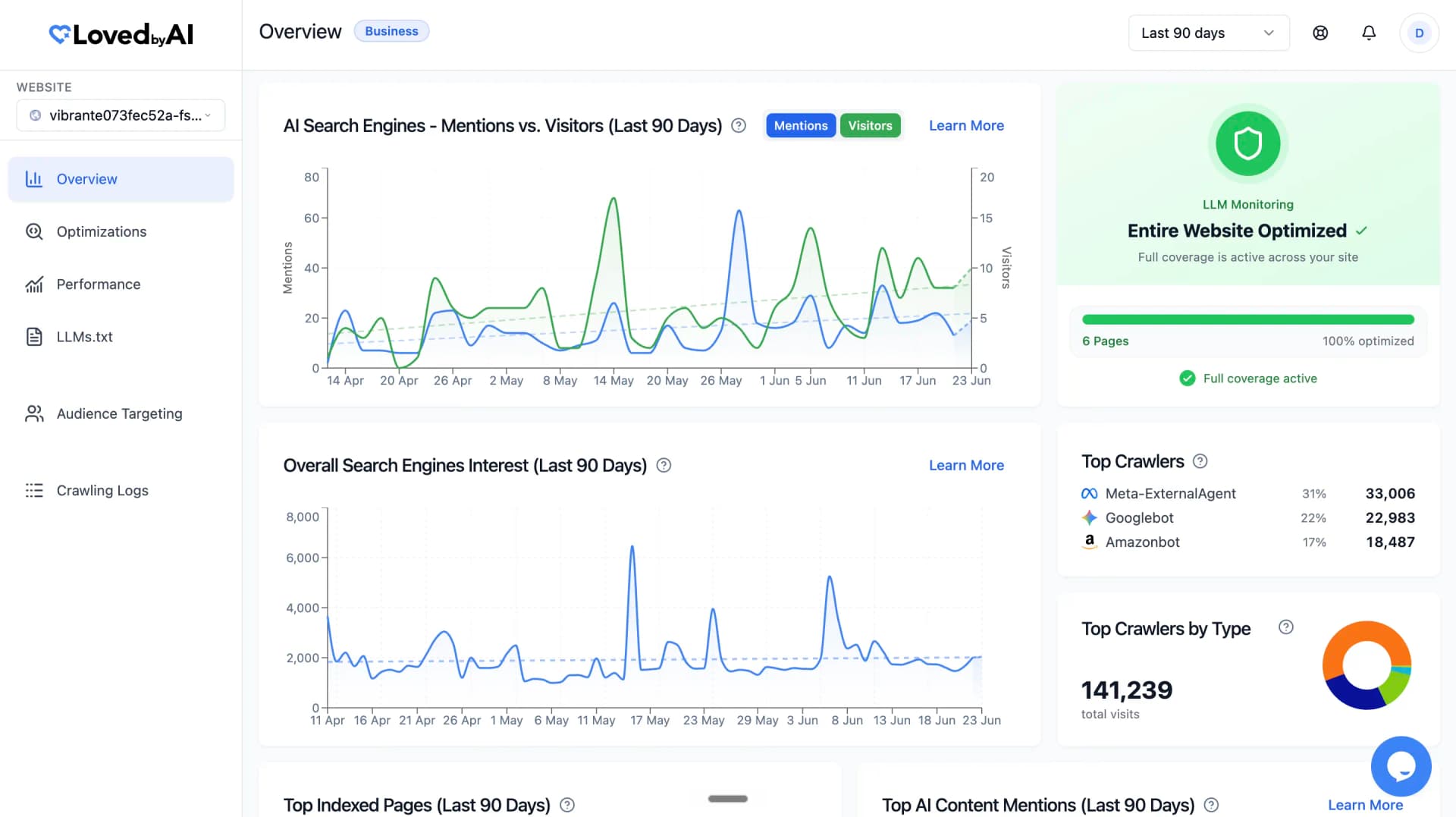
Best for: WordPress businesses, marketing agencies, local businesses, law firms, accounting firms, insurance agencies, real estate agencies, IT support companies, bloggers and publishers, and small and medium-sized businesses.
LovedByAI is a WordPress-native Generative Engine Optimization (GEO) platform designed to help businesses improve how AI search engines understand, retrieve, cite, and recommend their websites.
Instead of requiring users to manually configure structured data, AI-readable content, FAQs, entity signals, and other technical GEO improvements, LovedByAI automates much of the implementation directly inside WordPress. This allows businesses to adopt Generative Engine Optimization without needing extensive technical knowledge or ongoing manual work.
The platform combines AI search optimization, AI traffic analytics, AI mentions tracking, and technical automation into a single workflow, making it particularly well suited for businesses that want to improve their visibility across ChatGPT, Gemini, Claude, Perplexity, Google AI Overviews, and other AI-powered search experiences.
Key Features- Automated Generative Engine Optimization (GEO)
- AI-ready content formatting
- AI-readable website information layer
- Automatic JSON-LD schema generation
- Automatic FAQ generation with FAQPage schema
- llms.txt generation and management
- Entity optimization recommendations
- AI search readiness scoring
- AI traffic analytics
- AI bot monitoring
- AI mentions tracking
- Agency and multi-site management
- Compatible with Yoast SEO, Rank Math, Elementor, Jetpack, and other popular WordPress plugins
- Built specifically for WordPress
- Automates many technical GEO tasks
- Easy setup with minimal technical expertise required
- Includes AI traffic analytics and AI mentions tracking
- Improves AI readability and structured data automatically
- Affordable for small businesses and agencies
- Supports both single-site and multi-site environments
- Free educational resources and implementation guides
- Available only for WordPress websites
- Less focused on enterprise AI visibility reporting and prompt-level analytics
- Smaller ecosystem than long-established enterprise SEO platforms
| Plan | Price |
|---|---|
| Free | $0/month |
| Pro | $29/month (annual billing) |
| Business | $59/month (annual billing) |
The Free plan supports a single webpage and is ideal for testing Generative Engine Optimization. The Pro plan supports up to 200 webpages and includes AI traffic tracking, AI mentions tracking, automated AI formatting, and llms.txt generation. The Business plan increases limits to 1,000 webpages while adding audience targeting capabilities and priority support.
What Users LikeUsers frequently praise the platform's simplicity and automation. Many appreciate that technical GEO tasks, such as schema generation, AI formatting, FAQ creation, and llms.txt management, require little to no manual configuration after installation.
Agencies value the ability to manage multiple WordPress websites efficiently, while small businesses often highlight how quickly they can begin optimizing for AI search without hiring developers or GEO specialists.
Customers also report measurable improvements in AI-driven traffic and AI search visibility after implementing the platform's recommendations. In a published LovedByAI study of 116 WordPress sites and 108,834 pages, optimized pages earned 11 times the AI referral visits per page of untouched pages on the same sites, with many customers reporting initial improvements within the first few weeks of implementation.
VerdictGenerative Engine Optimization isn't just about understanding how AI platforms talk about your business. It's about improving how they understand, retrieve, and recommend it.
LovedByAI focuses on that implementation layer by helping businesses automate many of the technical and on-page improvements that support stronger AI search performance. Rather than piecing together multiple plugins and manual workflows, users can implement core GEO best practices directly inside WordPress.
For WordPress businesses, agencies, local service providers, and other organizations looking for a practical, affordable way to adopt Generative Engine Optimization, LovedByAI is one of the most complete implementation-focused platforms currently available.
2. Profound
Best for: Enterprise brands, large marketing teams, global organizations, and agencies managing enterprise clients.
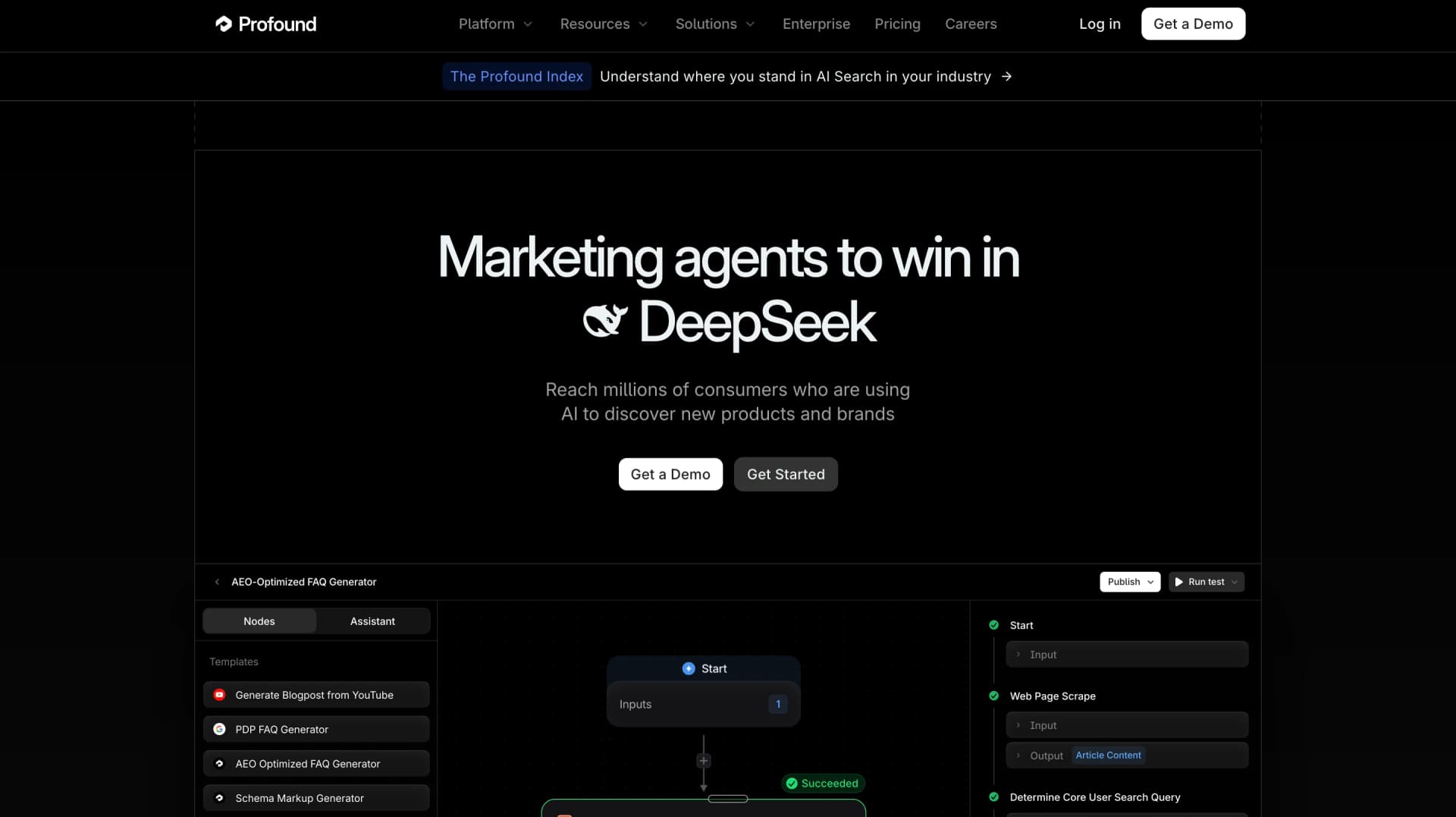
Profound is one of the leading AI visibility platforms built for enterprise organizations. It helps brands monitor how they appear across ChatGPT, Gemini, Claude, Perplexity, Google AI Overviews, and other AI search experiences through prompt-level tracking, share of voice analysis, competitor benchmarking, and visibility reporting.
Rather than focusing on implementation, Profound specializes in measuring AI search performance at scale, making it a strong choice for organizations that need enterprise-grade AI search intelligence.
Key Features- AI visibility monitoring
- Prompt-level tracking
- AI share of voice
- Citation analysis
- Competitor benchmarking
- Enterprise reporting
- Multi-model monitoring
- Excellent enterprise analytics
- Advanced competitive intelligence
- Strong reporting capabilities
- Covers major AI platforms
- Limited GEO implementation features
- Better suited for enterprise organizations
- Costs increase as usage grows
| Plan | Price |
|---|---|
| Starter | $99/month |
| Growth | $399/month |
| Enterprise | Custom |
Users appreciate Profound's reporting depth, prompt-level insights, and ability to monitor AI visibility across multiple brands and markets.
VerdictIf your priority is measuring AI visibility across multiple AI search platforms, Profound remains one of the strongest enterprise monitoring solutions available today.
3. Peec AI
Best for: SEO teams, marketing departments, mid-sized businesses, and AI visibility reporting.
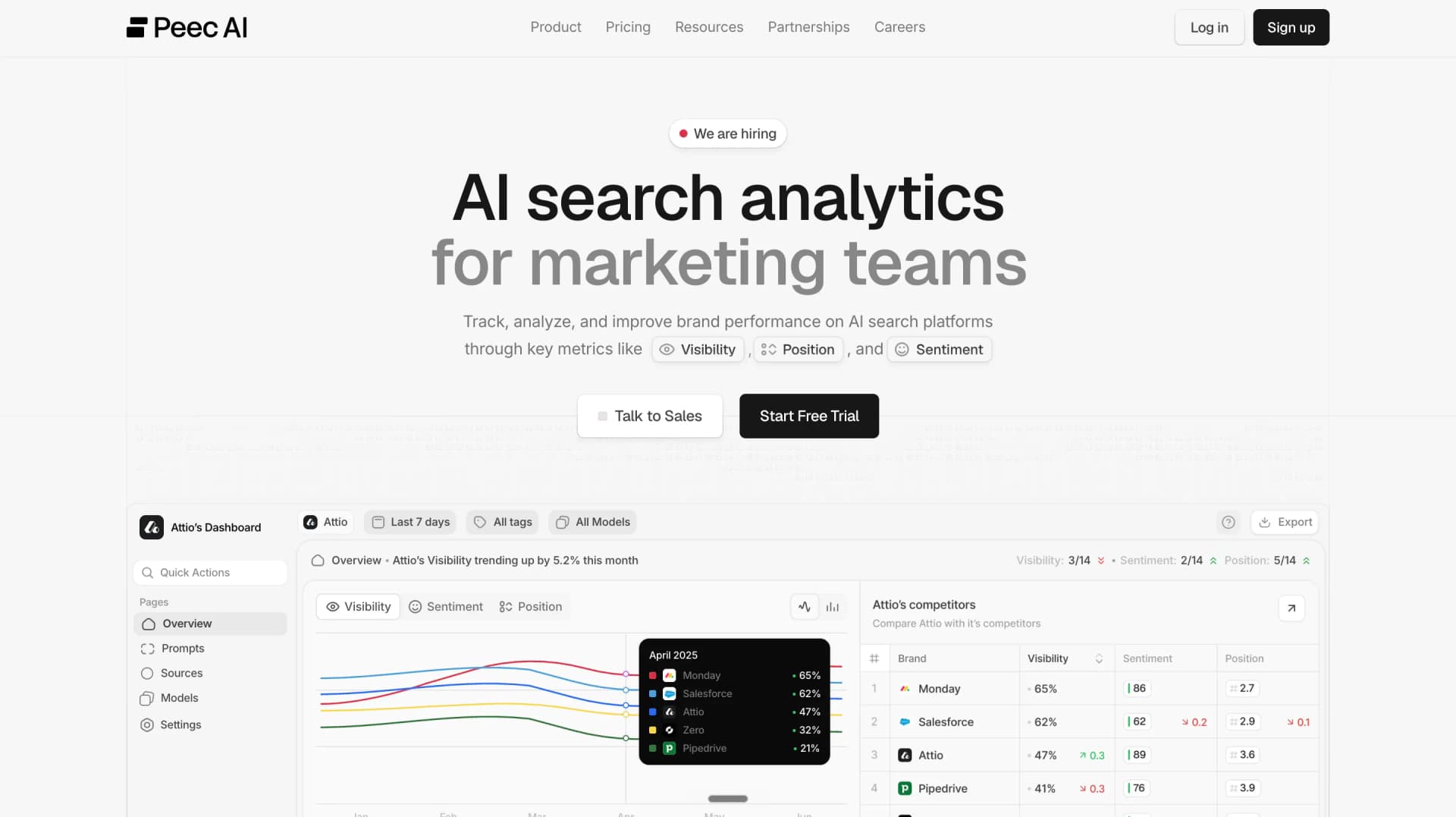
Peec AI makes AI visibility tracking accessible without enterprise-level complexity. The platform focuses on AI mentions, citation tracking, competitor benchmarking, and share of voice reporting across leading AI search engines.
Key Features- AI visibility tracking
- AI mentions monitoring
- Share of voice reporting
- Competitor analysis
- Historical reporting
- Affordable
- Easy to use
- Strong reporting dashboards
- Good multi-model coverage
- Limited GEO implementation
- Primarily a monitoring platform
- Fewer enterprise workflows
| Plan | Price |
|---|---|
| Starter | $95/month |
| Pro | $245/month |
| Advanced | $495/month |
| Enterprise | Custom |
Users like the clean interface, affordability, and detailed AI visibility analytics.
VerdictPeec AI is an excellent option for businesses that want affordable AI visibility analytics and competitive benchmarking.
4. Scrunch AI
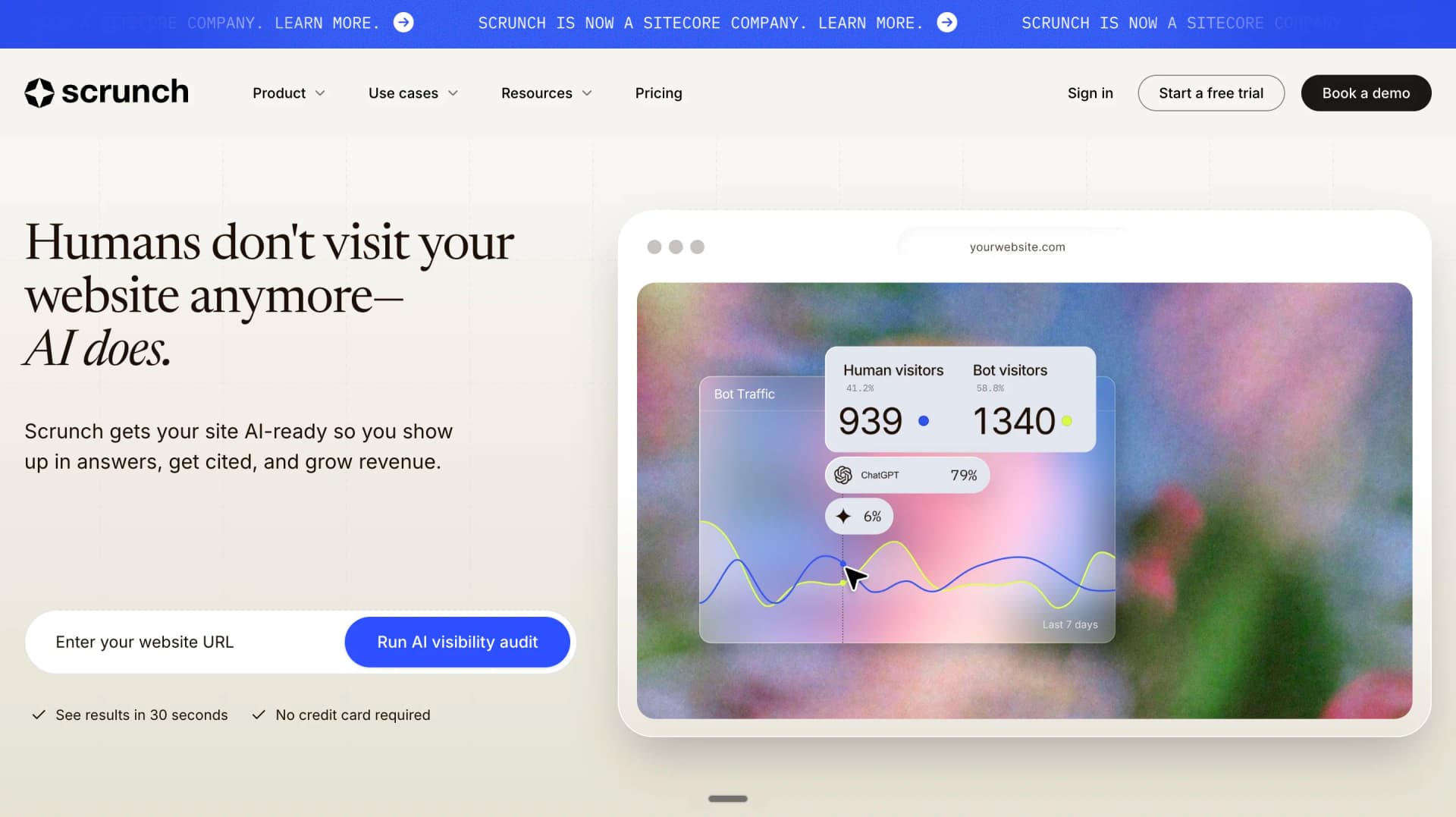
Best for: Enterprise organizations, global brands, and AI-first companies.
Scrunch AI is built for organizations treating AI search as a strategic acquisition channel. The platform provides enterprise AI visibility intelligence, perception analysis, competitor monitoring, and prompt-level reporting across major AI models.
Key Features- Enterprise AI visibility
- AI perception analysis
- Share of voice
- Prompt intelligence
- Competitive benchmarking
- Enterprise-ready
- Excellent AI intelligence
- Strong reporting
- Extensive AI model support
- Expensive
- Better suited for large organizations
- Limited implementation automation
| Plan | Price |
|---|---|
| Core | $250/month |
| Agency Core | $500/month |
| Enterprise | Custom |
Enterprise teams appreciate its detailed AI search intelligence and reporting capabilities.
VerdictScrunch AI is one of the strongest enterprise AI intelligence platforms for organizations that need large-scale AI visibility monitoring.
5. AthenaHQ
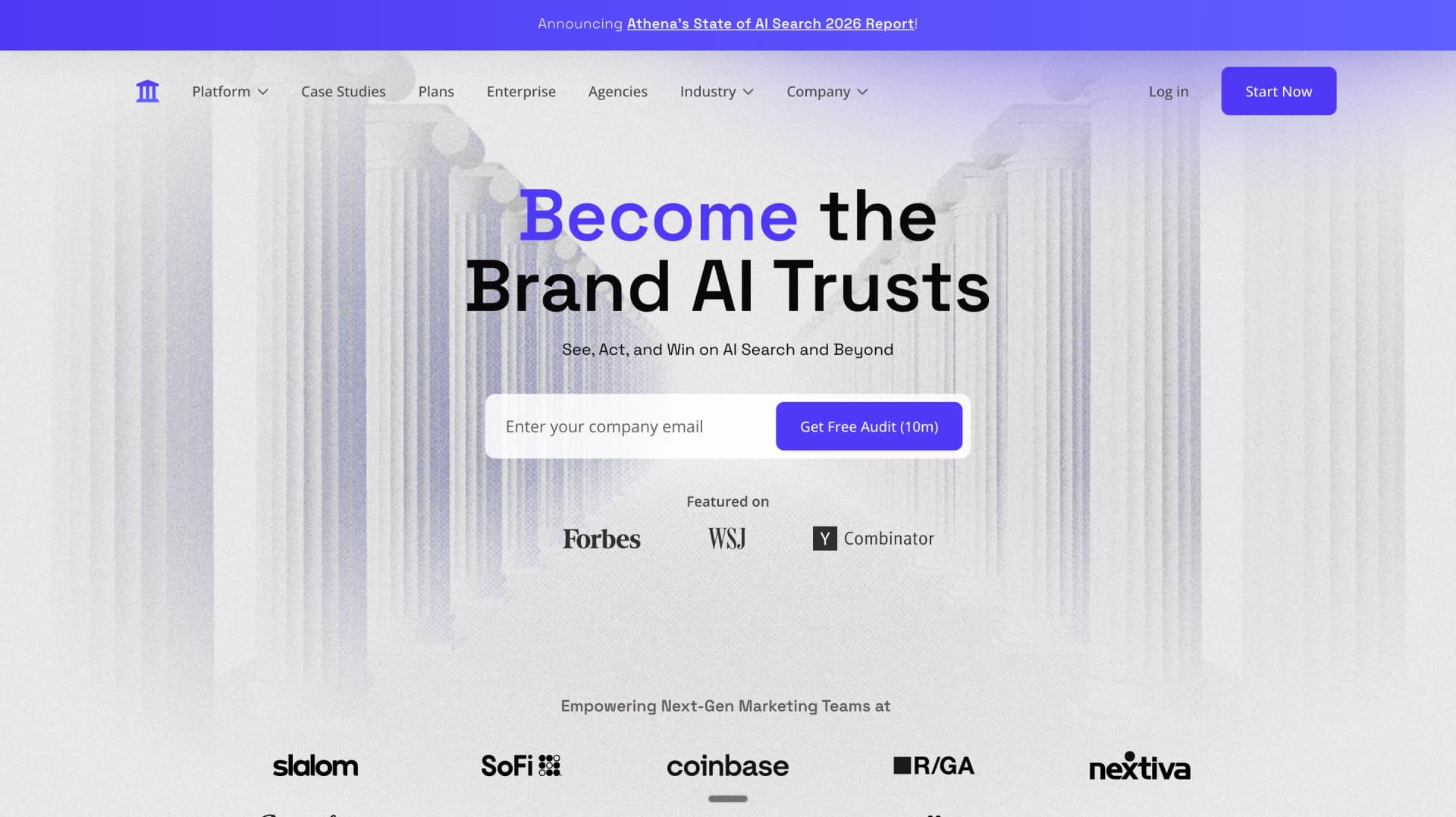
Best for: Growth-stage businesses, content teams, and GEO programs.
AthenaHQ combines AI visibility monitoring with actionable GEO recommendations, helping businesses identify optimization opportunities while improving AI search readiness.
Key Features- GEO recommendations
- AI visibility tracking
- AI content optimization
- Competitor monitoring
- Citation intelligence
- Combines monitoring and optimization
- Strong content recommendations
- Good GEO focus
- Higher starting price
- Requires active implementation
| Plan | Price |
|---|---|
| Self-Serve | $295/month |
| Enterprise | Custom |
Users appreciate receiving actionable optimization recommendations rather than analytics alone.
VerdictAthenaHQ is a strong choice for businesses wanting both AI visibility insights and practical GEO guidance.
6. Semrush AI Toolkit
Best for: Existing Semrush users, SEO teams, and enterprise marketing departments.
Semrush AI Toolkit extends the Semrush ecosystem into AI search by combining AI visibility reporting with keyword research, content optimization, and technical SEO workflows.
Key Features- AI visibility reporting
- AI competitor tracking
- Prompt monitoring
- AI readiness audits
- Search analytics
- Familiar Semrush workflow
- Strong reporting
- Useful for SEO teams
- Best value for existing Semrush customers
- More monitoring than implementation
| Plan | Price |
|---|---|
| AI Toolkit | From $99/month per domain |
Existing Semrush customers appreciate managing traditional SEO and AI search insights in one platform.
VerdictIf your team already relies on Semrush, AI Toolkit is the easiest way to add AI search monitoring to existing workflows.
7. Similarweb AI Visibility
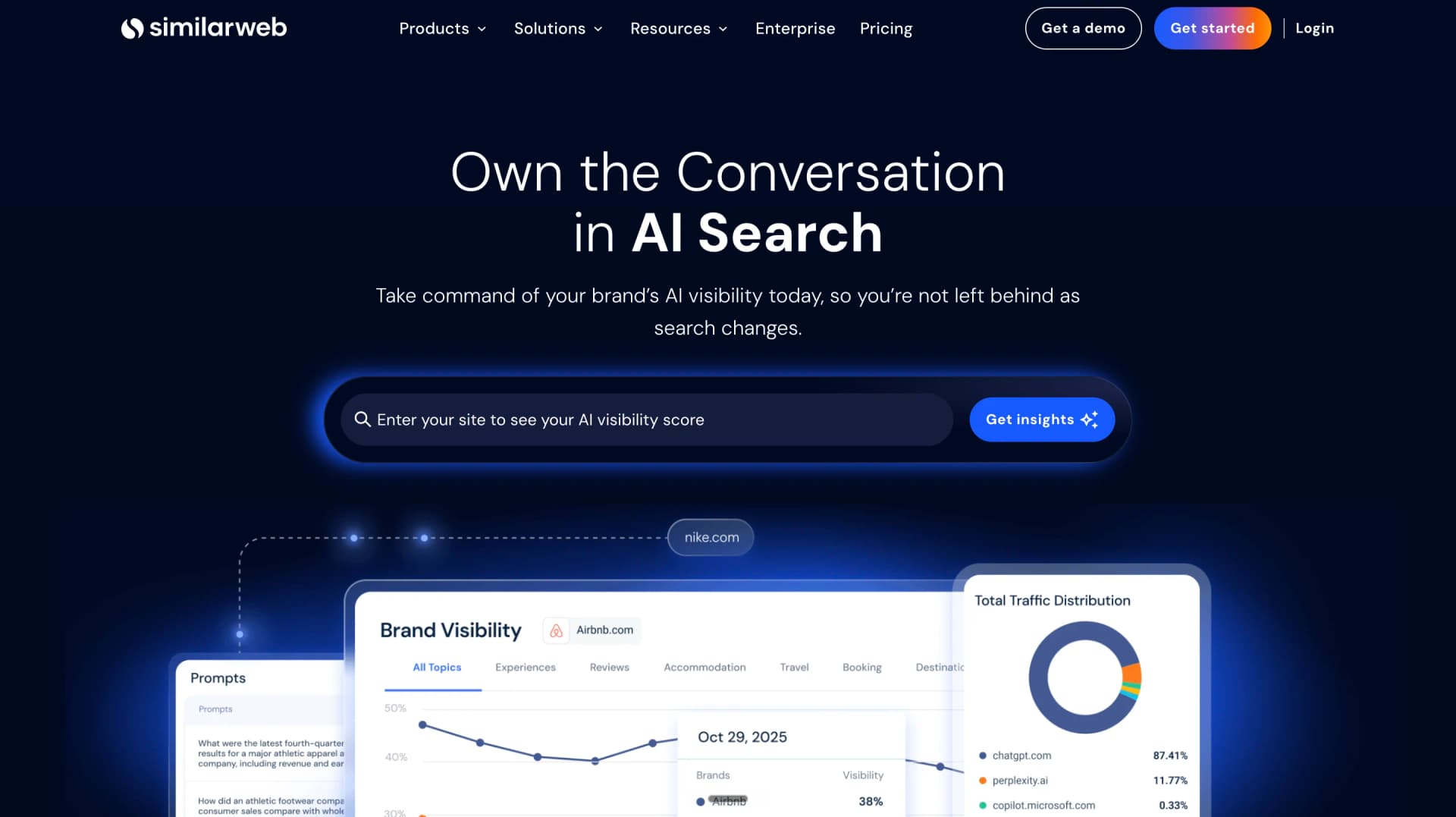
Best for: Competitive intelligence, enterprise marketing, and market research.
Similarweb AI Visibility combines AI search analytics with the company's well-established traffic intelligence platform, helping businesses benchmark AI visibility alongside traditional digital performance.
Key Features- AI visibility analytics
- AI traffic insights
- Brand visibility scoring
- Market intelligence
- Competitor benchmarking
- Strong competitive intelligence
- Excellent traffic insights
- Trusted enterprise platform
- Limited GEO implementation
- Higher-tier features can be expensive
| Plan | Price |
|---|---|
| AI Search Intelligence | From $99/month |
Users value the combination of AI visibility and broader competitive intelligence.
VerdictSimilarweb is ideal for businesses that want AI visibility alongside comprehensive market and competitor analysis.
8. Otterly AI
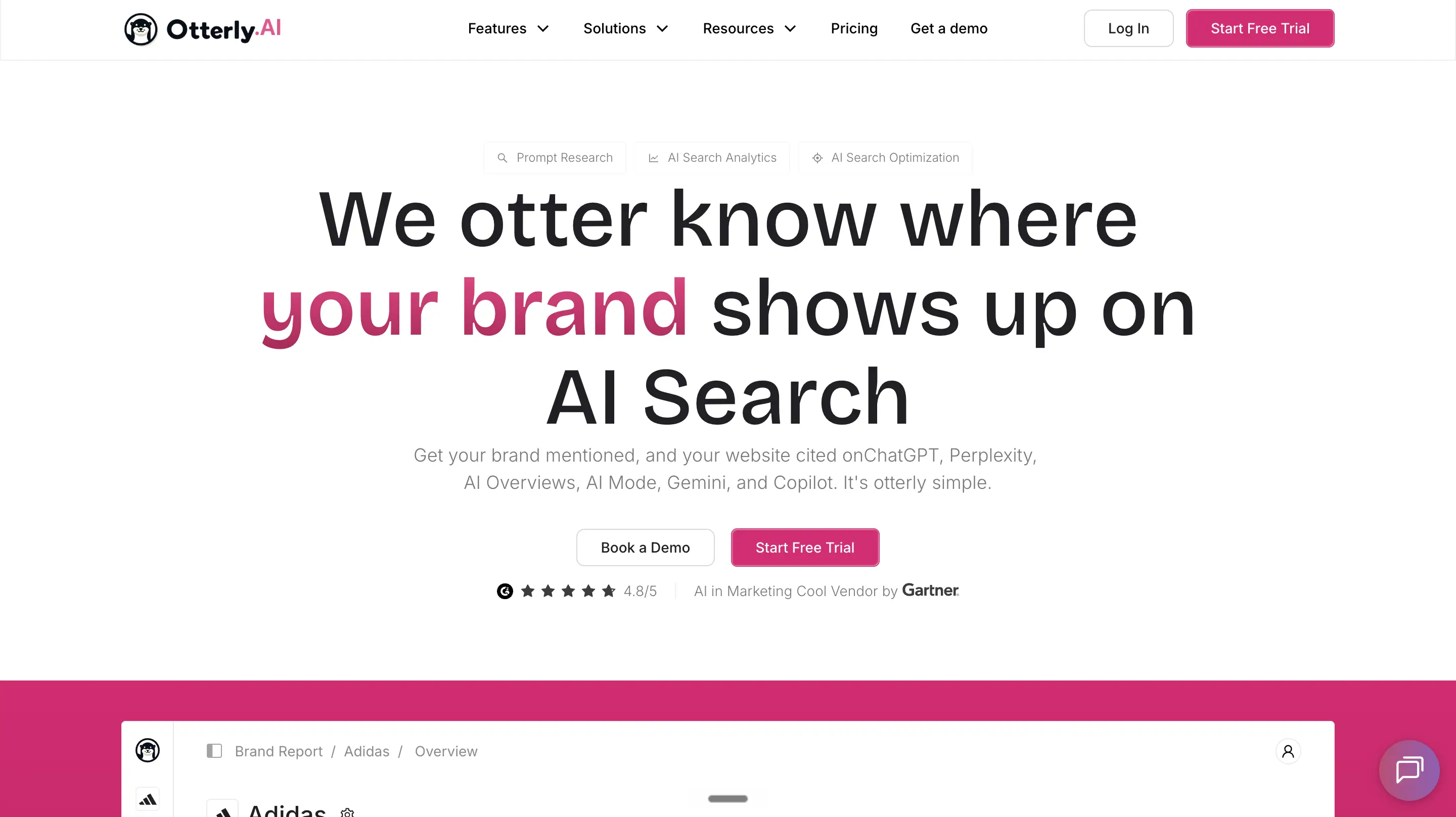
Best for: Small businesses, startups, and agencies.
Otterly AI offers one of the most affordable ways to begin tracking AI visibility across ChatGPT, Google AI Overviews, Perplexity, and Microsoft Copilot.
Key Features- AI visibility tracking
- Citation monitoring
- GEO audits
- Competitor tracking
- Budget friendly
- Easy to use
- Supports multiple AI platforms
- Limited enterprise features
- Less advanced reporting
| Plan | Price |
|---|---|
| Lite | $29/month |
| Standard | $189/month |
| Premium | $489/month |
Users consistently mention its affordability and straightforward interface.
VerdictOtterly AI is one of the best entry-level AI visibility tools for businesses beginning their GEO journey.
9. AirOps
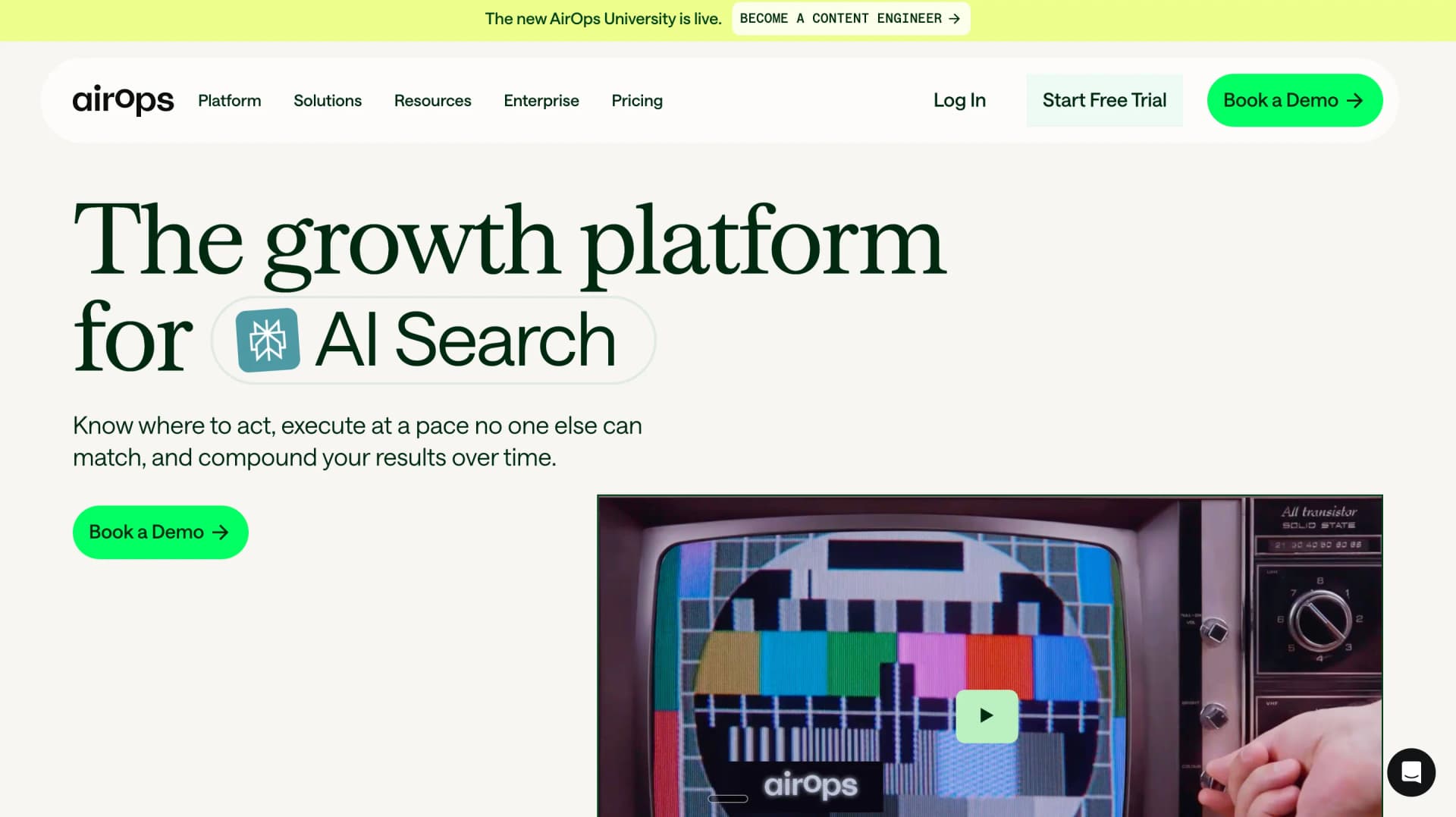
Best for: Content operations, marketing teams, and GEO workflows.
AirOps helps teams scale content creation and optimization through AI-powered workflows designed for both traditional SEO and Generative Engine Optimization.
Key Features- AI content workflows
- GEO optimization
- Workflow automation
- Prompt management
- Excellent content workflows
- Strong automation
- Good for scaling content
- Limited AI visibility tracking
- More content-focused than analytics-focused
| Plan | Price |
|---|---|
| Starter | Free |
| Pro | From $49/month |
Teams appreciate its ability to operationalize GEO content production.
VerdictAirOps is an excellent choice for organizations producing large volumes of AI-optimized content.
10. Frase
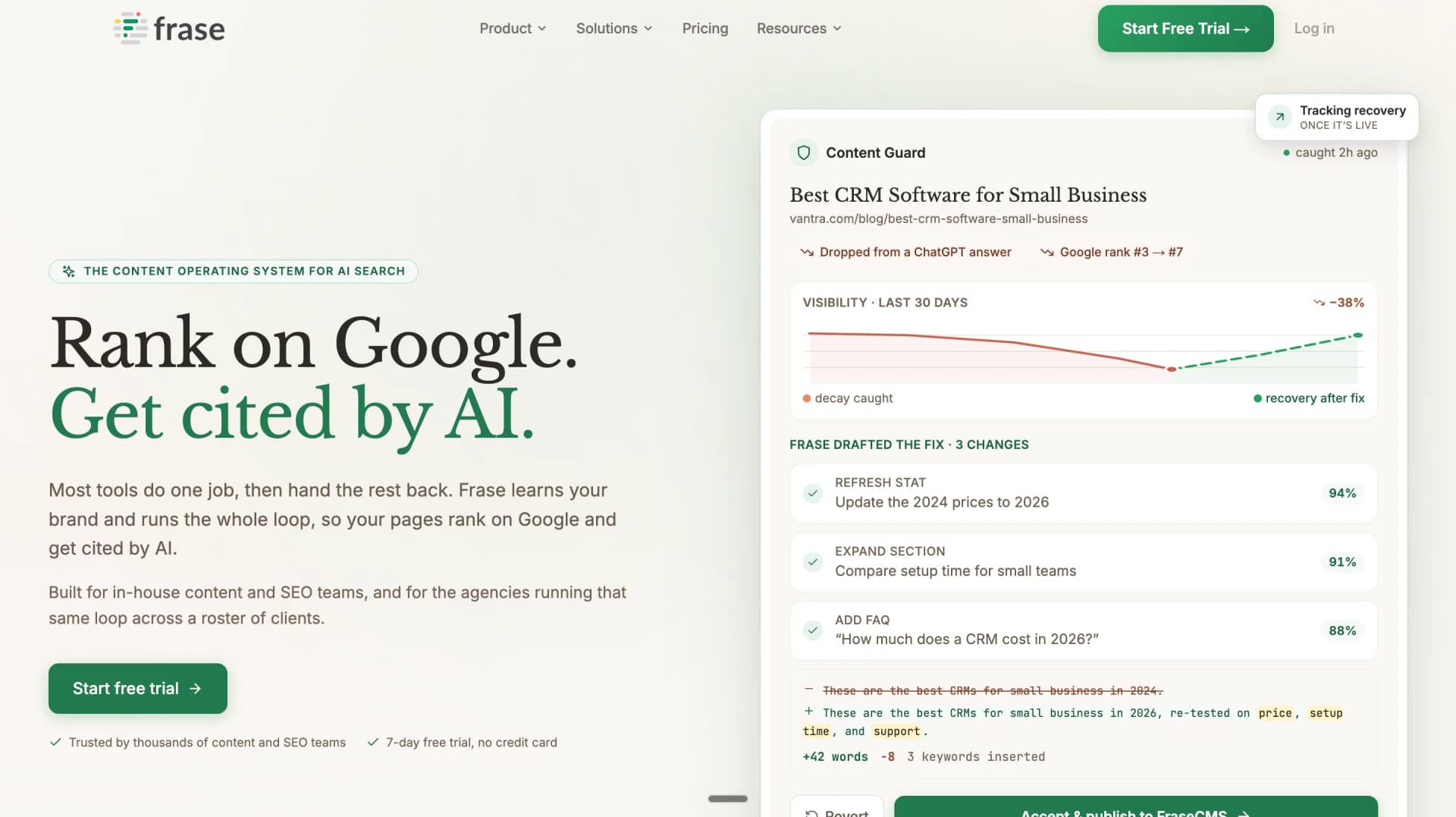
Best for: Content marketers, bloggers, and SEO writers.
Frase focuses on helping businesses create well-structured, AI-friendly content that performs across both traditional search engines and AI-powered search experiences.
Key Features- AI content optimization
- Content briefs
- SERP research
- Content scoring
- Easy to use
- Strong optimization tools
- Affordable
- Limited AI visibility tracking
- Primarily content focused
| Plan | Price |
|---|---|
| Starter | $39/month |
| Professional | $103/month |
| Scale | $239/month |
Users praise Frase's ability to streamline content creation and optimization.
VerdictFrase remains one of the best AI-assisted content optimization platforms for SEO and GEO teams.
11. Writesonic
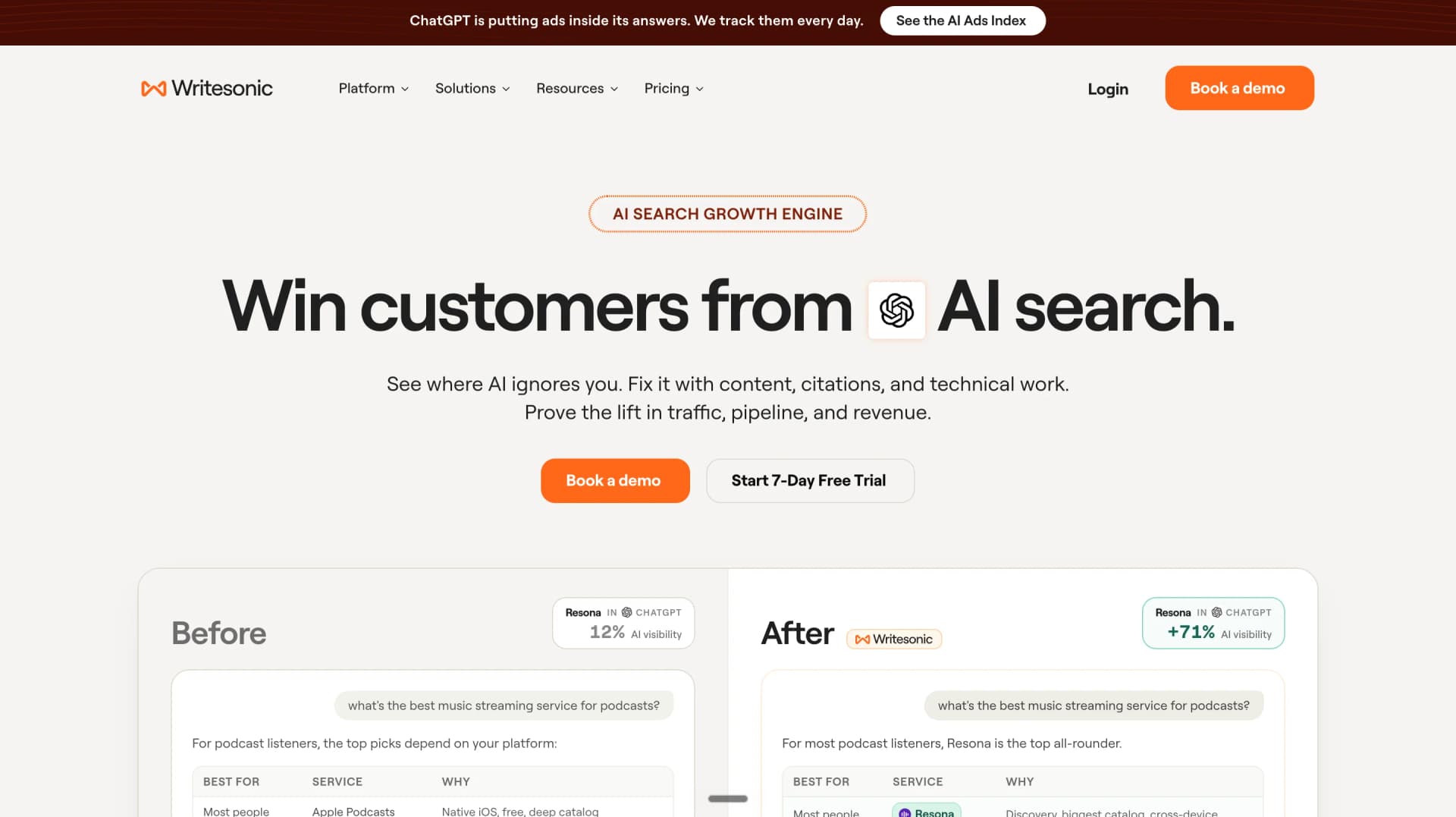
Best for: AI-first marketing teams, growth marketers, and content creators.
Writesonic combines AI content creation with growing Generative Engine Optimization capabilities, helping businesses create and optimize content for modern AI search experiences.
Key Features- AI content generation
- GEO recommendations
- AI search optimization
- Competitor analysis
- Excellent AI writing
- Strong automation
- Continually expanding GEO features
- GEO features are newer than dedicated platforms
- Visibility monitoring is less comprehensive
| Plan | Price |
|---|---|
| Starter | $79/month |
| Basic | $199/month |
| Growth | $399/month |
Users enjoy having AI content creation and GEO recommendations in a single platform.
VerdictWritesonic is best suited for businesses looking to combine AI-assisted content creation with emerging Generative Engine Optimization capabilities.
Best Generative Engine Optimization (GEO) Tools by Use Case
The best GEO platform depends on your business type, technical requirements, and optimization goals. While some tools specialize in enterprise AI visibility, others focus on automating Generative Engine Optimization, content workflows, or AI search analytics.
| Business Type | Recommended Tool | Why It's a Strong Fit |
|---|---|---|
| WordPress Websites | LovedByAI | Native WordPress plugin with automated GEO implementation |
| Agencies | Profound | Enterprise reporting, prompt tracking, and multi-client monitoring |
| Local Businesses | LovedByAI | Automates local GEO signals and AI search optimization |
| Law Firms | LovedByAI | Strong entity optimization and local authority improvements |
| Accounting Firms | LovedByAI | Designed for service-based businesses competing in AI search |
| Insurance Agencies | LovedByAI | Improves local AI discoverability and structured business information |
| Real Estate Agencies | LovedByAI | Helps strengthen location-based authority and AI readability |
| IT Support Companies | LovedByAI | Well suited for local lead generation and AI search optimization |
| SaaS Companies | Scrunch AI | Enterprise AI intelligence and competitive monitoring |
| Content Teams | AirOps | Scalable AI content workflows and GEO automation |
| Ecommerce Brands | Yotpo Discover | Review-driven product discovery and brand authority |
| Enterprise Organizations | Profound | Advanced AI visibility analytics and reporting |
| Bloggers & Publishers | Frase | AI-friendly content optimization and topical authority |
How to Improve Generative Engine Optimization
The best-performing brands in AI search don't rely on a single tactic. Instead, they build trust, authority, and technical clarity across their entire online presence.
Here are the practices that consistently contribute to stronger AI search visibility.
- Build entity authority by helping AI systems understand who you are, what you do, and which topics your brand is known for.
- Create original research: publish first-hand insights, case studies, surveys, and unique perspectives that AI systems can reference.
- Publish AI-citable statistics. Original data and research are far more likely to be cited than generic listicles.
- Improve AI readability by organizing content with clear headings, concise paragraphs, tables, FAQs, and logical page structure.
- Strengthen trust signals: put expertise, customer reviews, author profiles, credentials, and transparent business information front and center.
- Earn brand mentions by building authority through industry publications, podcasts, directories, communities, and trusted third-party websites.
- Implement structured data. Schema markup helps search engines and AI systems better understand your website.
- Strengthen internal linking to reinforce topical authority and help AI understand relationships between pages.
- Optimize brand profiles by keeping your Google Business Profile, social profiles, business listings, and other brand information consistent across the web.
- Measure results: track AI visibility, AI mentions, citations, and AI referral traffic to see what's working and where improvements are needed.
Generative Engine Optimization isn't a one-time project. It's an ongoing process of making your business easier for AI systems to understand, trust, and recommend.
Common GEO Mistakes
| Mistake | Why It Hurts |
|---|---|
| Treating GEO like traditional SEO | Ranking well doesn't guarantee AI recommendations. |
| Ignoring brand authority | AI systems evaluate brands, not just webpages. |
| Publishing commodity content | Generic content is less likely to be cited or recommended. |
| Only tracking Google rankings | AI visibility requires additional metrics beyond traditional SEO. |
| Neglecting entity optimization | Weak entity signals make it harder for AI to understand your business. |
| Skipping structured data | Well-structured information improves machine understanding. |
| Ignoring AI traffic | Without measurement, it's difficult to evaluate GEO performance. |
| Waiting too long | Businesses investing in GEO today have an opportunity to build authority before AI search becomes even more competitive. |
The Future of Generative Engine Optimization
AI search is evolving quickly, but the direction is clear. Search is becoming more conversational, personalized, and agent-driven. Businesses investing in Generative Engine Optimization today will be better prepared as these experiences continue to expand.
Trends to watch:
- Google AI Mode
- SearchGPT
- Agentic Search
- AI Shopping
- Personal AI Assistants
- Autonomous Buying Agents
