
In February 2026, I noticed a real shift in the data I track for small service businesses: AI search bots officially began crawling these websites more often than Google bots. Potential clients are researching and choosing service providers differently now. If you run a local consulting firm, a plumbing company, or a private clinic, figuring out how to get more clients from Perplexity and Claude is now a practical necessity.
Many business owners hear this and assume their website no longer matters, believing AI just pulls from massive directories. That is completely backward. A well-optimized website combined with consistent directory profiles creates a cross-reference loop that AI tools trust. The problem is not having a website. The problem is having an inconsistent web presence that causes AI engines to hesitate before recommending you.
AI bots do not read your site to learn about your business for the first time. They read it to verify what other trusted sources already say about you. If those sources and your site disagree, you lose the recommendation.
How to Get More Clients from Perplexity and Claude Right Now
To get potential clients to see your business in AI answers, you have to prioritize factual consistency over traditional keyword density. Perplexity and Claude recommend service providers when they can instantly verify that your business name, address, phone number, and core services match across the web. If your website says you offer commercial roofing, but your local chamber of commerce listing says residential repairs, the AI engine drops you from the output to avoid giving a user a bad answer.
Start by auditing the exact terms you use to describe your services on your own homepage. You want clear, direct statements. Instead of a vague headline like "Solutions for Your Home," write "Emergency Plumbing Services in Chicago." Claude and Perplexity parse text looking for specific entities, which are distinct concepts like people, places, and service categories. They use these entities to build a factual map of your business.
Setting the Factual Baseline
Once your website clearly states what you do, you need to broadcast those facts using JSON-LD. JSON-LD is a specific format of structured data that feeds information to search bots in a machine-readable format. When you add a script to the <head> section of your website containing your business details, you hand the AI an exact cheat sheet of your firm.
You can check the official documentation at Schema.org LocalBusiness guidelines to see the exact fields search engines expect. If you want a faster path, tools like LovedByAI can scan your existing pages and inject the correct structured data automatically. Either way, the goal is to make sure the AI bot does not have to guess what you do or where you operate. Taking control of this factual baseline is your first step toward visibility.
Why AI Crawls Overtook Google for Service Businesses
I analyzed crawler behavior across the professional services sites on the platform. Between January and April 2026, the average AI crawls per small service business website grew 4x. Sites went from seeing 4,049 AI bot visits to 15,845 visits per site. By February of that year, AI bot activity had entirely overtaken Google's traditional search crawlers.
This surge in traffic happens because AI answer engines are actively mapping local service providers. They are not just caching pages to show blue links on a results page. They are synthesizing data to answer complex user queries like "find me a highly rated tax accountant in Denver who handles small business audits." To answer that confidently, the bots have to constantly re-check the facts.
The Bot Traffic Breakdown
In the data I reviewed, ChatGPT bots are the most active crawlers by a wide margin. Over the last three months, ChatGPT-associated bots averaged 14,228 visits per site. Claude and Perplexity bots follow closely behind, running continuous sweeps to ensure their language models have the latest pricing, service areas, and availability data.
This massive increase in bot traffic proves that AI platforms consider local service provider data highly valuable. If your site is not structured to handle these frequent checks, you miss the opportunity to be included in the synthesized answers.
What Perplexity and Claude Add to Your Current SEO Strategy
Traditional search engine optimization is not broken. It remains the foundation that AI visibility builds upon. Most SEO agencies excel at organizing content so a Google crawler can parse links and headings. AI search adds a specific layer on top of that foundation. It focuses on structured data, clear formatting, and entity consistency across the web.
If you already pay for SEO and wonder why you are missing from AI results, the issue is usually a gap in AI-specific formatting. You do not need to tear down your current website. You just need to translate your existing authority into a format that a large language model can easily digest. You can read more about SEO vs AEO: why entities matter more than keywords to understand this layer.
| Traditional Google SEO Focus | Perplexity and Claude Focus |
|---|---|
| Keyword clusters and content length | Conversational context and direct answers |
| Backlink volume from any relevant site | Consensus across high-trust local directories |
<h1> and <h2> heading hierarchy | Strict entity relationships and JSON-LD markup |
| Keeping users on your site longer | Delivering the bottom-line answer immediately |
Bridging the Optimization Gap
The most practical step is reviewing how you format your answers. Google might reward a 2,000-word guide on "Choosing a Landscaper." Claude and Perplexity prefer a concise, bulleted list of your specific landscaping services right at the top of the page. You can still keep the long guide, but you must format the top section to give the bottom-line answer first.
To see how Google engineers advise structuring content for clarity, you can review the Google Search Central guide on helpful content. The principles of direct, user-first writing apply equally to AI search optimization. The easier you make it for a bot to extract the core facts, the more likely that bot is to cite your business as the solution.
Structuring Your Service Offerings for AI Comprehension
Your service pages need to function as clear data sets, not just marketing brochures. When a potential client asks Perplexity for a recommendation, the AI looks for explicit confirmation that you offer the exact service requested. If your page relies on clever metaphors or buried paragraphs, the AI will skip you and recommend a competitor whose website is easier to parse.
Start by organizing your service pages with clear HTML structure. Use a dedicated <h2> heading for each specific service, followed by a short paragraph explaining exactly what it includes, who it is for, and how much it costs (if applicable). This structure makes it incredibly easy for Claude to extract your offerings and present them to a user. If your current setup is failing to register, you need to fix how your pages are built before worrying about external factors. You can learn exactly how to correct this if AEO finds zero answers on your site? Fix it now.
Using Code to Clarify Services
The most effective way to guarantee an AI understands your service is to use structured data. Below is a simple example of how a service business might use JSON-LD to explain their offerings. This code lives in the background of your site and speaks directly to the bots.
{
  "@context": "https://schema.org",
  "@type": "Service",
  "serviceType": "Commercial HVAC Repair",
  "provider": {
    "@type": "LocalBusiness",
    "name": "Apex Climate Control",
    "address": {
      "@type": "PostalAddress",
      "addressLocality": "Austin",
      "addressRegion": "TX"
    }
  },
  "areaServed": {
    "@type": "City",
    "name": "Austin"
  }
}
This exact markup tells any crawler precisely what the service is, who provides it, and where it is available. You can inject this manually using a plugin like WPCode, or reach for one of the best generative engine optimization tools to handle the generation and placement for you. W3Techs tracks the usage of structured data, and the adoption rate is climbing rapidly as service businesses realize its impact on AI visibility.
Earning High-Trust Citations to Drive AI Referrals
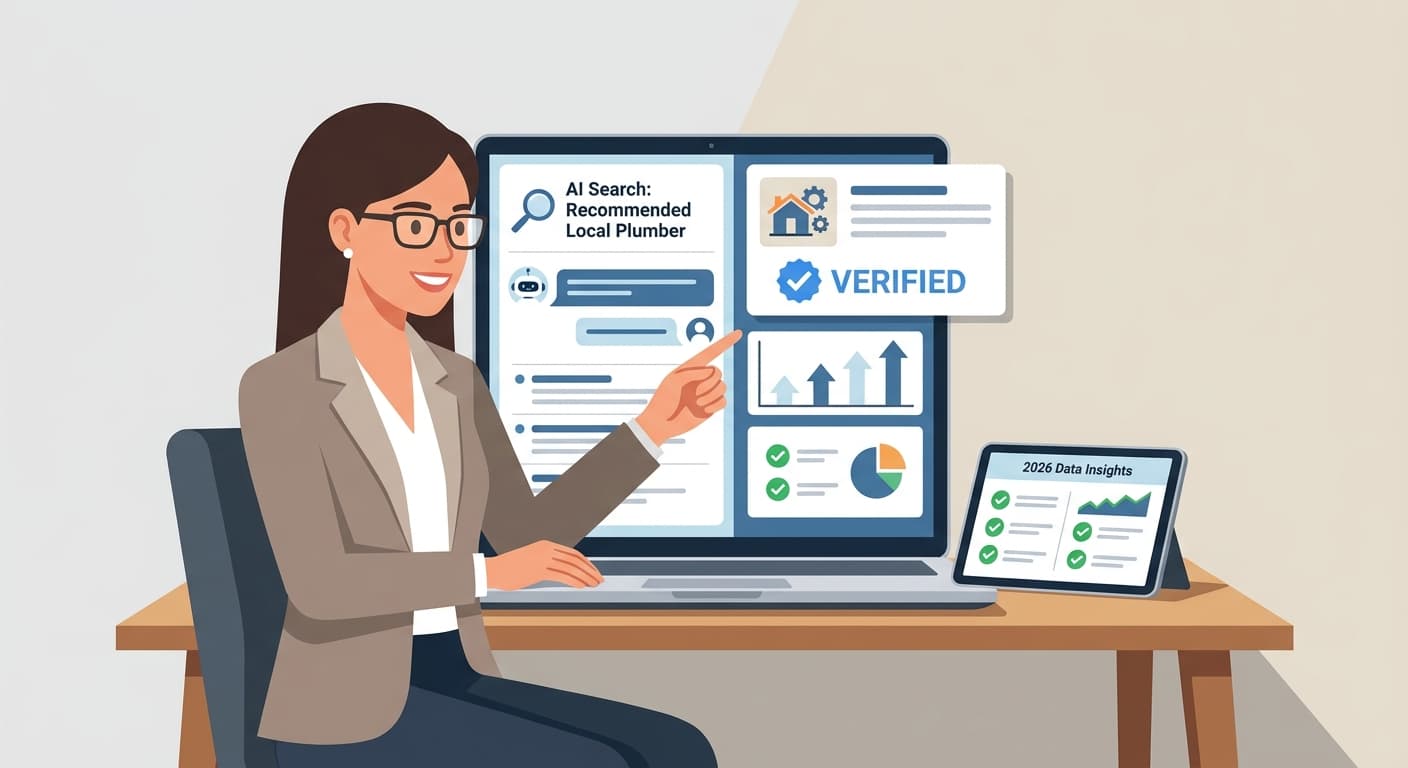
AI bots trust your website only when trusted third-party directories match what your site says. Perplexity does not just take your word for it. It cross-references your claims against local chamber of commerce listings, industry association directories, and review platforms. If those external sources confirm your location, specialty, and operating hours, the AI assigns a high confidence score to your business.
This is why fixing your own website is only the first half of the strategy. The second half is ensuring your business profile is identical on external platforms. A simple mismatch, like your site listing "Suite 200" while your Better Business Bureau profile says "Floor 2", can break the entity resolution process. AI engines interpret these mismatches as conflicting data and will often choose to recommend a different business entirely to avoid being wrong.
Building the Cross-Reference Loop
To get started, make a list of the top three directories in your specific industry. For a law firm, this might be Avvo, Martindale-Hubbell, and the state bar association. For an accountant, it might be the CPA directory and local business networks. Go to each of these platforms and verify that your business name, address, phone number, and service categories match your website exactly. Removing duplicate or outdated listings is just as critical as building new ones. You can use platforms like BuiltWith to analyze your site's underlying technology and ensure your data outputs are clean, but manual verification of your directory profiles is still required.
Consistency is the strongest signal you can send to an AI answer engine. When every source points back to the same set of facts, you become the safest recommendation.
Once your foundation is solid, you can start looking at more advanced methods to Get cited in Perplexity and Claude web answers. The goal is to build a web of trust. When Perplexity crawls the web to answer a prospective client's query, it should find your well-structured website supported by a chorus of consistent external citations. That is how you turn AI search into a reliable channel for new clients. If you want the version written for your trade rather than the general case, we keep vertical guides for accountants, insurance agencies and real estate agencies, with the rest on our industries hub.
