
What is Search Atlas?
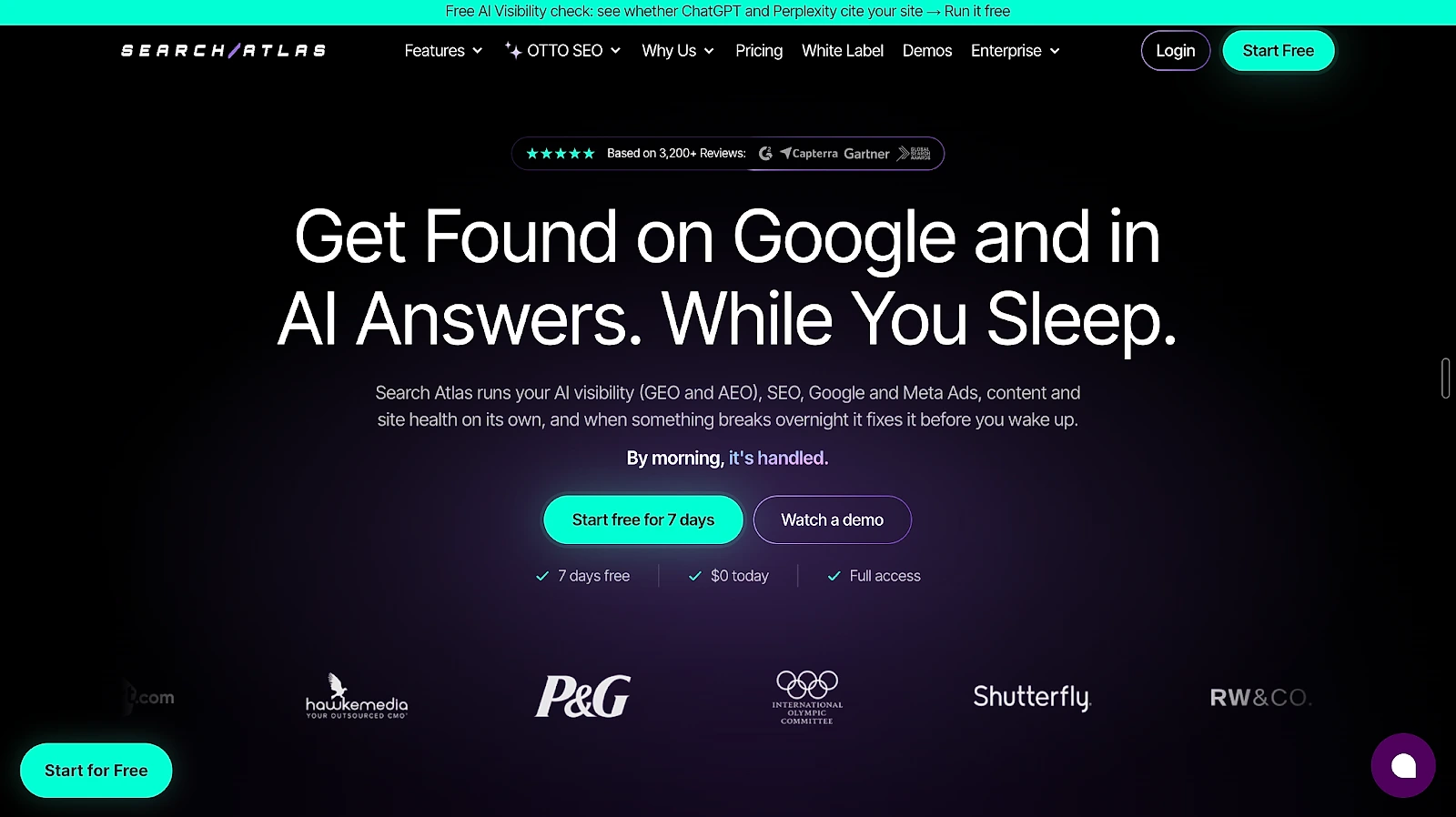
Before jumping into our Search Atlas review, let's understand what Search Atlas is and what it does. Search Atlas is an AI SEO and digital marketing platform that helps businesses improve their Google rankings, optimize content, fix technical SEO, build backlinks, and increase their AI search visibility.
In this review, we'll cover Search Atlas's core features, how the setup works, its pricing, pros and cons, and what users say on Trustpilot, Reddit, G2 and Capterra. We'll also compare it with LovedByAI, a generative engine optimization platform for small businesses on WordPress, to help you decide which tool fits your needs.
Search Atlas toolkit: what each tool does
| Feature | What it does |
|---|---|
| OTTO SEO | Automates on-page and technical SEO optimizations to improve website performance and search rankings. |
| Keyword Research | Finds relevant keywords, search opportunities, and competitor keyword gaps. |
| Content Optimization | Helps create and optimize content based on search intent, topical relevance, and on-page SEO factors. |
| Local SEO | Supports local rankings, business profile optimization, and local citation management. |
| Rank Tracking | Monitors keyword rankings and tracks SEO performance over time. |
| LLM Visibility | Tracks brand mentions and citations across AI search platforms and AI-generated answers. |
| Backlink Analysis | Helps analyze backlinks, evaluate link profiles, and identify link-building opportunities. |
| Technical SEO Audits | Identifies website health issues, crawlability problems, and on-page optimization opportunities. |
| Google & Meta Ads | Provides advertising tools for managing and optimizing paid campaigns across Google and Meta. |
| Reporting & Client Tools | Offers reporting, white-label dashboards, and client management features. |
Who owns Search Atlas?
Search Atlas was founded by Manick Bhan, who serves as its CEO and CTO, alongside co-founder and COO Sophia Deluz-Bhan. Their journey began with LinkGraph, an SEO agency focused on helping enterprise clients improve their organic search performance. The agency's revenue and client relationships helped fund the software development that followed.
The founders then developed Search Atlas into an SEO software platform, building on the problems they ran into while working with clients. That agency-first approach eventually led to OTTO SEO, its AI-powered automation engine, which helps businesses implement SEO improvements rather than relying only on manual recommendations and audits.
How much revenue does Search Atlas make?
Search Atlas Group has scaled from $2 million to over $30 million in annual recurring revenue (ARR) since Sophia Deluz-Bhan joined as co-founder in 2019, according to her company bio and CEOWORLD magazine. The same bio says the team has grown to more than 250 employees. These are company-reported figures, not independently audited revenue disclosures.
What are the core features of Search Atlas?
1. OTTO SEO (AI-powered SEO automation)
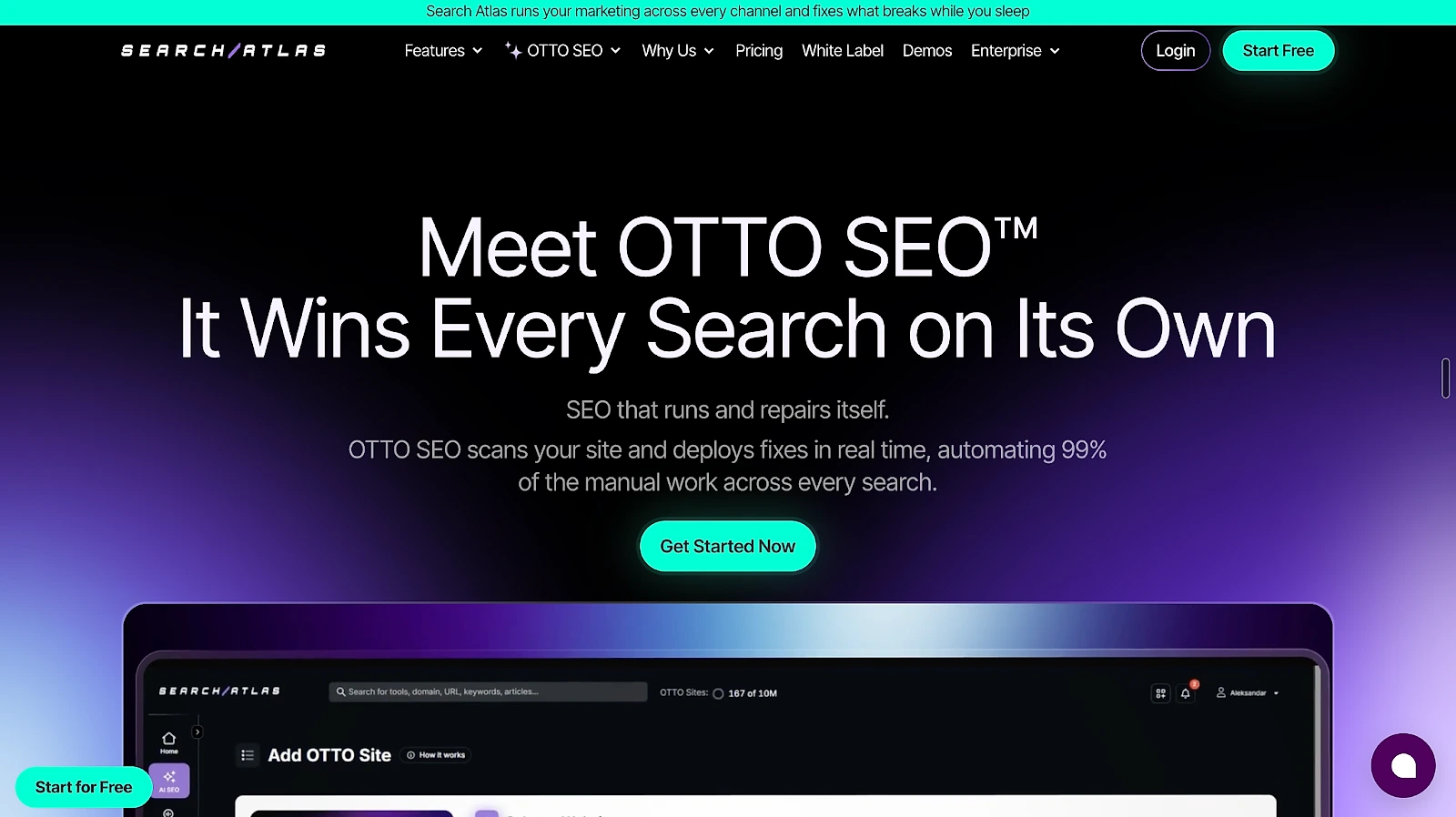
OTTO SEO identifies on-page and technical SEO issues and recommends fixes, including title tags, meta descriptions, and schema markup. Users can review suggested changes and deploy multiple optimizations in bulk.
2. Search Atlas keyword research
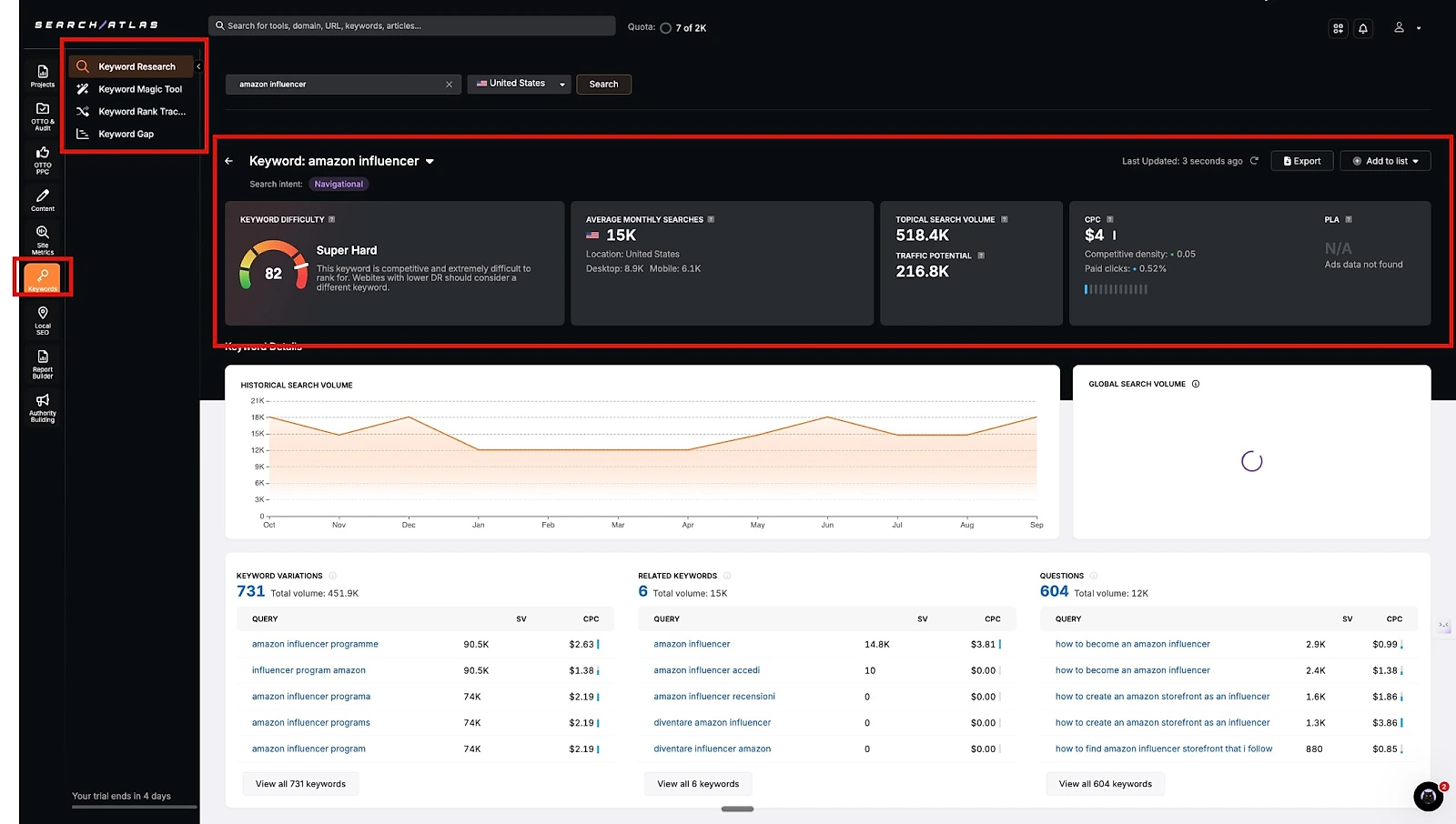
Discover keyword opportunities, analyze search volume and ranking difficulty, and identify terms competitors rank for. This helps SEO teams prioritize keywords and build content around relevant search intent.
3. Search Atlas content optimization and AI writing
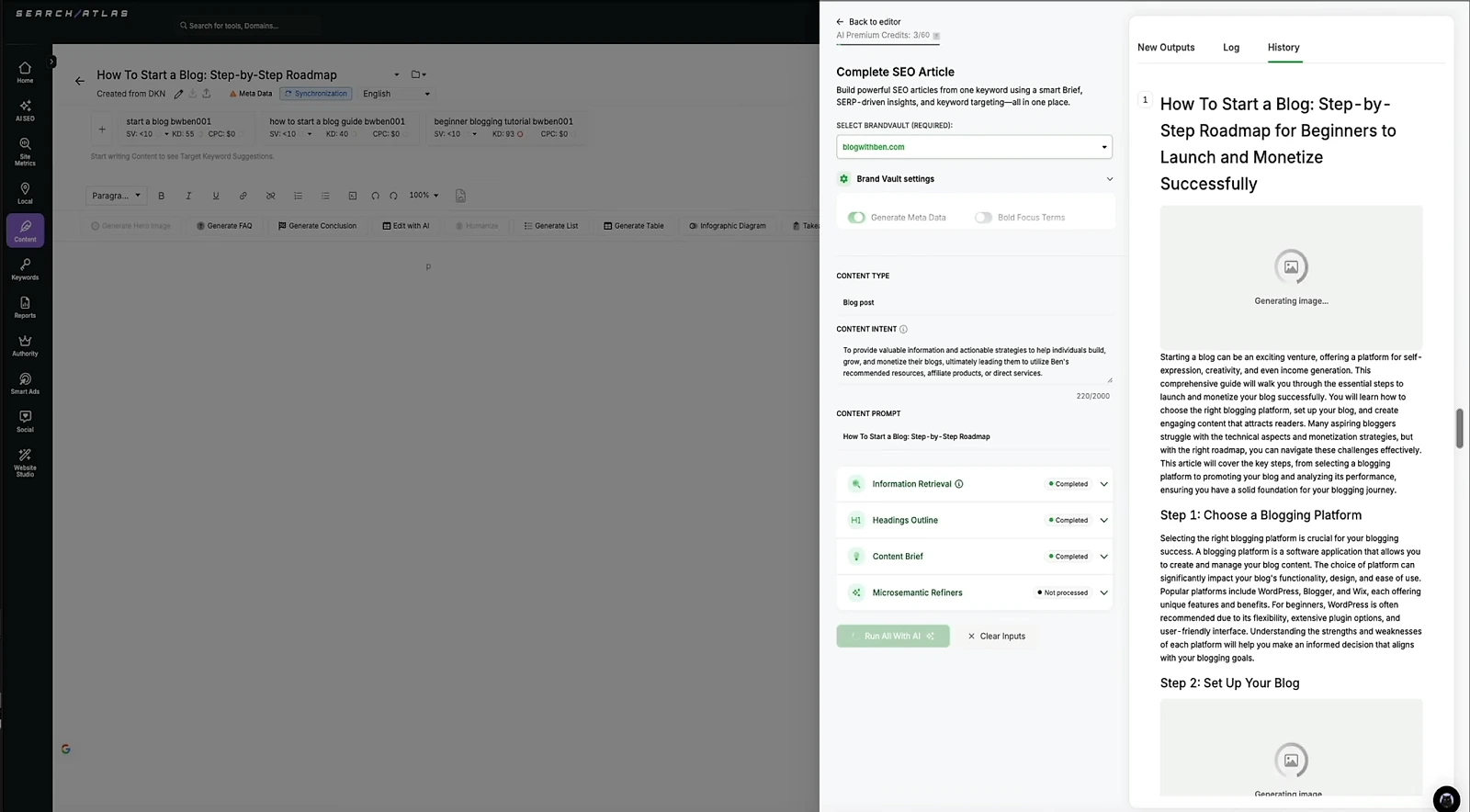
Create SEO-focused content briefs and AI-generated articles based on keyword targets and topical relevance. The editor also supports content scoring, AI-assisted revisions, FAQ generation, and image creation.
4. Domain Knowledge Network
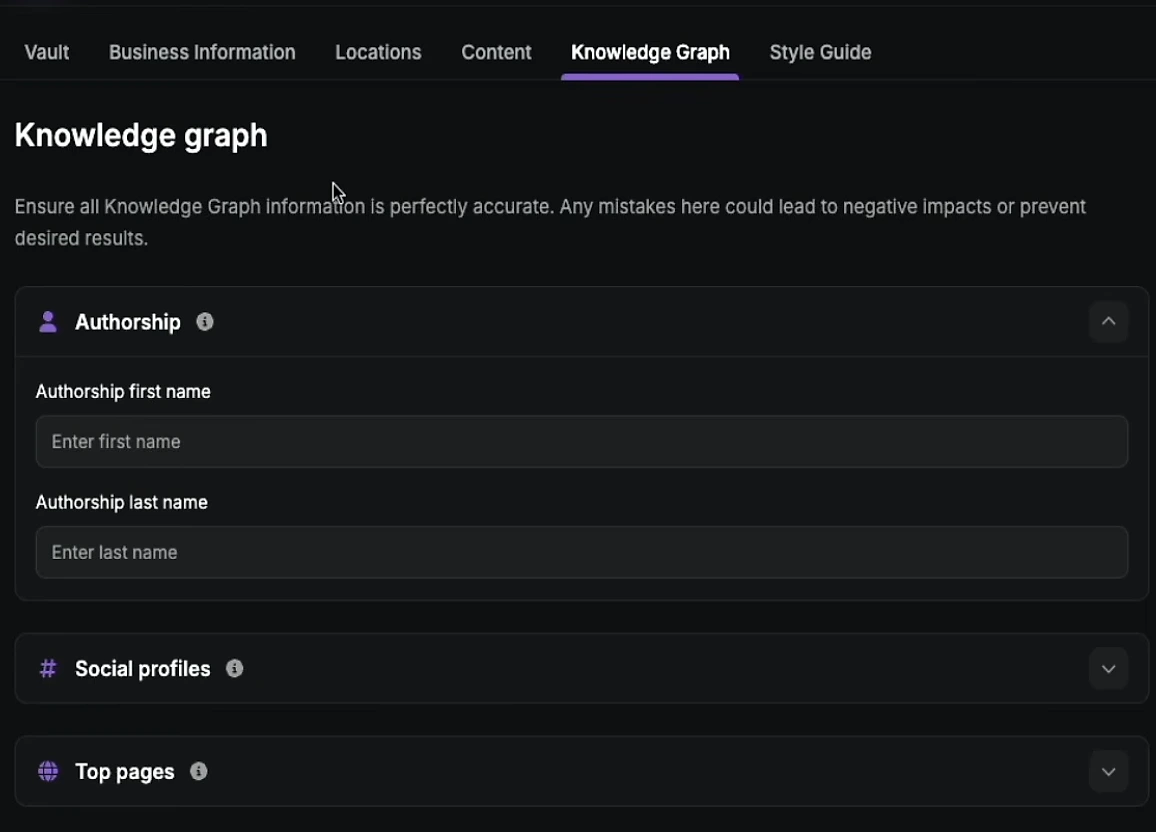
Build a content roadmap around your website's niche, audience, business model, and search intent. It groups related topics into content clusters to help identify gaps and develop stronger topical coverage.
5. Search Atlas site audit and technical SEO
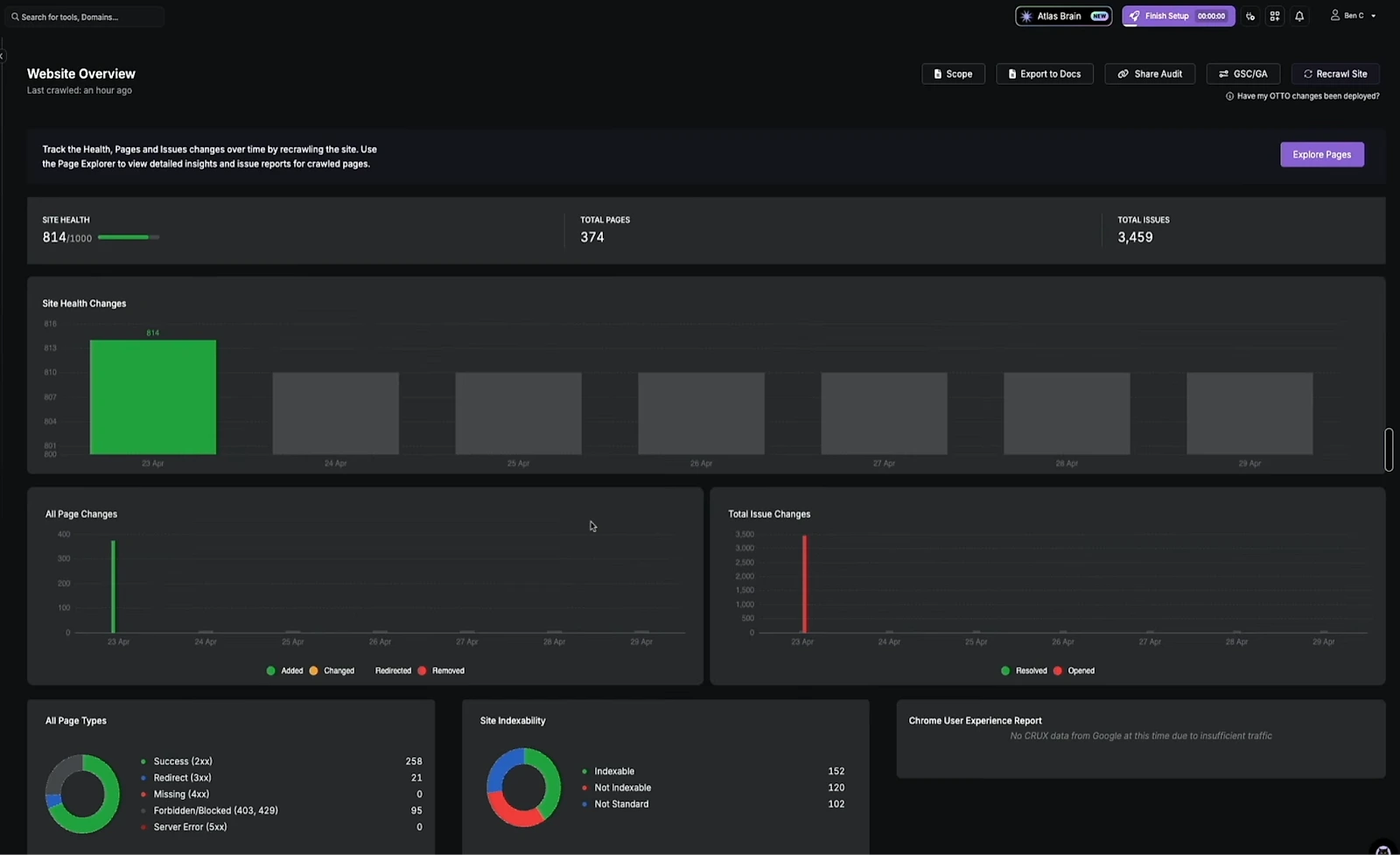
Audit your website to identify technical issues, indexing problems, and on-page optimization opportunities. Site health reports help teams prioritize fixes and monitor changes over time.
6. Atlas Brain and Playbooks

Use Atlas Brain to request SEO tasks through a conversational interface, or run predefined Playbooks for workflows such as fixing on-page issues and developing backlink strategies. Users can review workflow instructions and proposed actions before approving execution.
7. Site Explorer and competitor analysis
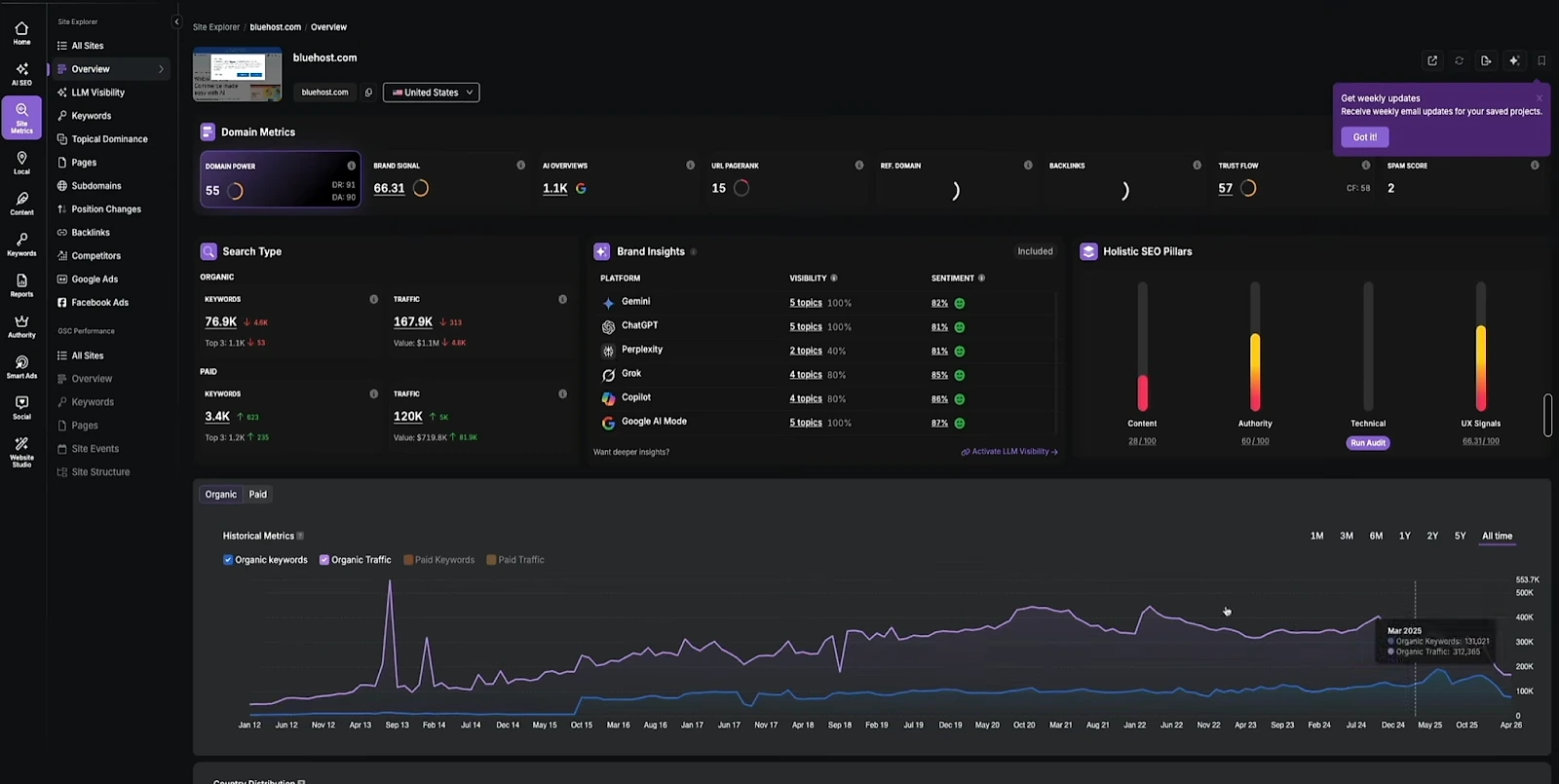
Analyze competitors' organic keywords, estimated traffic, ranking history, paid search activity, and backlink-related opportunities. Topical dominance and topic-gap reports help uncover subjects competitors cover that your website may be missing.
8. Search Atlas LLM Visibility
Monitor brand presence, mentions, and citations across supported AI search platforms. This gives businesses an additional view of how their brand appears in AI-generated answers alongside traditional search performance.
9. Search Atlas rank tracking
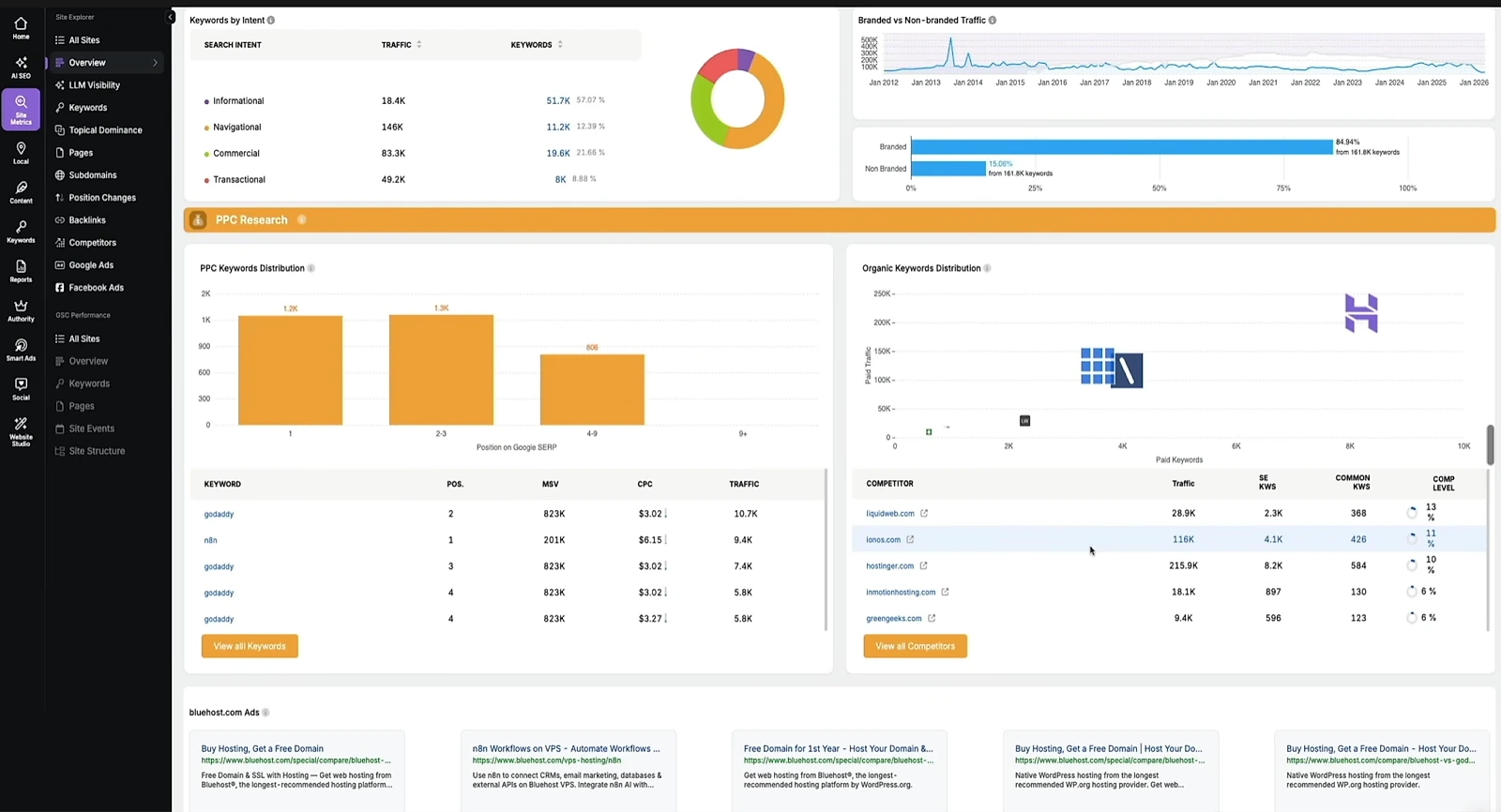
Track keyword ranking positions and monitor changes in search visibility over time. This helps SEO teams evaluate performance and identify keywords or pages that may need further optimization.
10. Local SEO and Google Business Profile
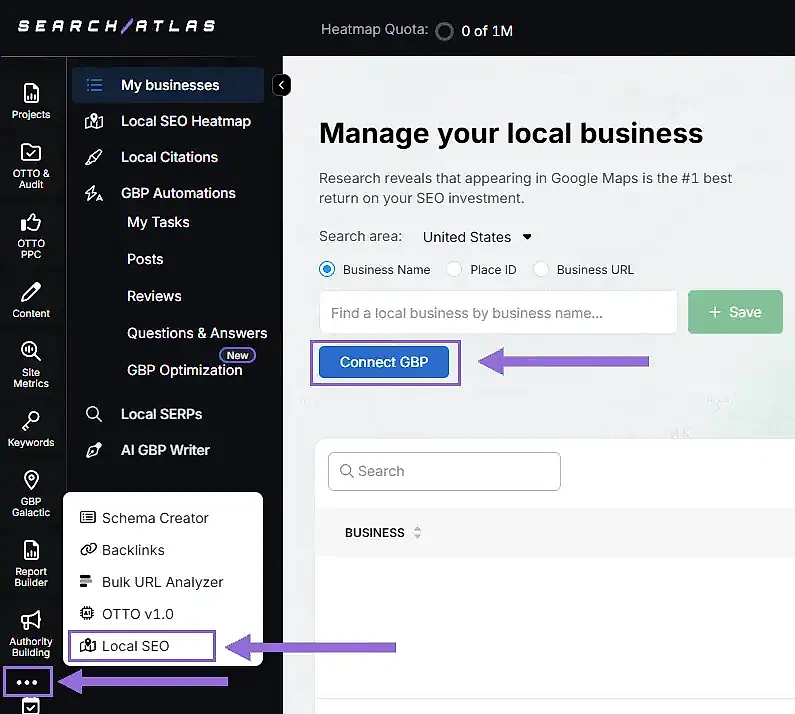
Manage local SEO workflows and improve visibility in local search results. Search Atlas also provides tools for Google Business Profile optimization for businesses targeting location-based searches.
11. Backlink and authority building
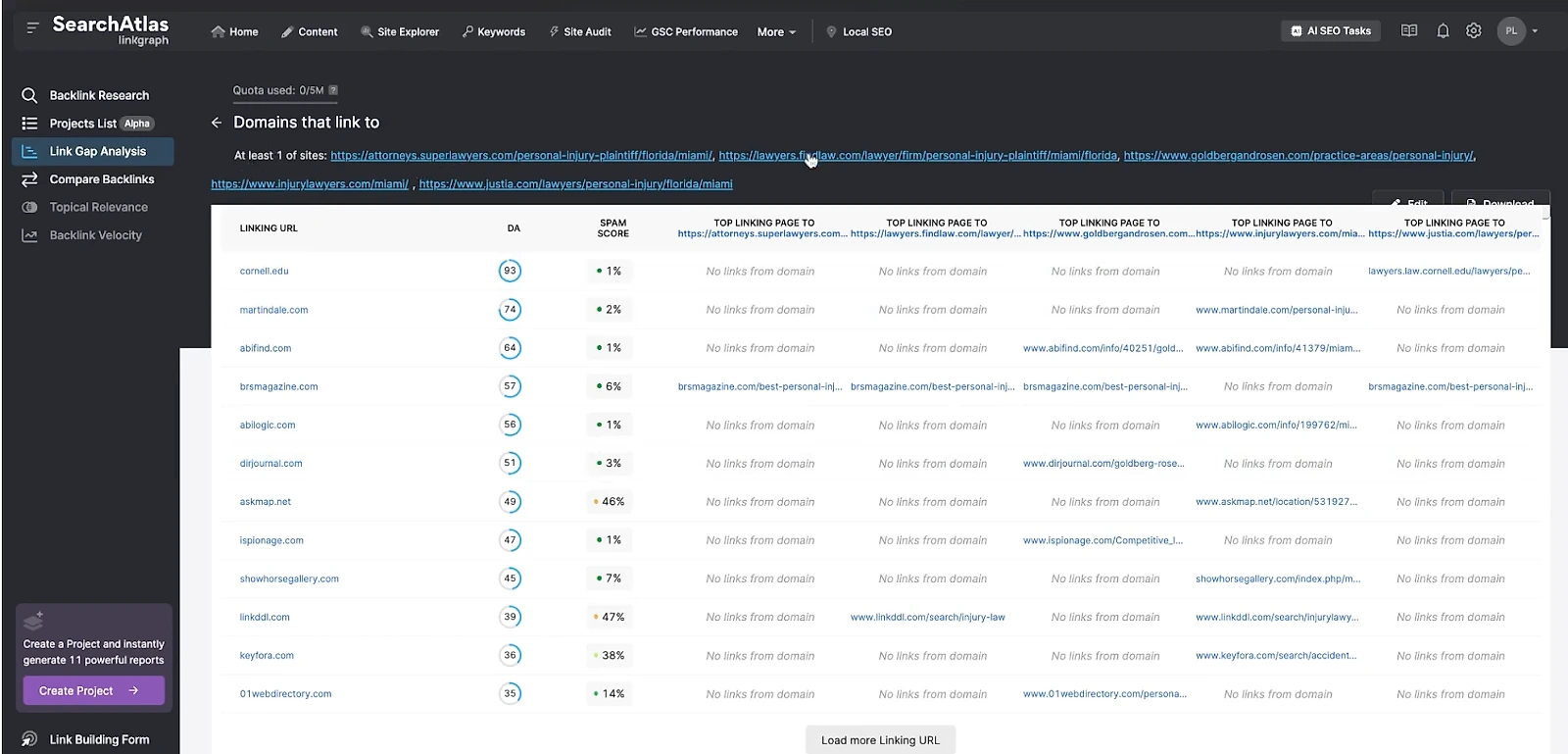
Research backlink opportunities and develop strategies to strengthen a website's authority. Atlas Brain's workflows can help organize target pages, anchor-text plans, and potential link-building activities.
12. Google and Meta Ads
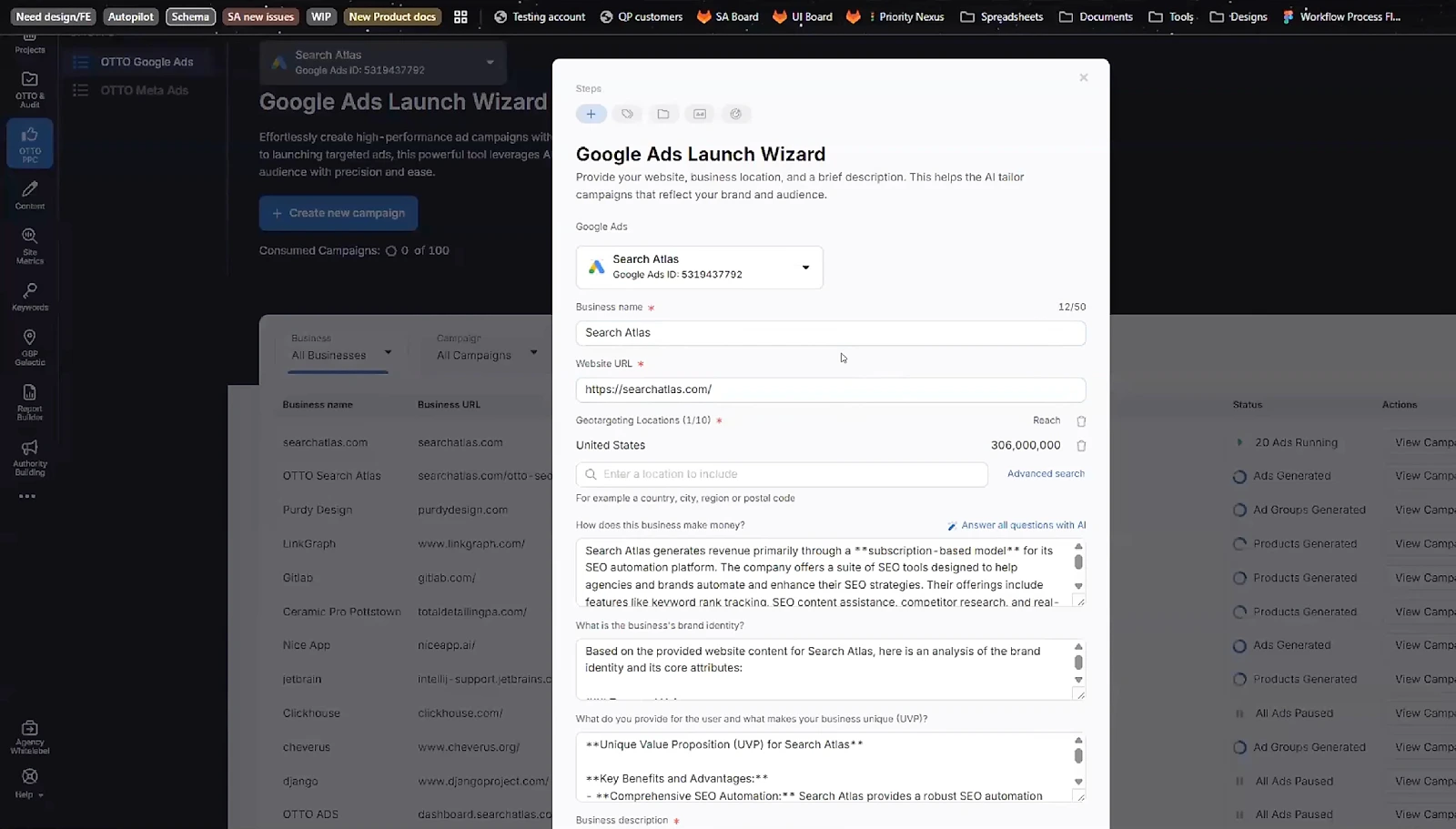
Access advertising tools alongside organic SEO workflows, including integrations with Google Ads and Meta. This makes Search Atlas broader than a traditional SEO research tool by bringing paid marketing into the same platform.
How does Search Atlas work? A step-by-step setup walkthrough
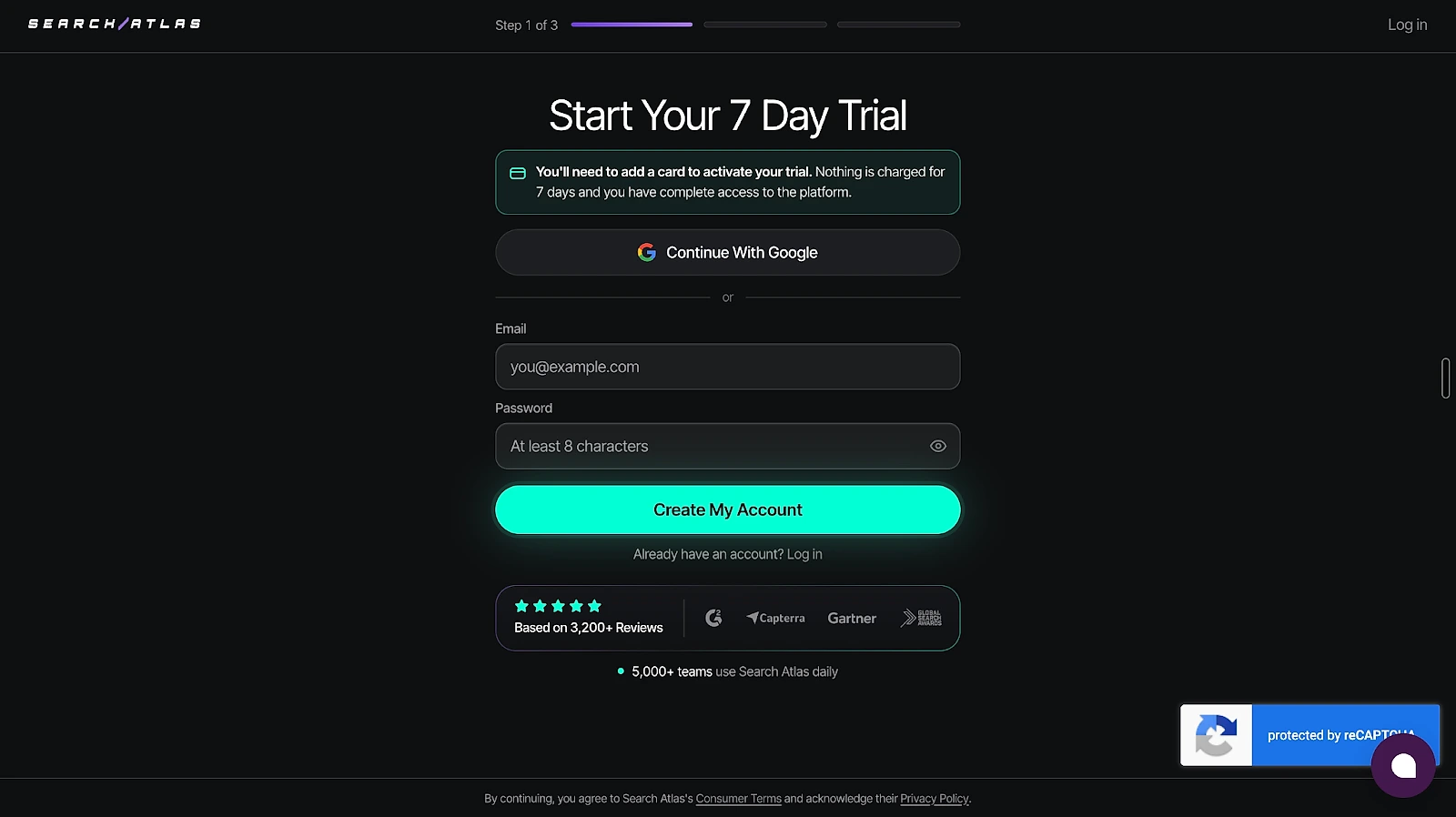
To use Search Atlas, you first need to sign up and log in to the dashboard. You can try it with the 7-day free trial, but you need to add a card for that as well:
Once you are logged in, you land on the dashboard:
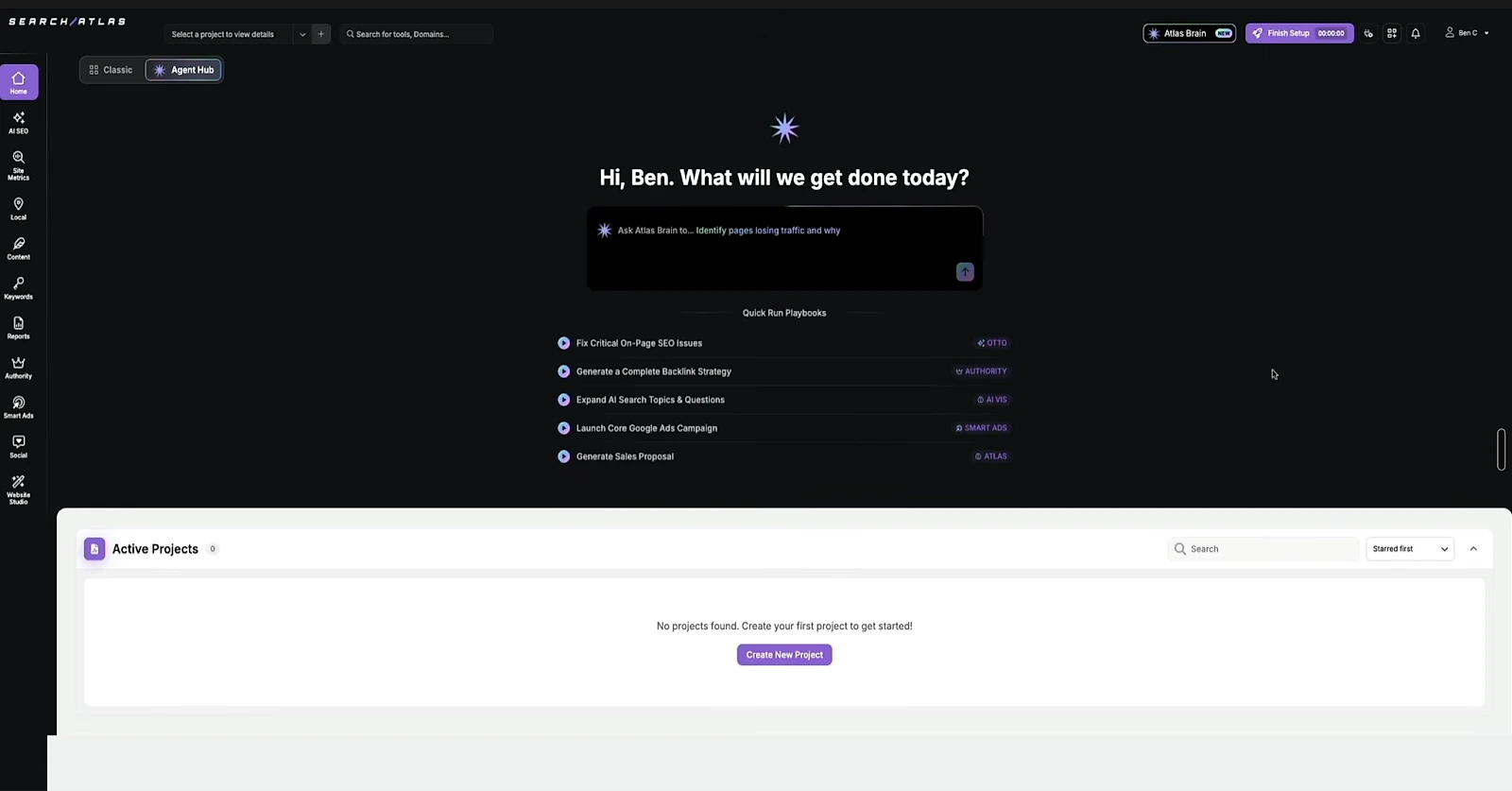
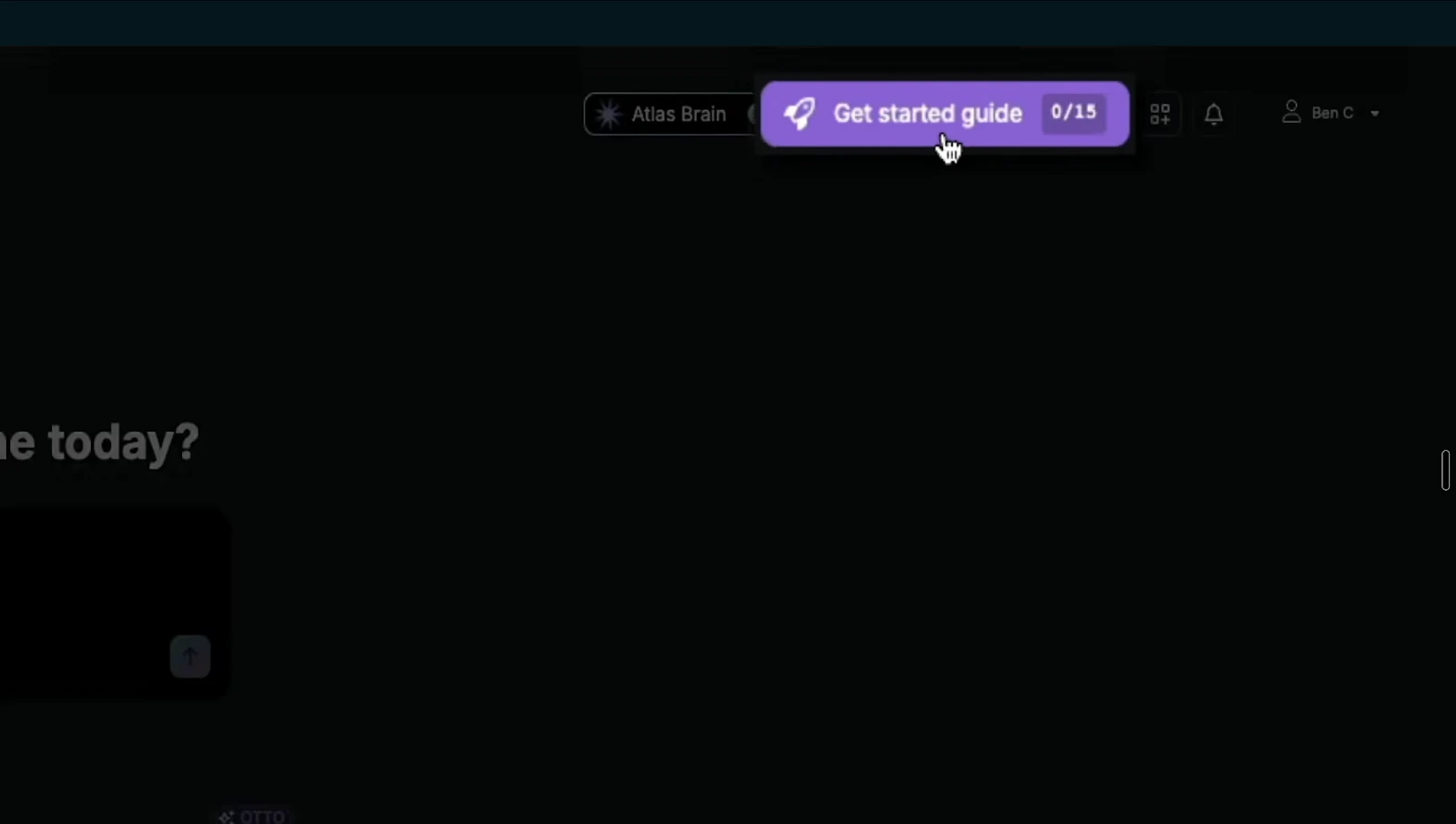
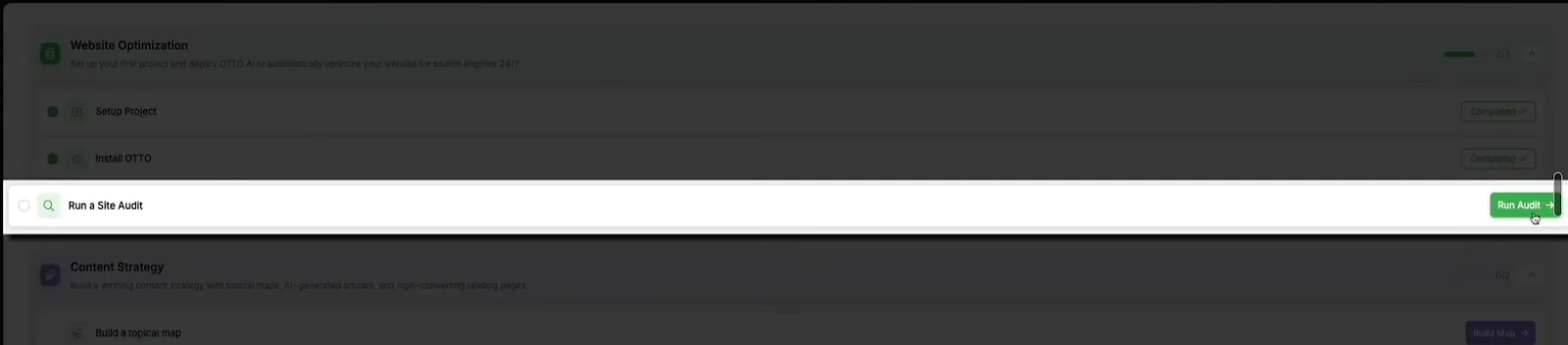
There is a Get Started guide that you can use to create your first project:
Once you open the Get Started guide, you will see six sections: Website Optimization, Content Strategy, Local & Google Business Profile, LLM Visibility & Rank Tracking, Smart Ads, and Authority.
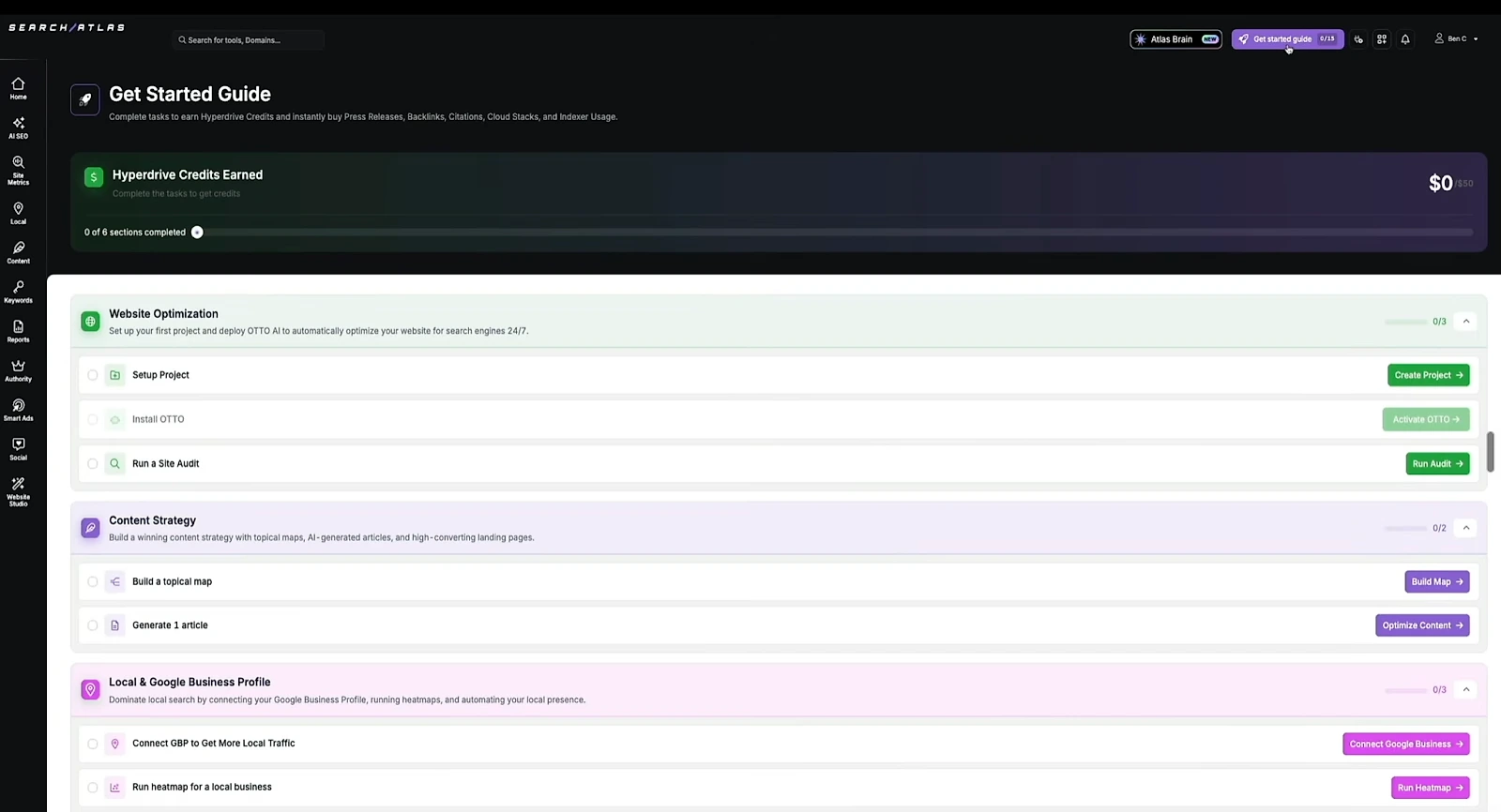
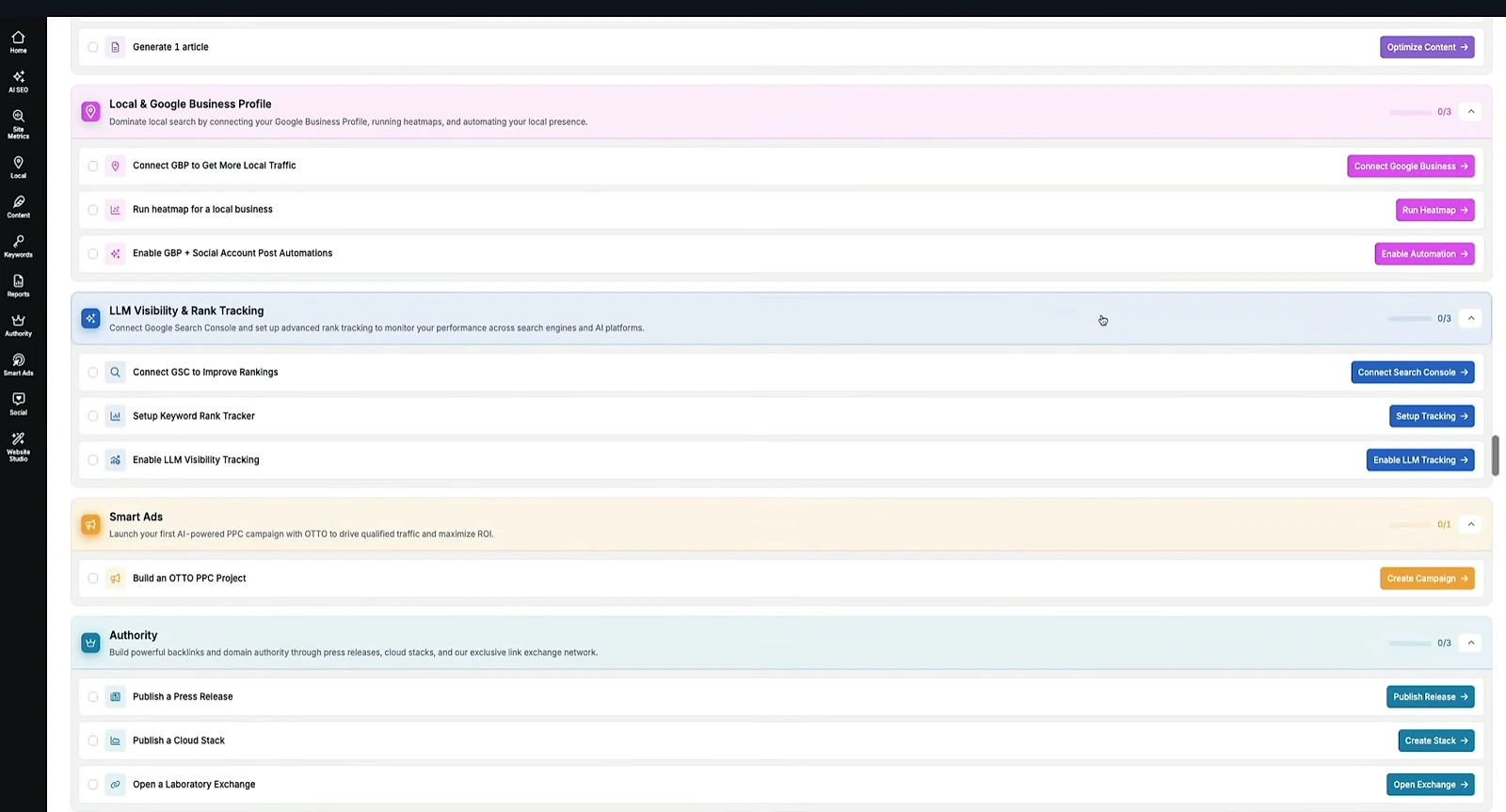
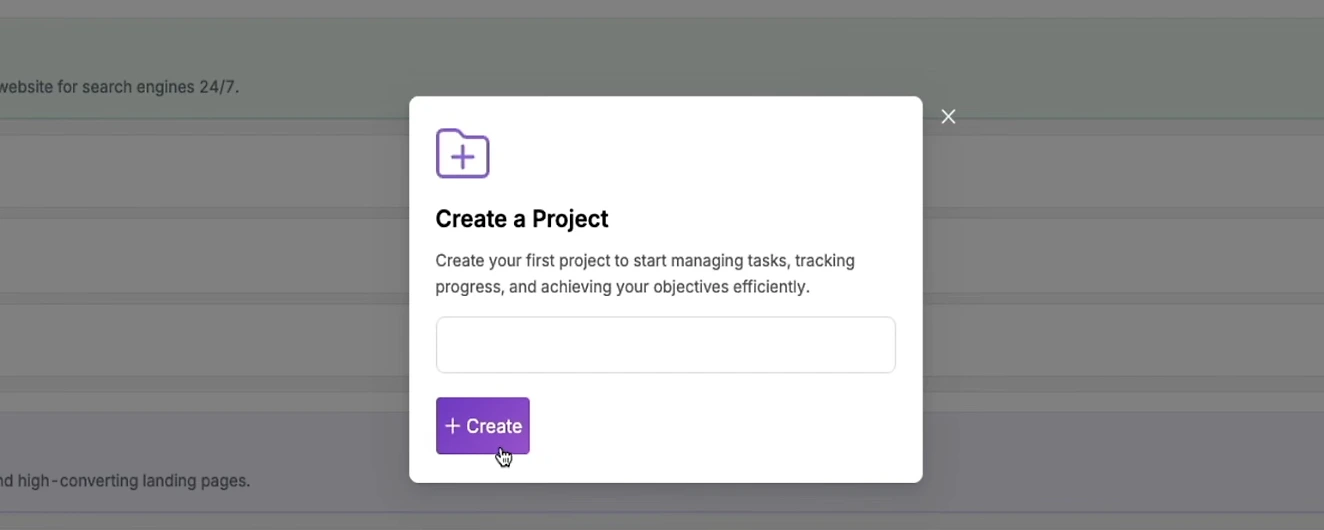
Under Website Optimization, click "Create Project", add your domain, and hit create:
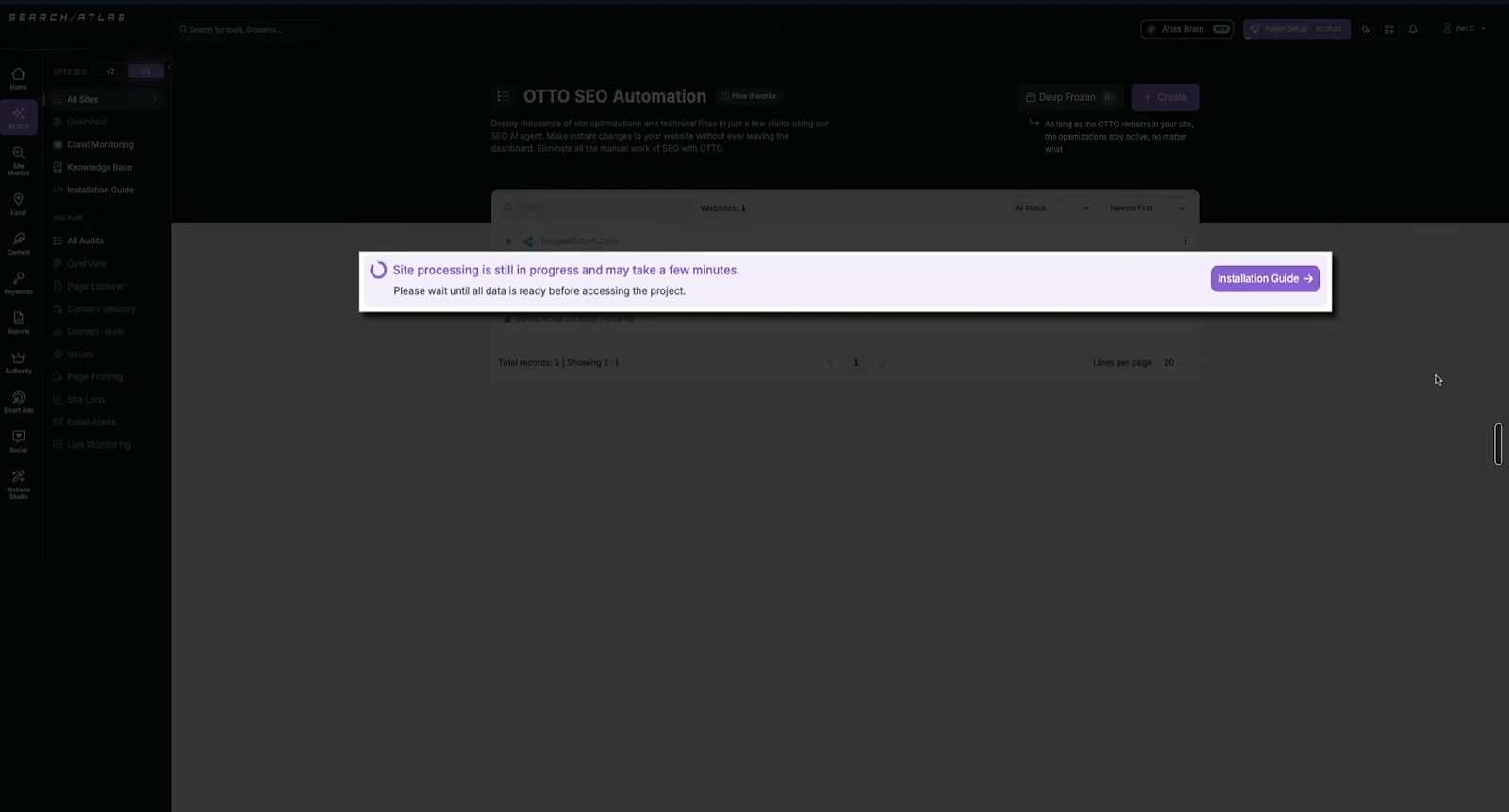
Site processing will start and take a few minutes:
Let's go through the next steps in detail.
1. Connect your website and set up OTTO SEO
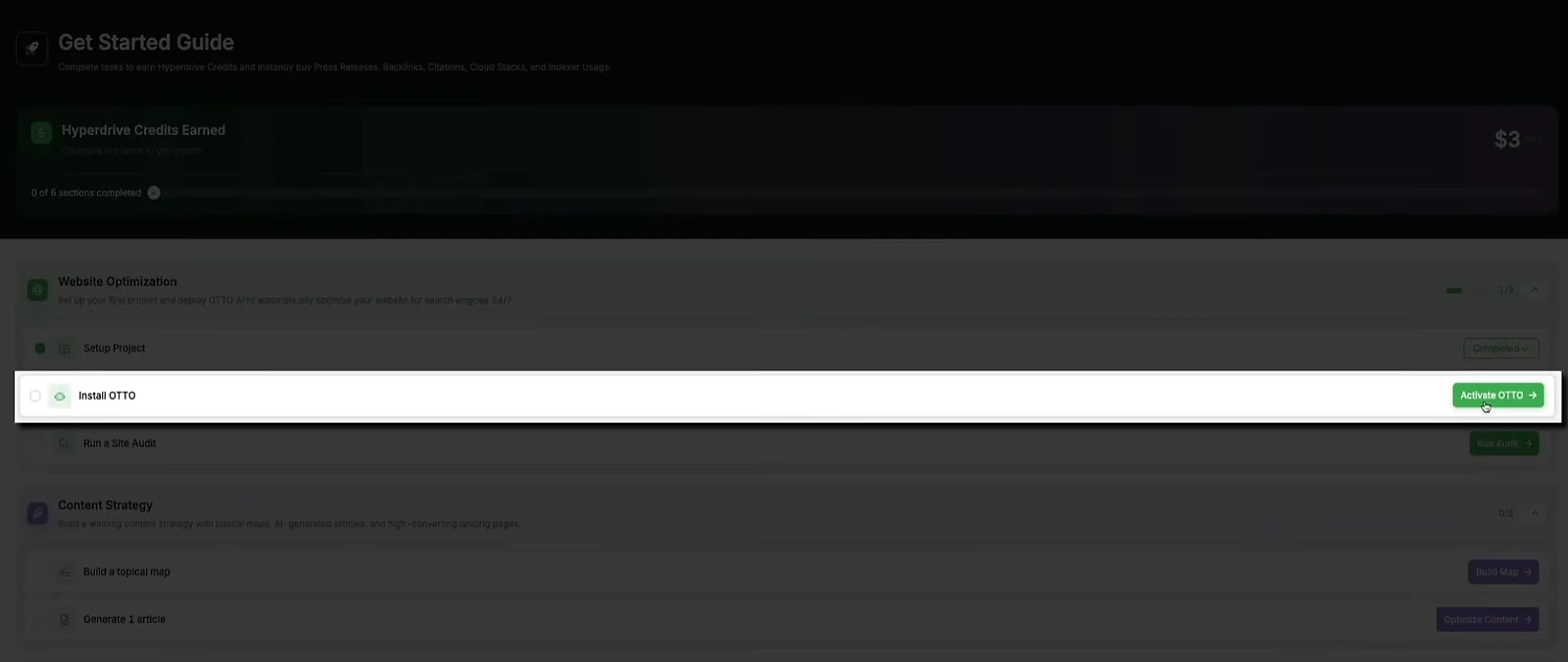
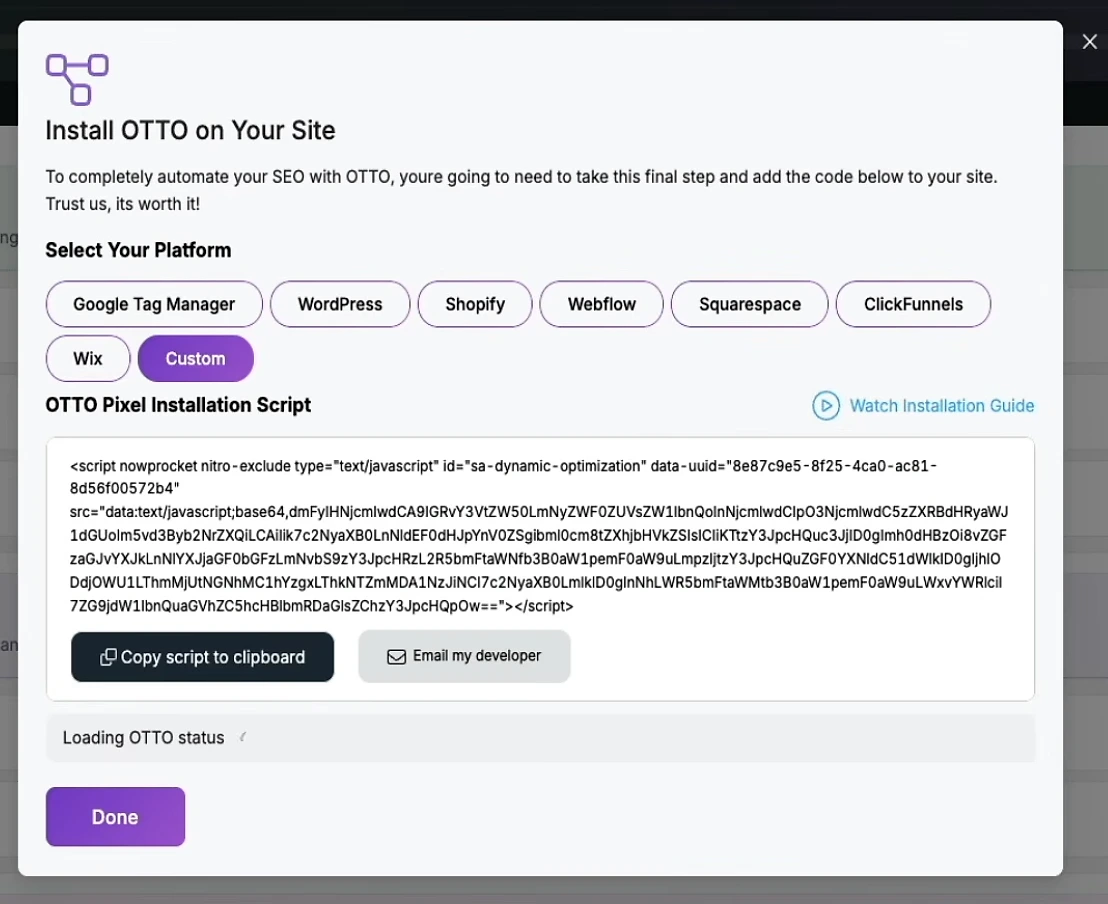
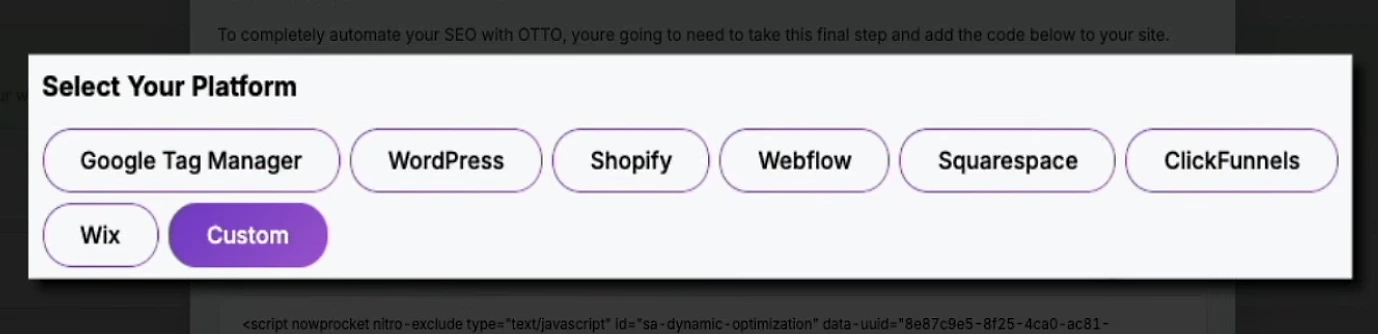
The process starts by creating a project with your website URL and installing OTTO SEO, Search Atlas's AI-powered SEO automation engine. It supports integrations with platforms such as WordPress, Shopify, Webflow, and Google Tag Manager, with a custom installation option for other setups.
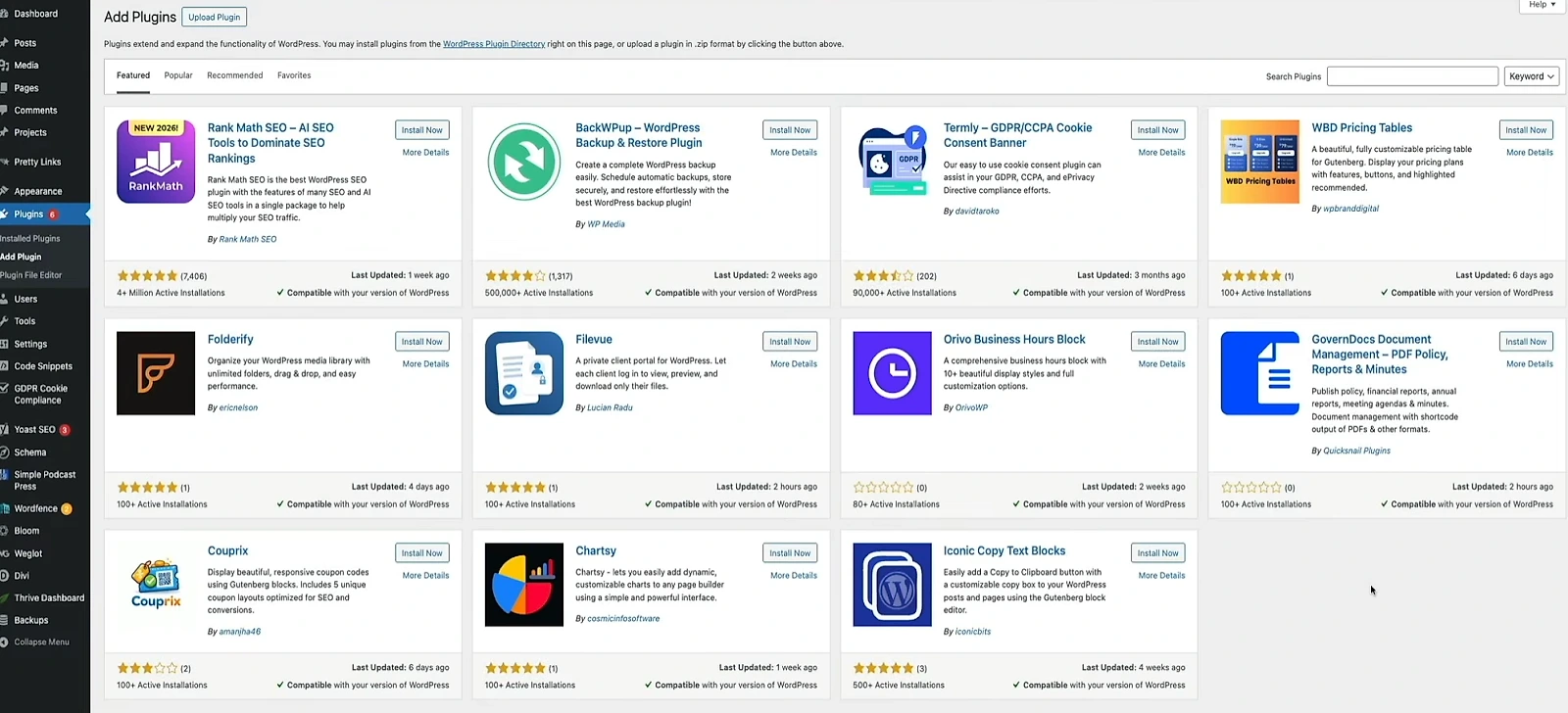
For WordPress users, the plugin connects the website to the Search Atlas account and can import existing SEO settings from tools such as Yoast. During setup, users can configure indexing preferences and enable automatic schema markup for articles, web pages, or products.
Related: Best GEO & AEO Plugins for WordPress 2026
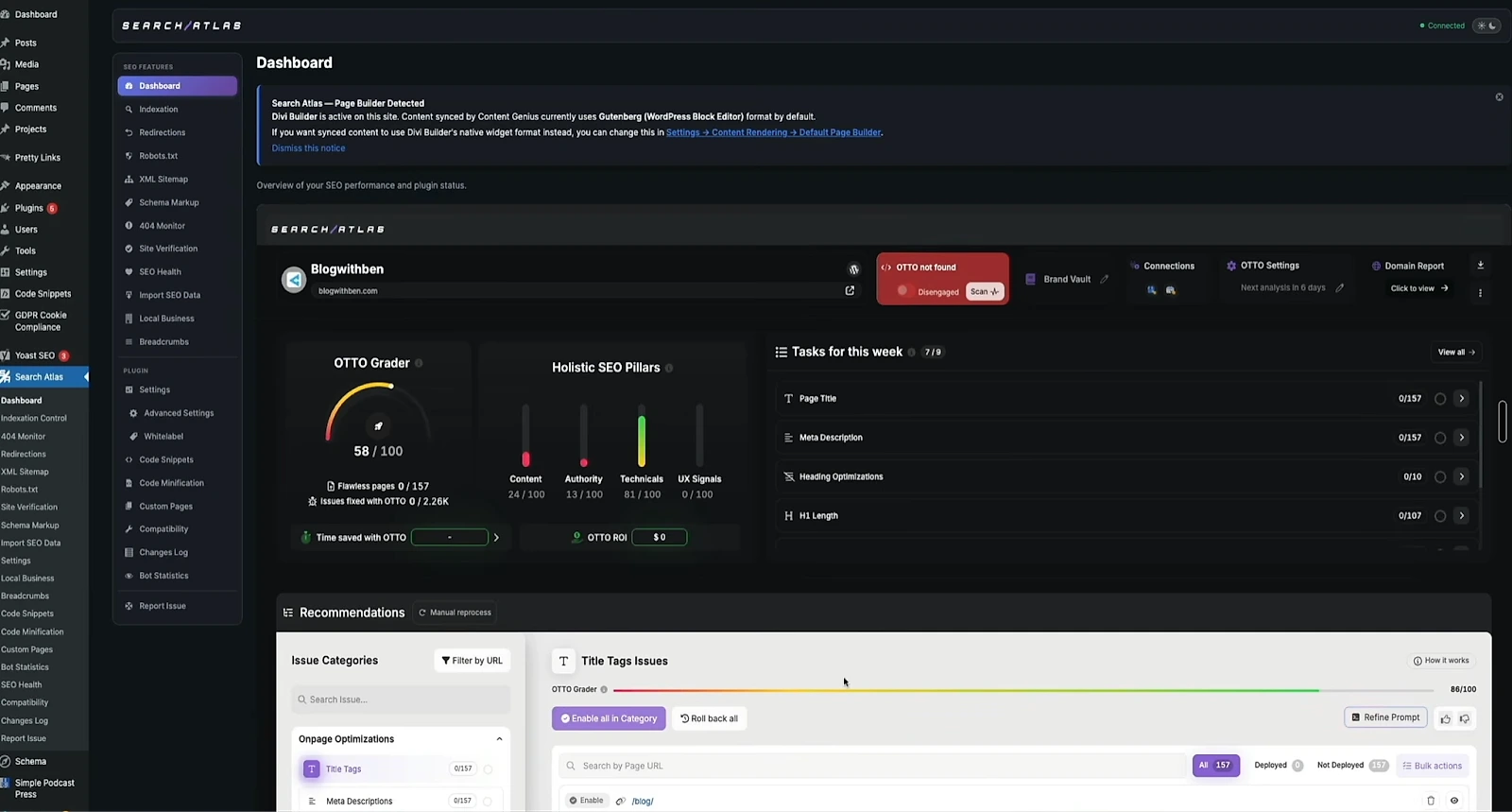
2. Audit your website and connect performance data
Once the website is connected, Search Atlas's Site Auditor evaluates its technical health and highlights issues affecting important pages. The dashboard tracks site health, indexing, page-level issues, and user experience signals, helping users identify which problems deserve attention first.
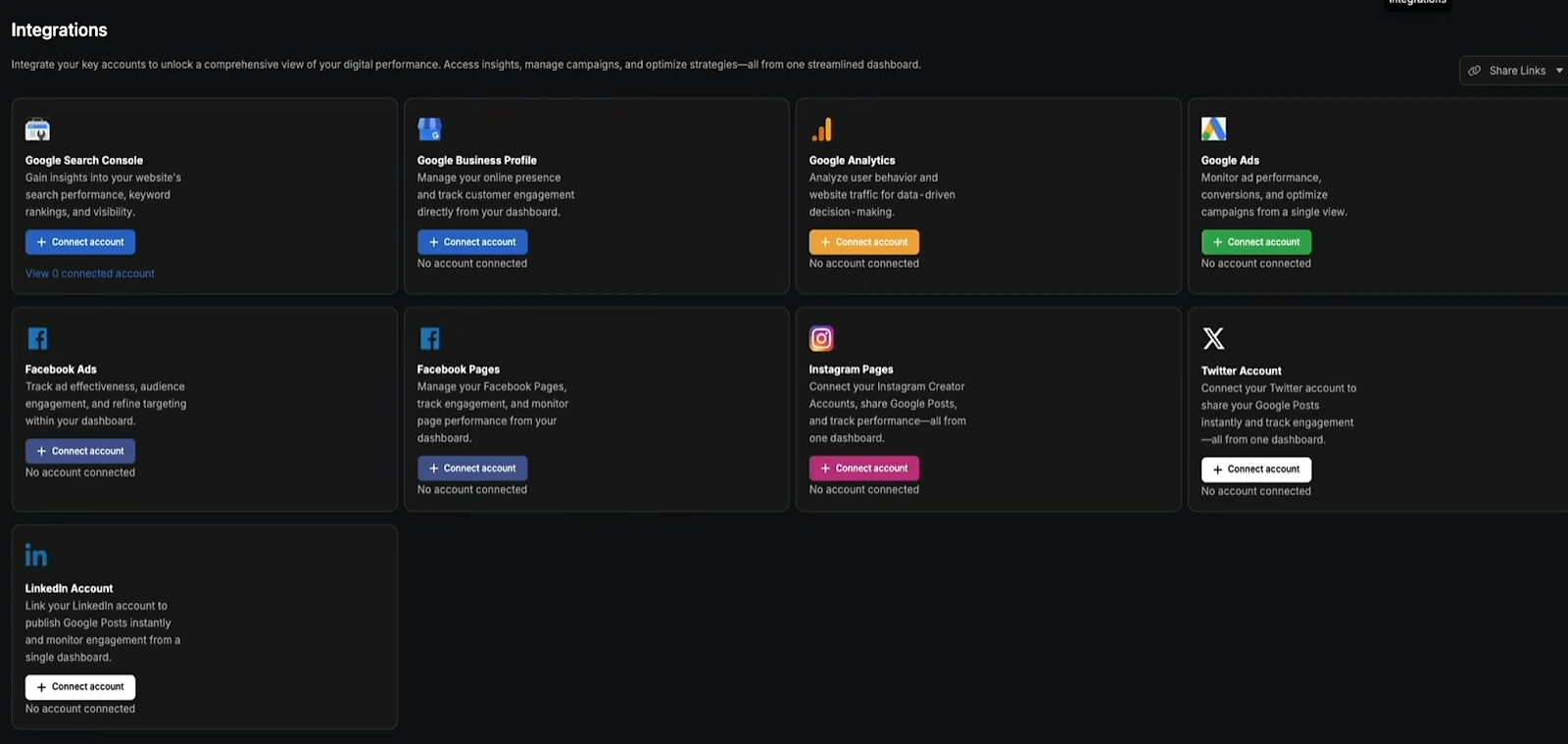
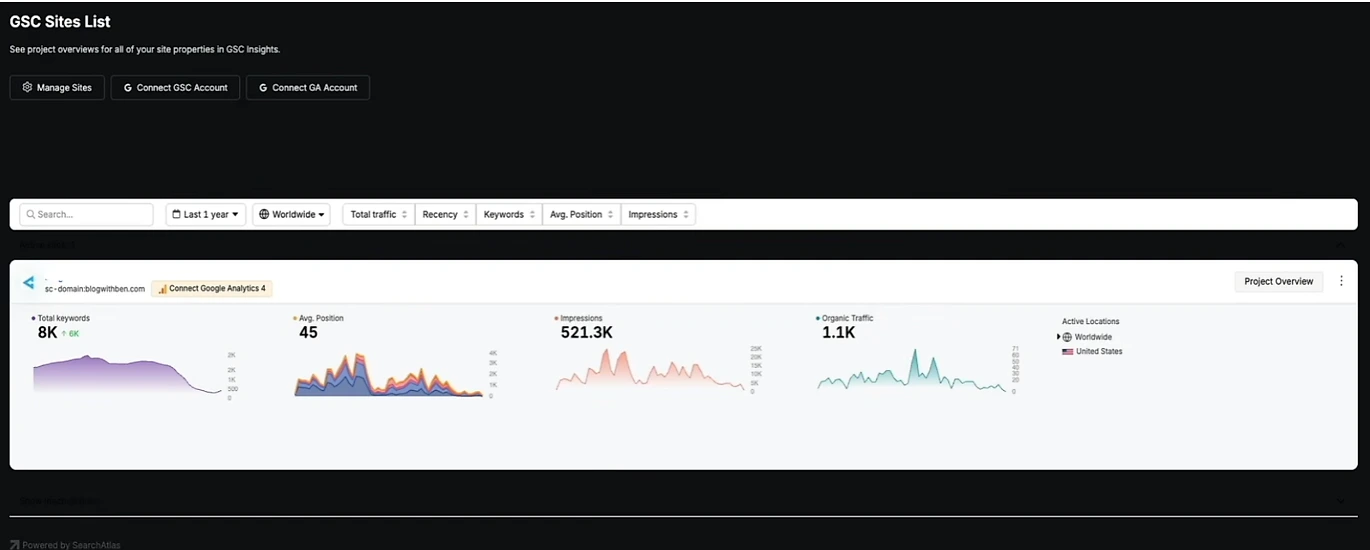
You can also connect Google Search Console and Google Analytics 4 to bring search performance and traffic data into the platform. This provides additional context for evaluating SEO opportunities alongside technical issues.
3. Use OTTO SEO to implement optimization changes
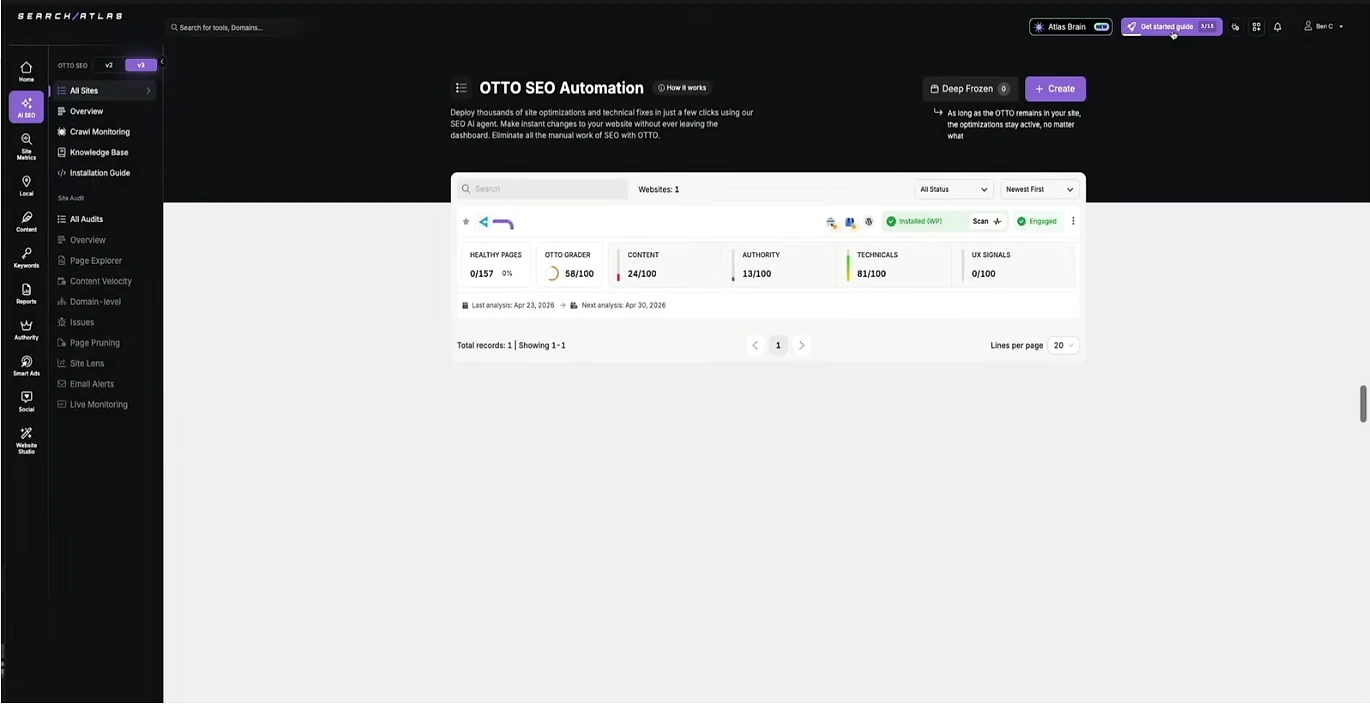
OTTO SEO turns audit findings into a prioritized list of recommended improvements across areas such as content, on-page SEO, indexing, technical performance, and authority building.
For example, it can identify pages that need title tag or meta description updates, generate suggested replacements, and let users review or edit those changes before deploying them in bulk. WordPress users can access the same recommendations through the Search Atlas plugin, keeping the workflow connected to their existing CMS.
4. Build a content strategy around your website
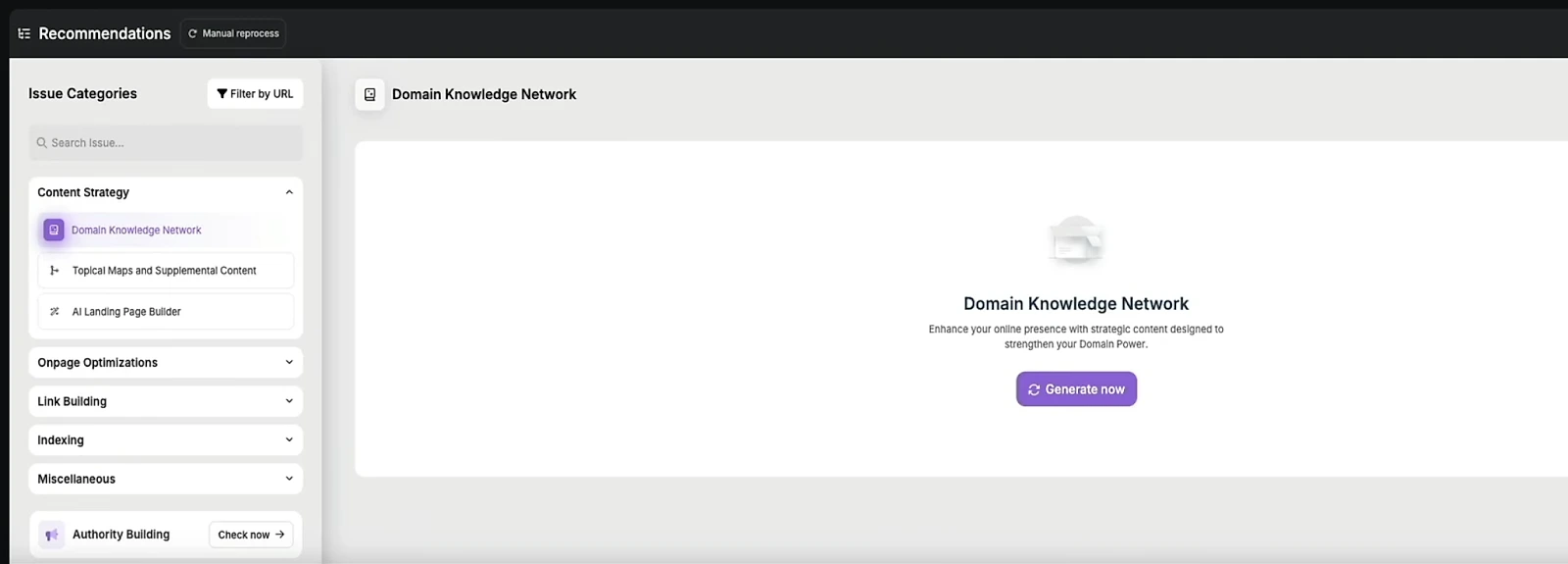
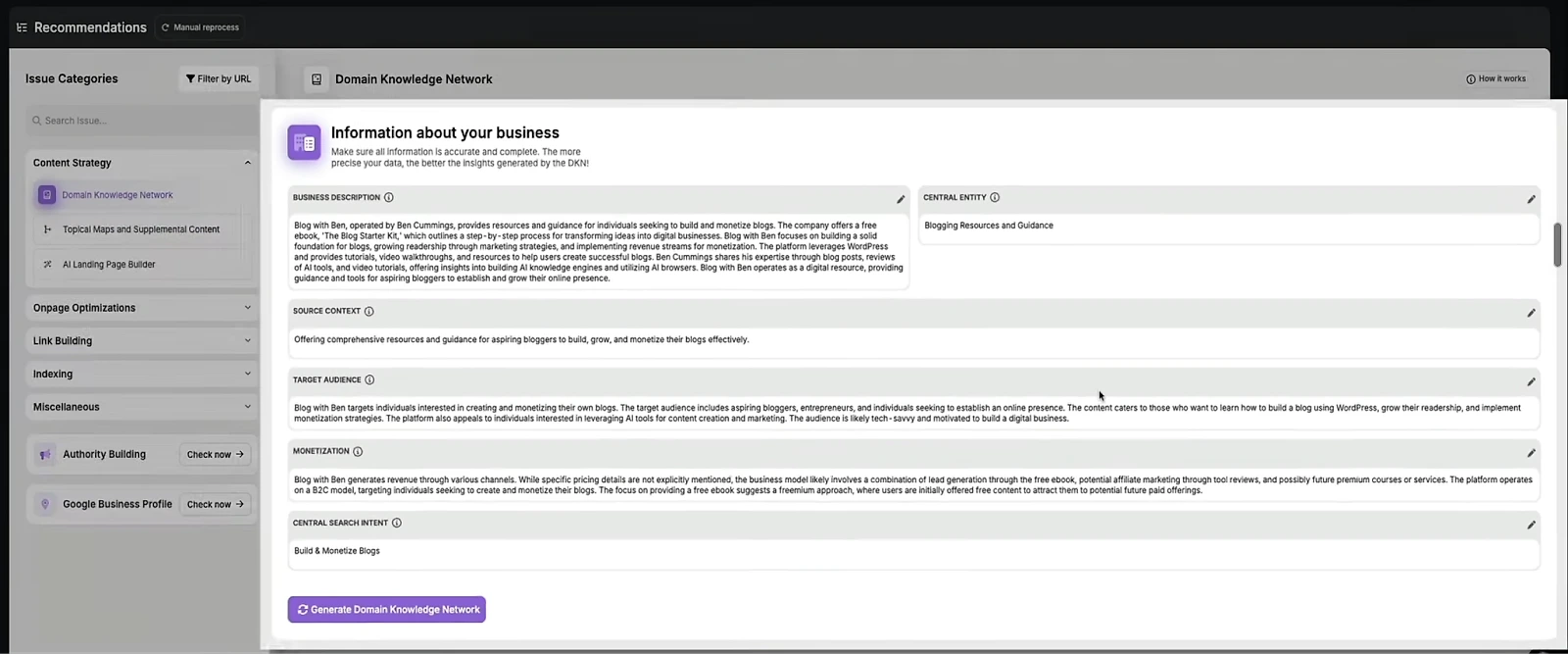
Search Atlas uses its Domain Knowledge Network to develop a content roadmap based on a website's niche, audience, business model, and search intent. Users can review the generated business context and create topic clusters designed to strengthen coverage of their core subject areas.
The platform can then turn individual recommendations into AI-generated article drafts. Its content editor supports further revisions, FAQ generation, image creation, and content scoring. Once the draft is ready, users can export it or send it directly to WordPress as a draft, published post, or scheduled article.
5. Automate SEO workflows with Atlas Brain and Playbooks
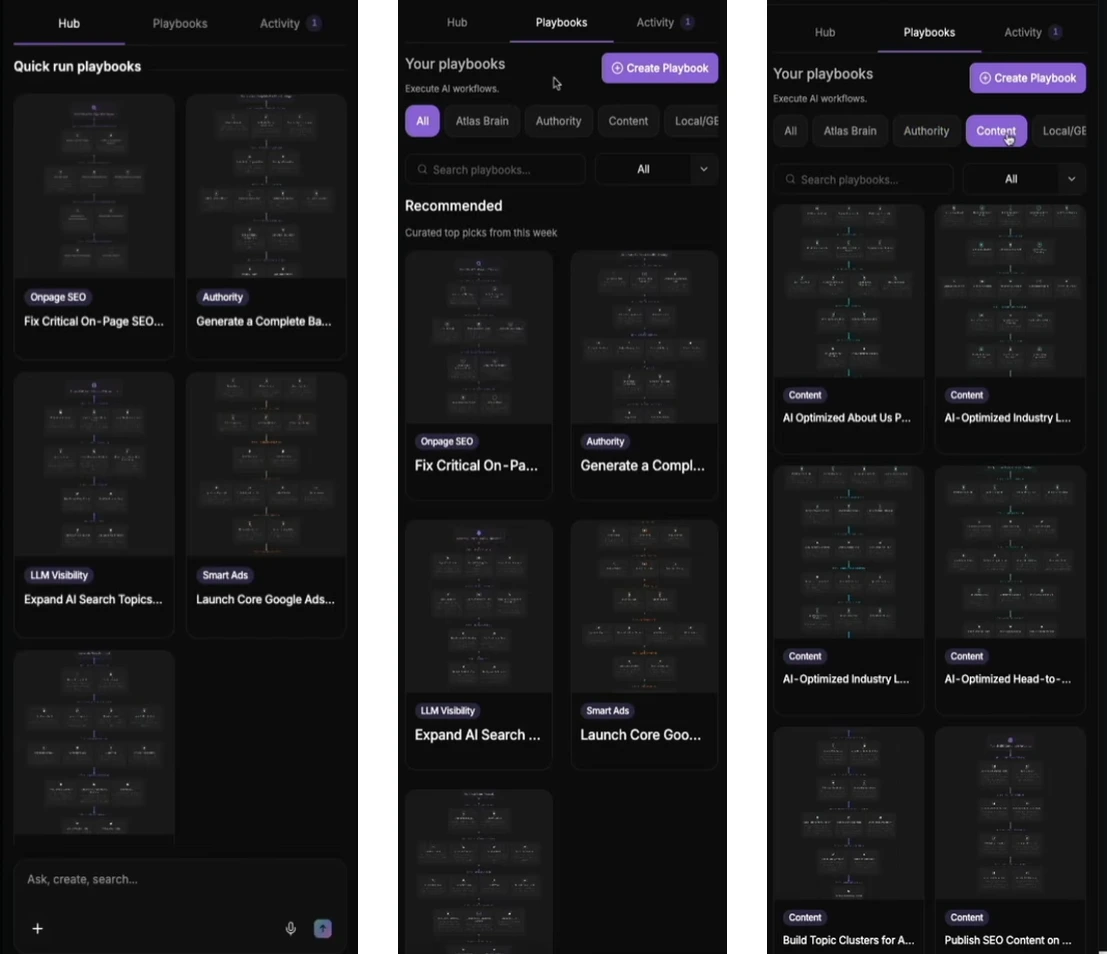
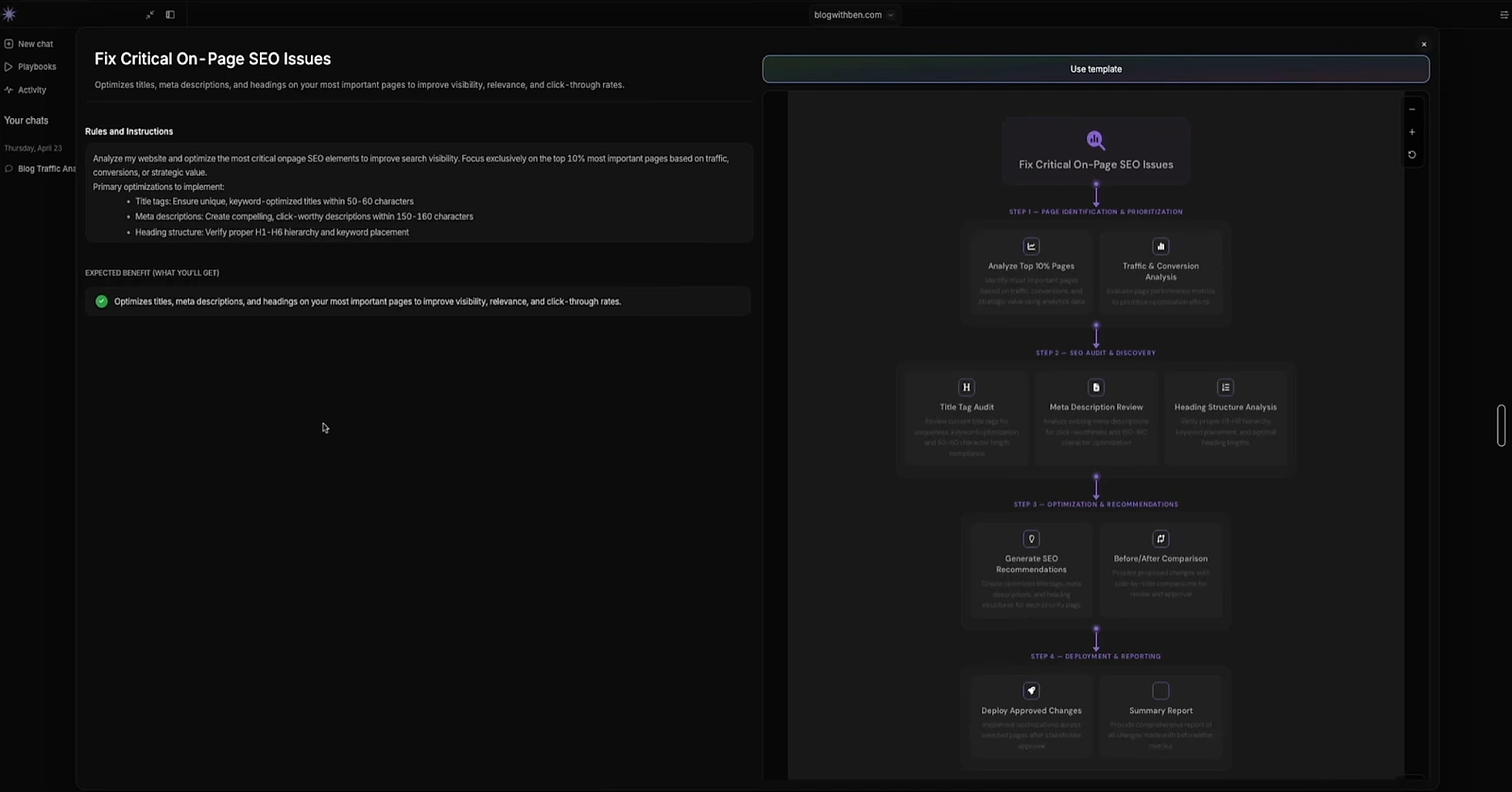
Atlas Brain provides a conversational interface for requesting SEO tasks, while Playbooks offer predefined workflows for common activities such as fixing on-page issues or developing a backlink strategy.
Users can inspect a playbook's instructions and expected actions before running it. During the backlink-strategy workflow we tested, for example, the system generated an authority blueprint with target pages, keyword recommendations, link-building options, and budget tiers. It also showed approval steps before execution, so users can review proposed actions rather than publishing everything automatically.
6. Research competitors with Site Explorer
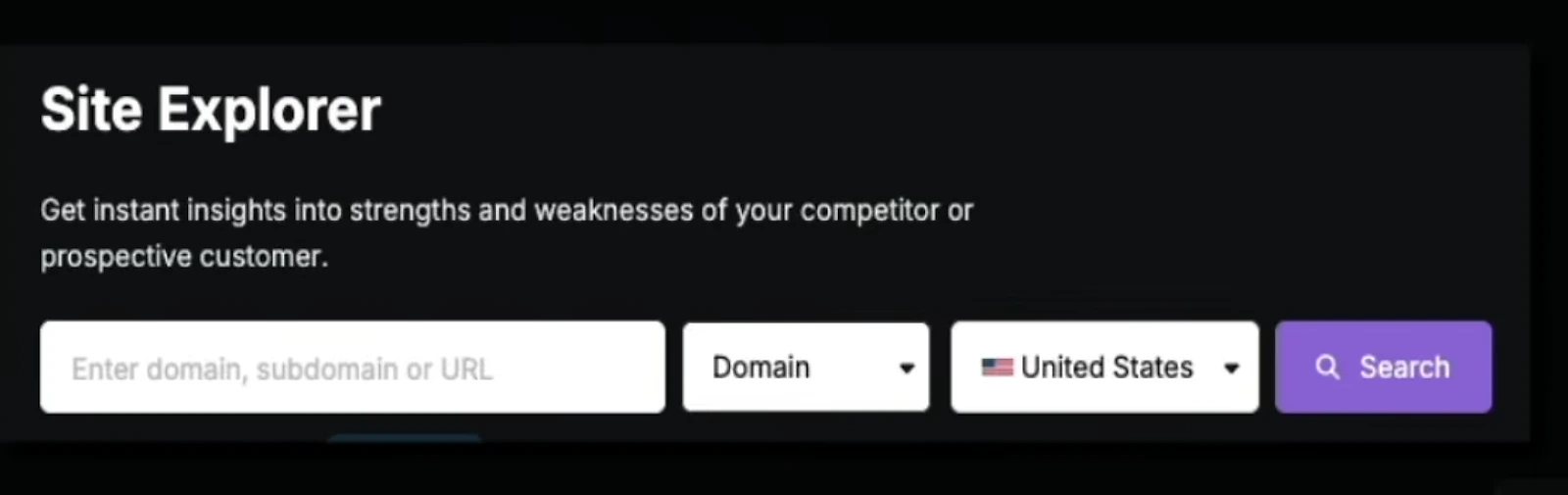
Search Atlas's Site Explorer lets users analyze competing domains, including their organic and paid keywords, estimated traffic, ranking history, and advertising activity. It also includes topical dominance and topic-gap analysis to identify subject areas where competitors have stronger coverage or where new content could present an opportunity.
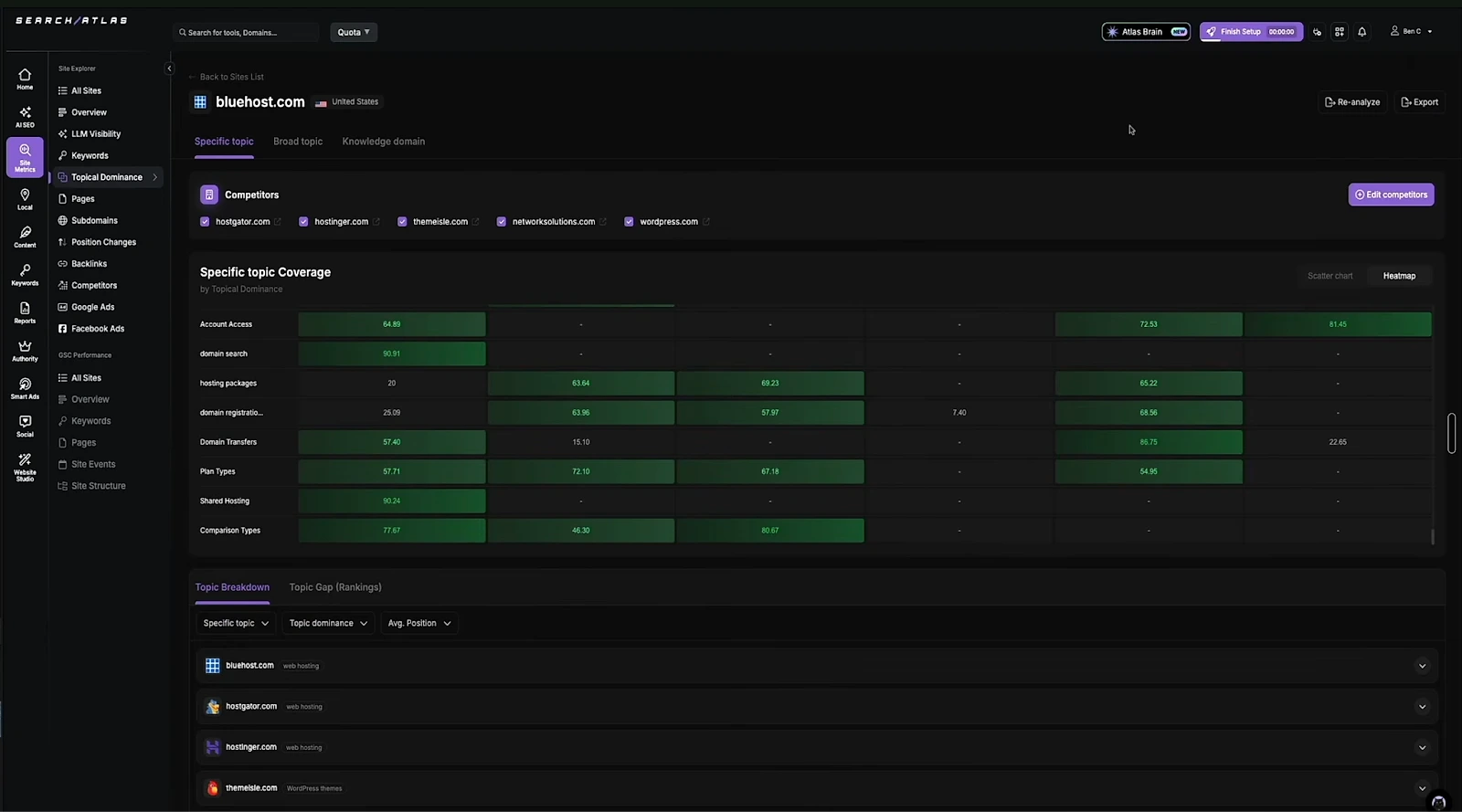
This connects competitor research with the rest of the platform: users can discover gaps, build a content plan, generate articles, and implement SEO improvements without constantly switching between separate tools.
How much does Search Atlas cost? Search Atlas pricing in 2026
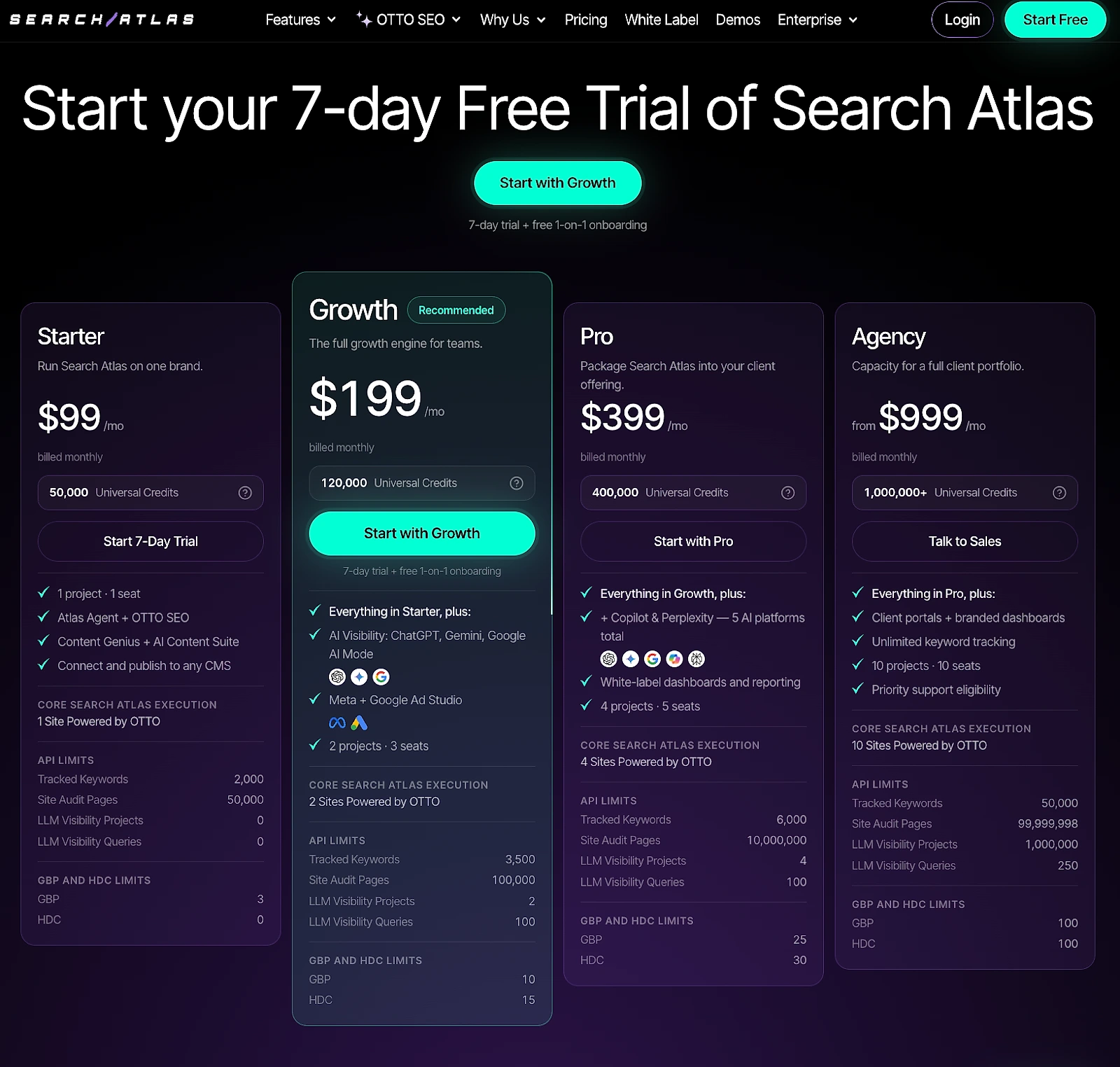
Search Atlas offers four main subscription tiers, starting at $99/month for Starter. Every plan comes with a 7-day free trial, and every trial includes a free 1-on-1 onboarding call.
| Plan | Price | Seats | Sites powered by OTTO | Best for |
|---|---|---|---|---|
| Starter | $99/mo | 1 | 1 | Individuals and single-site SEO |
| Growth | $199/mo | 3 | 2 | Growing businesses needing AI visibility |
| Pro | $399/mo | 5 | 4 | Teams needing expanded AI coverage and white-label reporting |
| Agency / Enterprise | From $999/mo | 10 | 10 | Larger client portfolios |
Prices were checked against Search Atlas's live pricing page on 11 October 2026, where every plan is shown billed monthly.
What do you get with each Search Atlas plan?
- Starter: Core SEO automation through OTTO SEO, Atlas Agent, Content Genius and the AI Content Suite, with one project and 50,000 Universal Credits.
- Growth: Adds AI visibility tracking across ChatGPT, Gemini, and Google AI Mode, plus Google and Meta advertising tools and 120,000 Universal Credits.
- Pro: Adds Copilot and Perplexity visibility, white-label reporting, and higher usage limits.
- Agency / Enterprise: Provides expanded capacity, client portals, branded dashboards, and priority support eligibility.
Important pricing detail: AI visibility tracking begins with Growth, not Starter. If you mainly want to monitor your brand across AI search engines, the practical entry price is $199/month.
Search Atlas pros and cons
| Pros | Cons |
|---|---|
| All-in-one SEO platform: Combines keyword research, content optimization, site audits, and competitor analysis. | Expensive: Advanced plans can be costly for freelancers and smaller businesses. |
| OTTO SEO automation: Helps implement technical and on-page SEO fixes in bulk. | Requires oversight: Automated changes should be reviewed before deployment. |
| AI content tools: Generates and optimizes content around keywords and topic clusters. | Learning curve: The large number of features can overwhelm beginners. |
| AI visibility tracking: Tracks brand mentions and citations across supported AI platforms. | Plan limitations: AI visibility tracking isn't included in the Starter plan. |
| Built for teams: Offers Playbooks, white-label reporting, and client management features on higher tiers. | Mixed user feedback: Some reviewers report bugs, inconsistent results, and customer support issues. |
Search Atlas and OTTO SEO reviews: what users say
Search Atlas reviews on Trustpilot
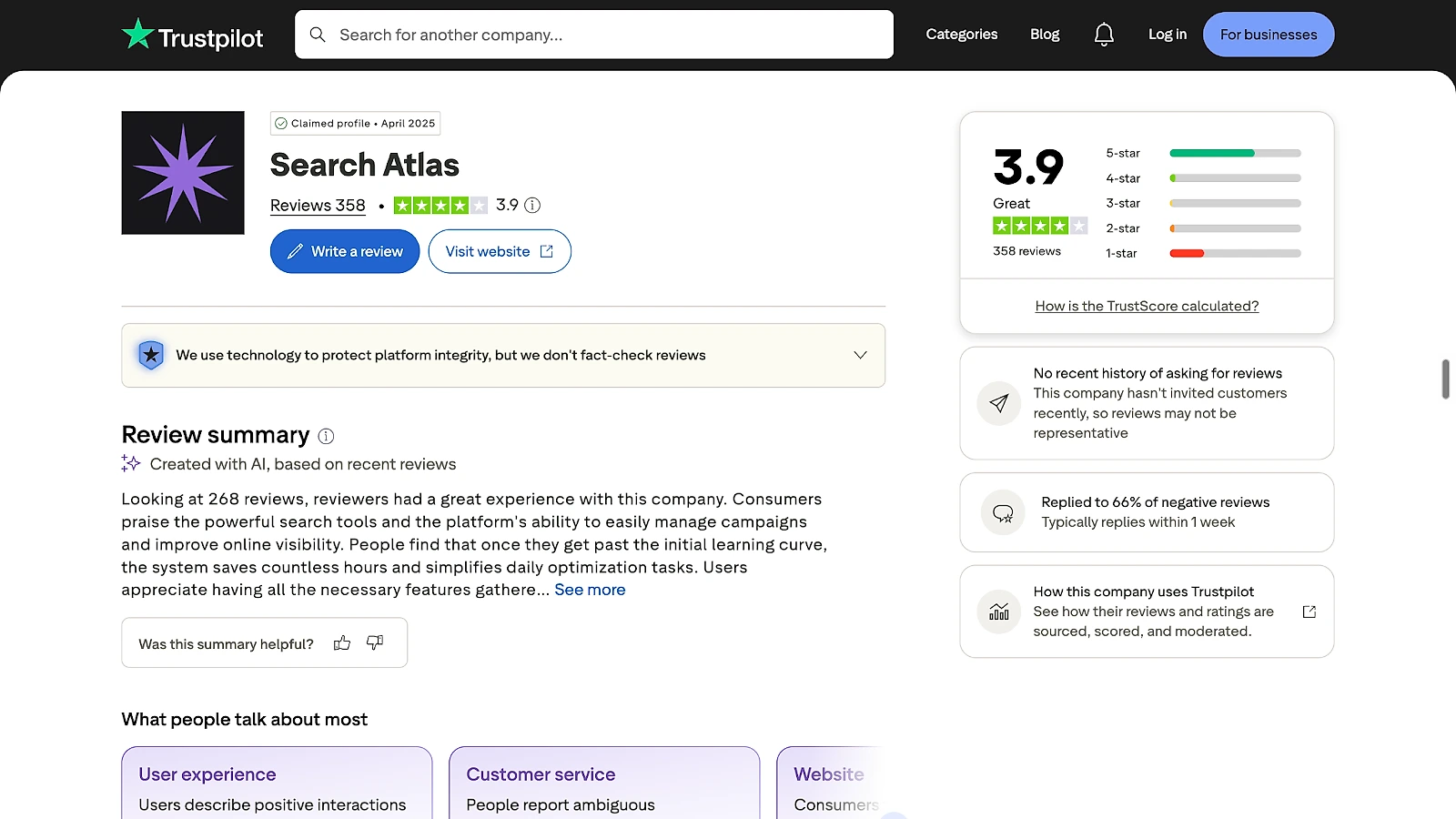
Search Atlas has a 3.9/5 Trustpilot score from 358 reviews. Users praise its all-in-one SEO toolkit, automation, content features, and time savings, while recurring complaints focus on software bugs, slow support, and billing or cancellation difficulties. (Source)
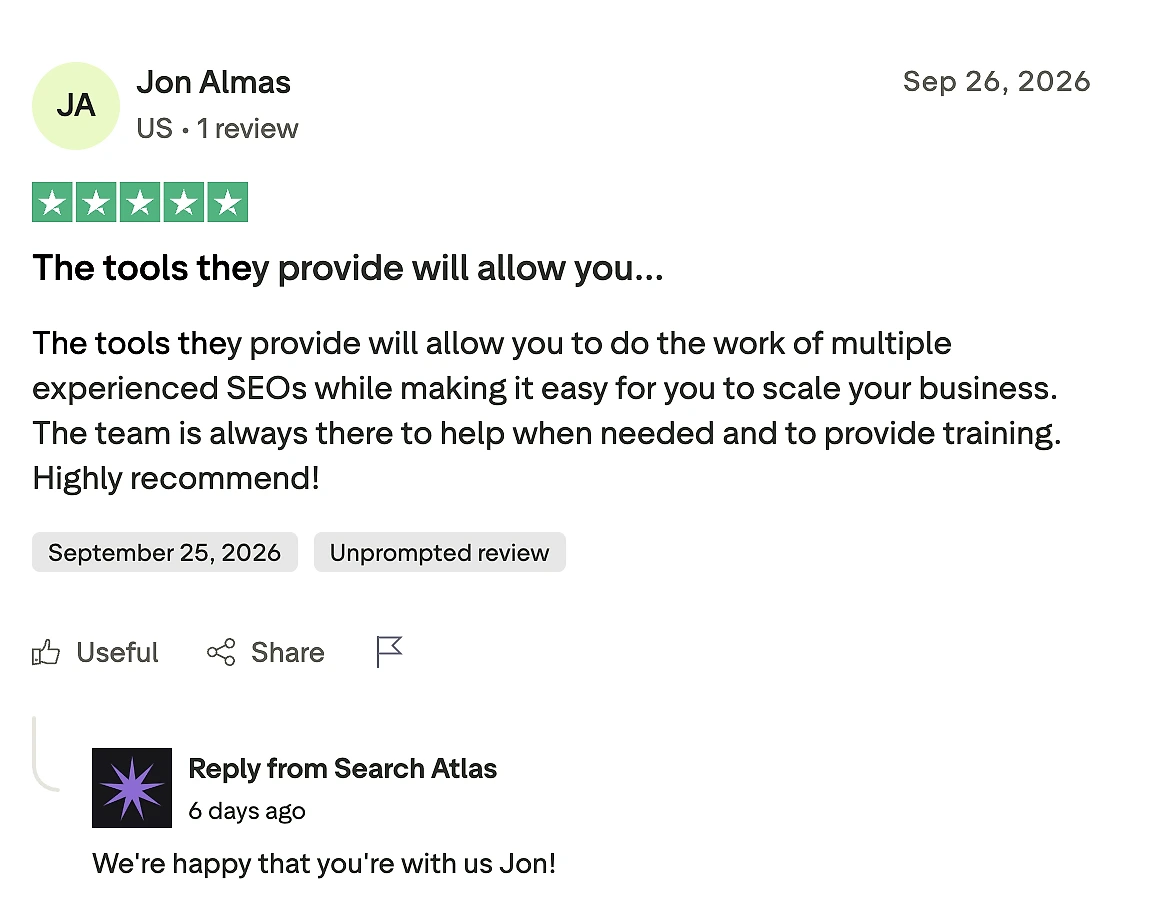
Positive review (5/5): "The tools they provide will allow you to do the work of multiple experienced SEOs while making it easy for you to scale your business." Jon Almas
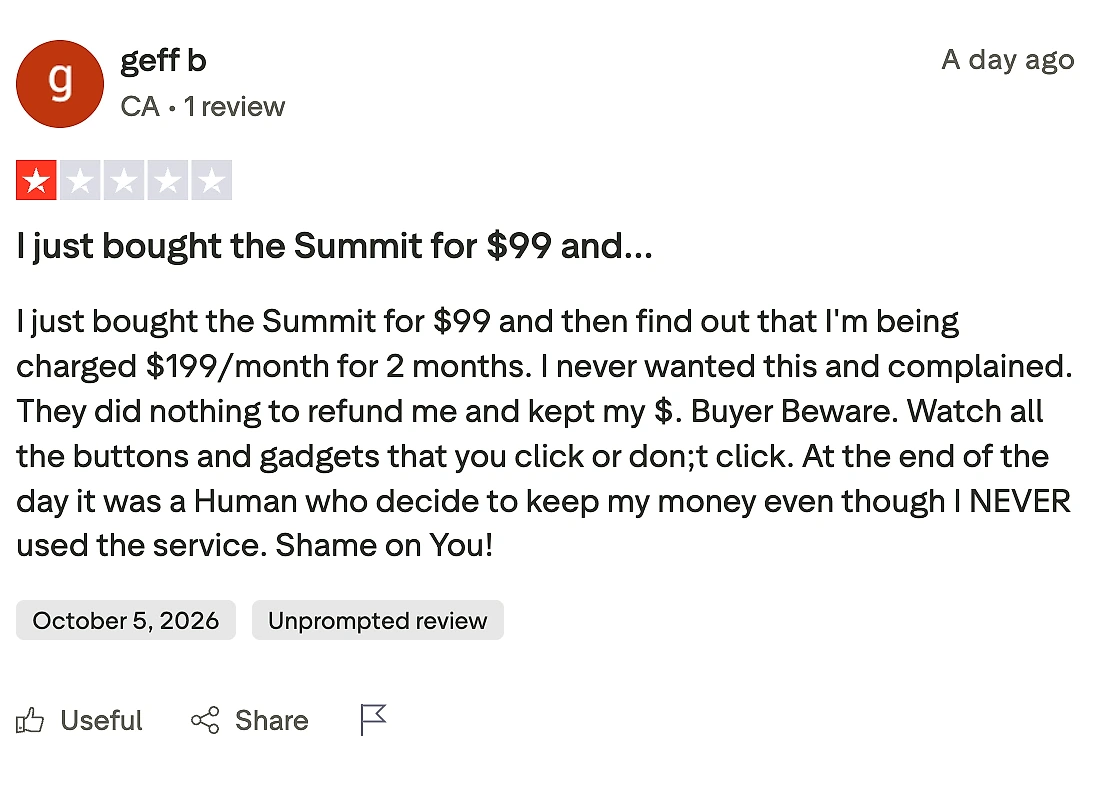
Negative review (1/5): "I just bought the Summit for $99 and then find out that I'm being charged $199/month for 2 months." geff b, who also complained about not receiving a refund.
Search Atlas reviews on Reddit
Reddit users have mixed opinions about Search Atlas. Supporters praise OTTO's AI-powered SEO automation, one-click website changes, and its potential to scale agency workflows.
The main criticisms concern platform crashes, inconsistent analytics and reports, slow customer support, and cases where users say OTTO changes hurt client websites.
Overall takeaway: Redditors see promise in Search Atlas's agentic SEO capabilities, but experiences with reliability and support vary, so test the platform carefully before rolling it out across multiple sites. (Source)
Search Atlas reviews on G2
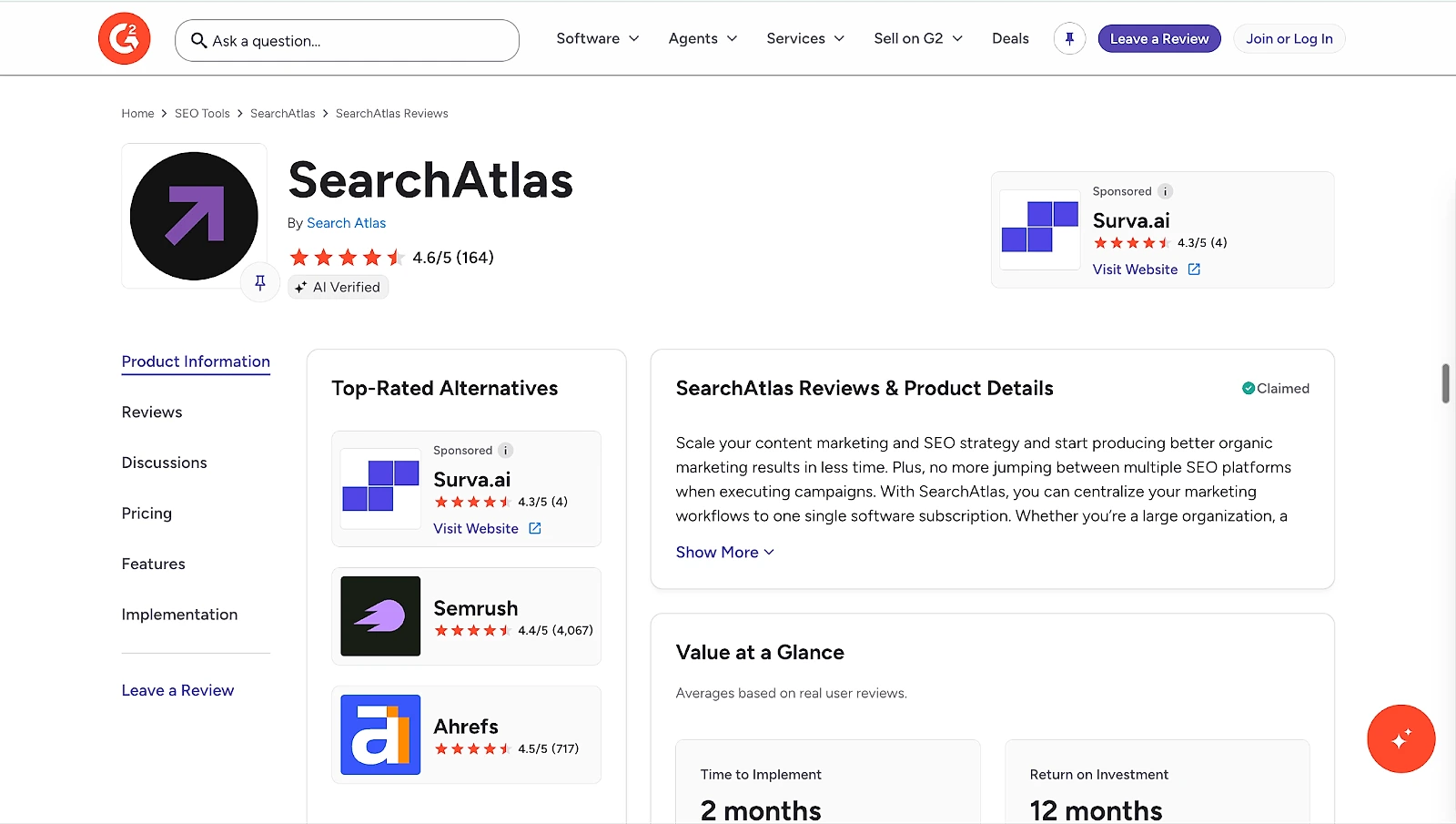
Search Atlas has a 4.6/5 rating from 164 reviews on G2. Users praise its all-in-one SEO toolkit, time-saving automation, actionable data, and the way it brings AI visibility into existing marketing workflows. Common criticisms include technical bugs, inconsistent execution of SEO changes, slow customer support, a learning curve, and pricing. (Source)
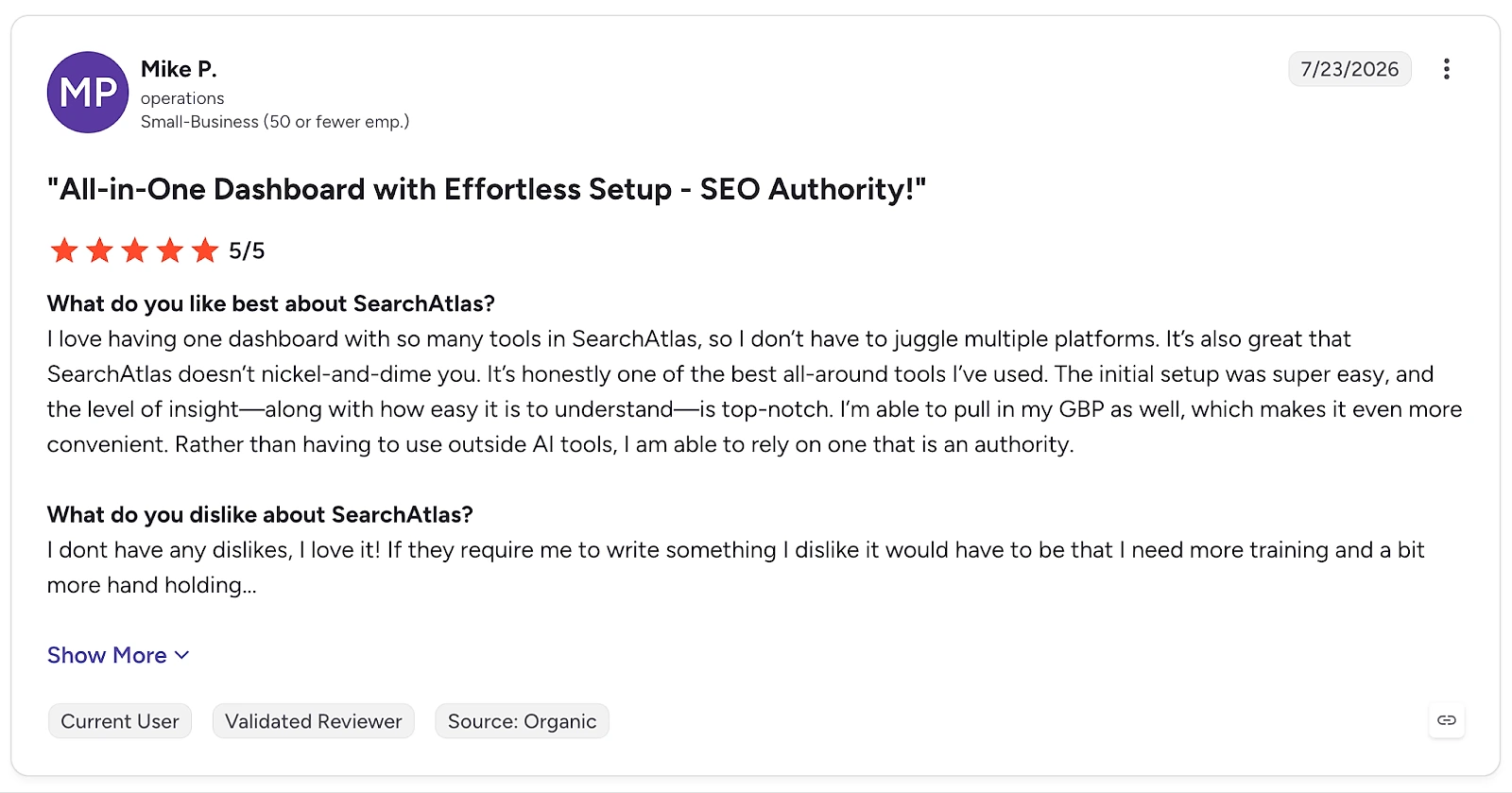
Positive review (5/5): "I love having one dashboard with so many tools in SearchAtlas, so I don't have to juggle multiple platforms." Mike P. (Source)
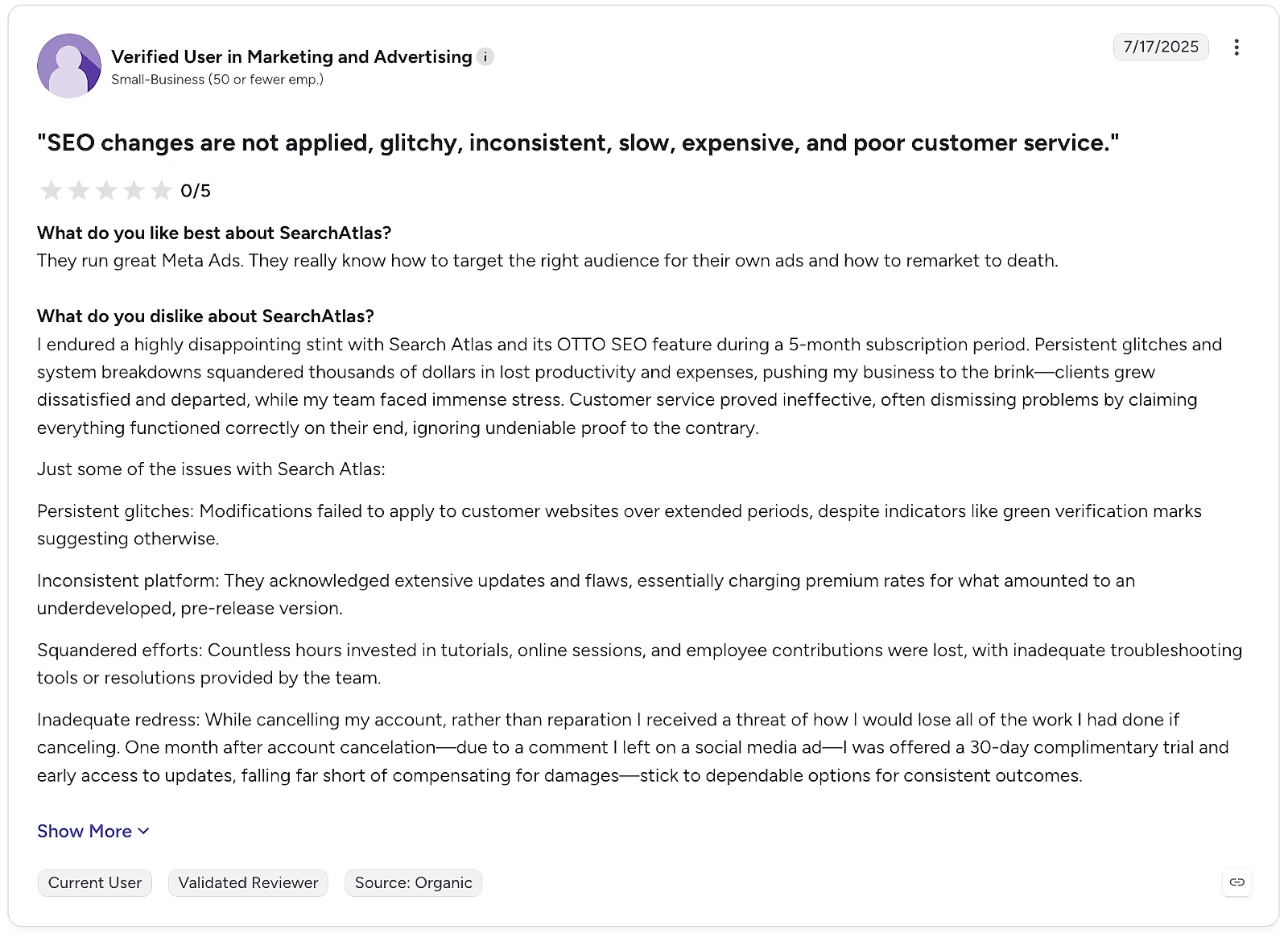
Negative review (0/5): "SEO changes are not applied, glitchy, inconsistent, slow, expensive, and poor customer service." That is the review's title as shown on G2. (Source)
Search Atlas reviews on Capterra
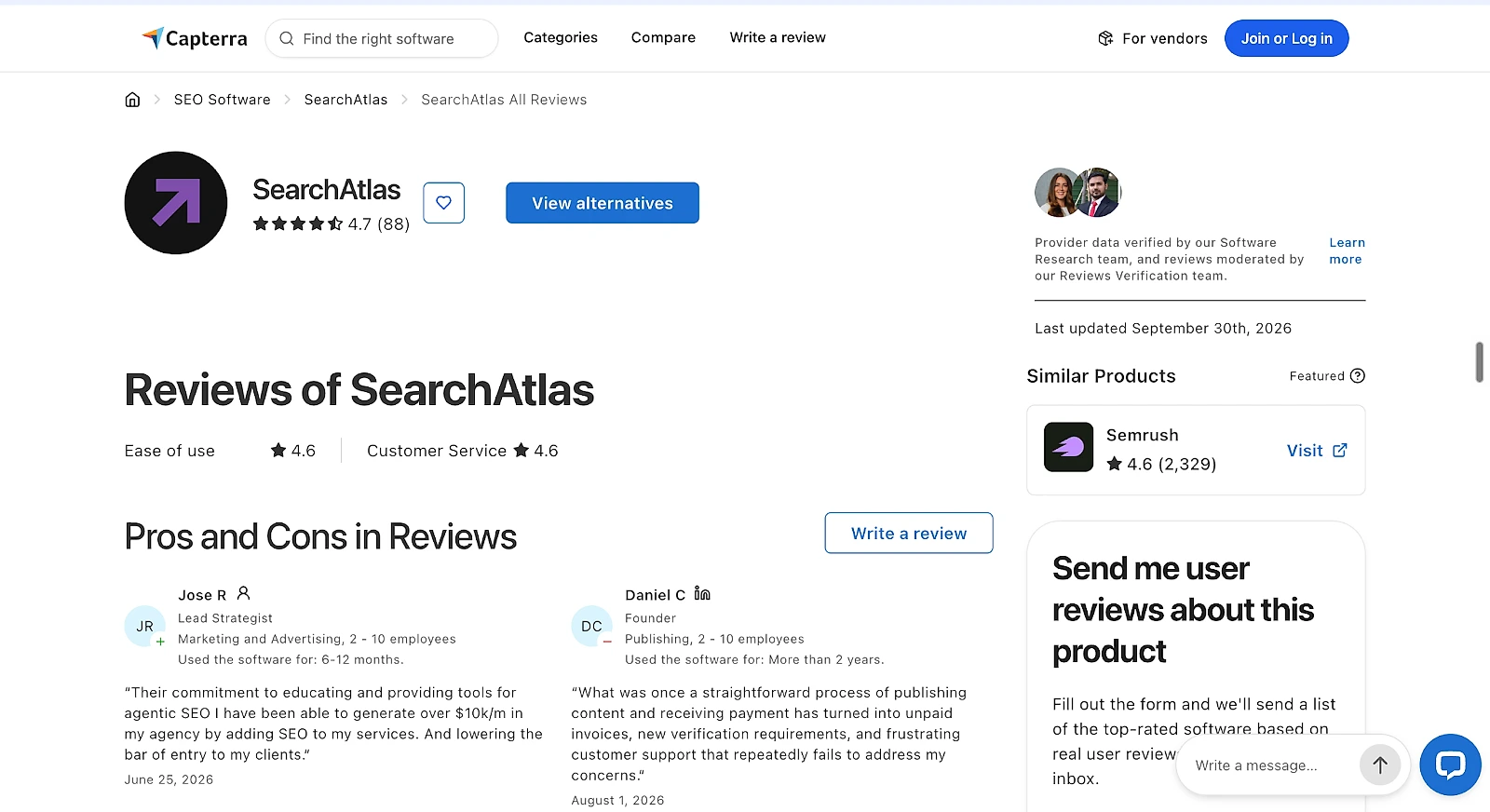
Search Atlas has a 4.7/5 rating from 88 reviews on Capterra. Users praise OTTO's one-click SEO automation, the comprehensive feature set, time savings, and the ability to consolidate multiple tools into one platform. (Source)
Common criticisms include a learning curve, concerns about AI-generated content quality, inconsistent SEO results, and frustration with customer support or billing. Some reviewers also say the platform needs ongoing human supervision rather than a set-and-forget approach.
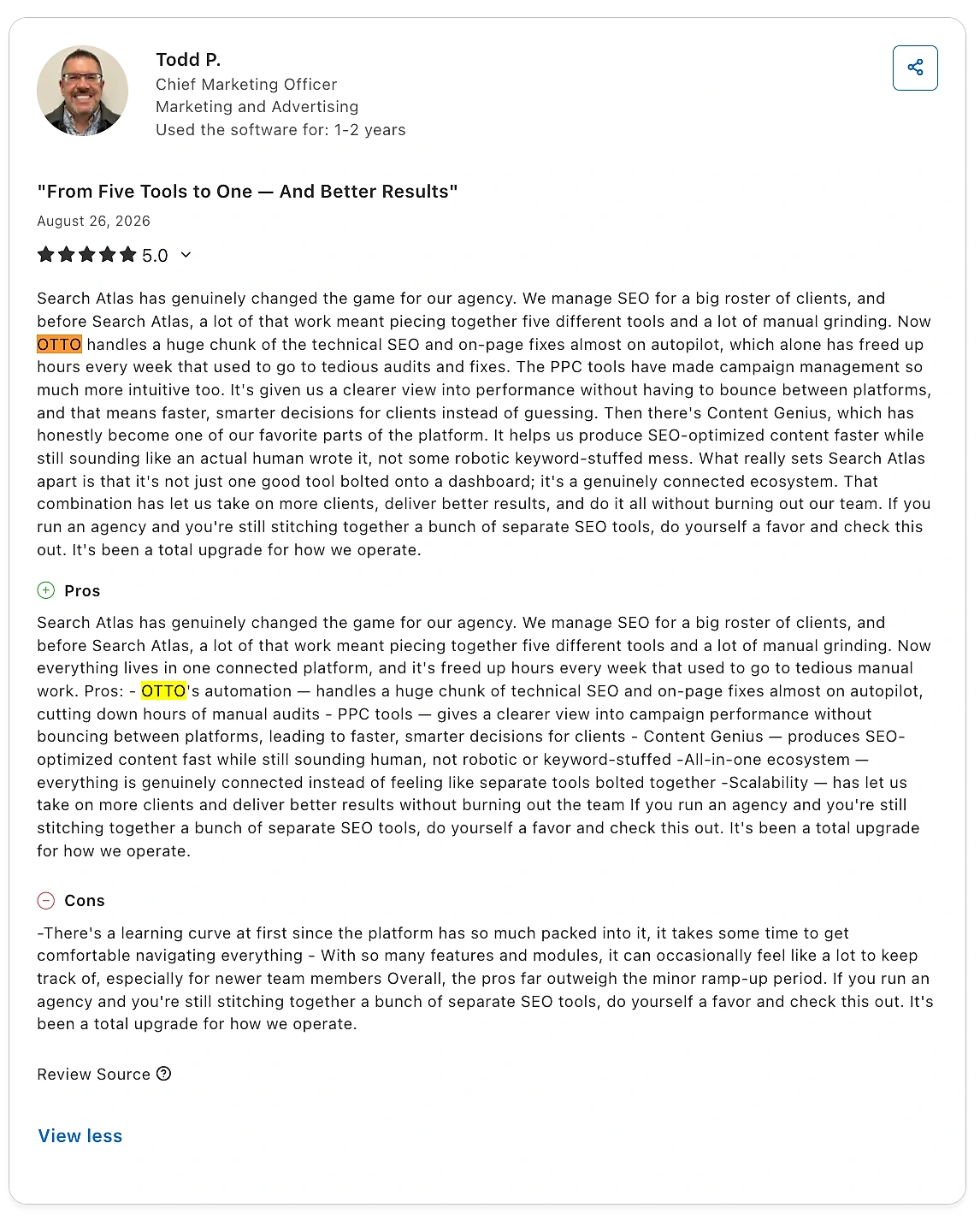
Positive review (5/5), Todd P., Chief Marketing Officer: "Now OTTO handles a huge chunk of the technical SEO and on-page fixes almost on autopilot, which alone has freed up hours every week that used to go to tedious audits and fixes."
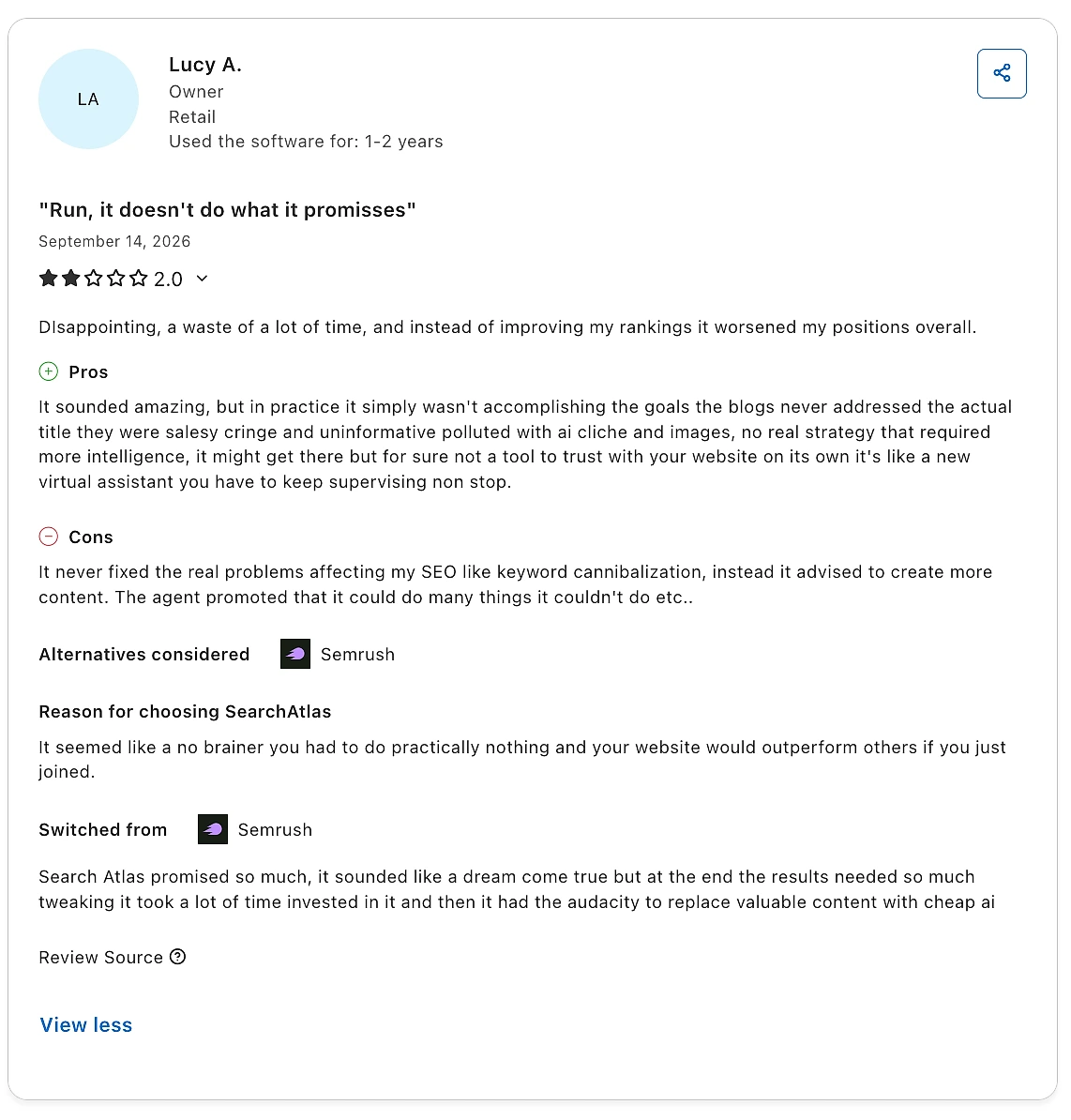
Negative review (2/5), Lucy A., Owner: "DIsappointing, a waste of a lot of time, and instead of improving my rankings it worsened my positions overall."
Is Search Atlas any good? Our Search Atlas verdict
Search Atlas is a solid option for in-house marketing teams, consultants and businesses that want keyword research, content optimization, technical SEO, and AI-powered automation in one platform. Its biggest advantage is OTTO SEO, which helps implement optimizations rather than just reporting issues.
However, user reviews mention concerns about technical bugs, customer support, and inconsistent results. Pricing is another consideration, especially if you only need AI visibility tracking, which starts with the Growth plan.
Search Atlas is worth considering if you want an all-in-one SEO platform with automation, but test it carefully before deploying changes across multiple websites.
Search Atlas vs LovedByAI: which one should you choose?
Search Atlas is a strong choice for businesses and marketing teams that need an all-in-one SEO platform. LovedByAI is worth considering if you're a small business that wants to improve its visibility in AI search with a more focused optimization solution. The right choice depends on whether you need broader SEO management or want to prioritize getting your business discovered through AI-powered search.
| Feature | Search Atlas | LovedByAI |
|---|---|---|
| Best for | In-house marketing teams, consultants and multi-location brands | Small businesses and website owners looking to improve AI search visibility |
| Primary focus | Traditional SEO, automation, and AI visibility tracking | Generative Engine Optimization (GEO) and AI search optimization |
| Core technology | OTTO SEO automation engine | An AI-readable layer that helps AI systems access and understand website content |
| SEO features | Keyword research, rank tracking, site audits, backlinks, and content optimization | AI search optimization alongside your existing SEO tools |
| AI visibility tracking | Available from the Growth plan | AI mentions and AI visitor tracking on paid plans |
| Website platforms | WordPress, Shopify, Webflow, Wix, and others | WordPress |
| Implementation | Automates technical and on-page SEO changes | Optimizes how AI systems access and interpret website content |
| Starting price | $99/month | Free scan and optimization; Pro starts at $29/month billed annually |
| Best reason to choose it | Manage SEO research, implementation, content, and marketing workflows in one platform | Improve AI search visibility with a more affordable, focused optimization solution |
When should you choose LovedByAI over Search Atlas?
Choose LovedByAI if you're a small business or website owner who wants to improve visibility in AI-generated answers without paying for a comprehensive SEO platform. It's especially useful if your traditional SEO is already covered by other tools and you want to focus on getting your business discovered, cited, and recommended by AI assistants.
Budget is another important consideration. Search Atlas offers a broad range of SEO capabilities, but its starting price may be hard to justify if you only need AI search optimization. LovedByAI offers a more budget-friendly way to get started, with a free scan and optimization and paid plans for additional capabilities.
Choose Search Atlas if you need a broader SEO platform with keyword research, competitor analysis, rank tracking, backlink workflows, advertising tools, and automated technical SEO across multiple website platforms.
Verdict: Search Atlas is better suited to businesses and marketing teams that need an all-in-one SEO platform. LovedByAI is a strong, more affordable alternative for small businesses that want to prioritize AI search visibility without the cost and complexity of a broader SEO suite.