Ask ChatGPT for a roofer in your town and you get four or five names. There is no page two. If you aren't one of them, the customer never knew you existed.
Every guide on this question gives you the same list, and the list is mostly right. What the guides miss is how much ChatGPT changed between September and November 2026. At LovedByAI we read the server logs of small business websites every day. Between late July and late October 2026, ChatGPT opened pages on the typical site 66% less often, while the visitors it sent the typical site rose 72% (the full numbers are in the Lab). ChatGPT appears to answer more from what OpenAI has already stored, so the work now is getting into that store before anyone asks.
The eight steps below are the ones every guide agrees on, in the order a small business should do them, with this autumn's changes written into each.
How does ChatGPT decide which websites to rank?
OpenAI publishes one paragraph on this, and it is worth reading in full:
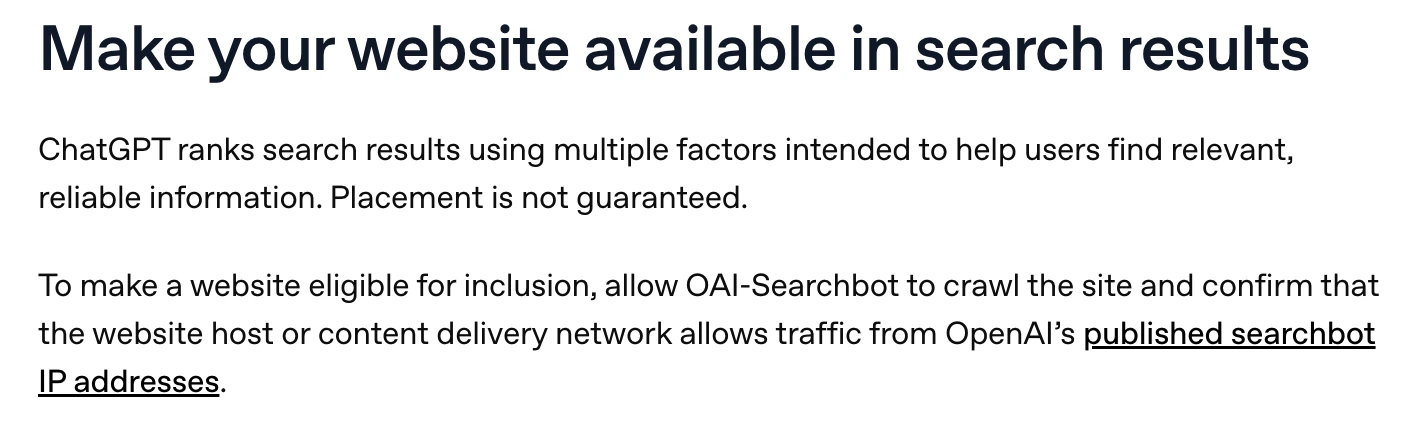
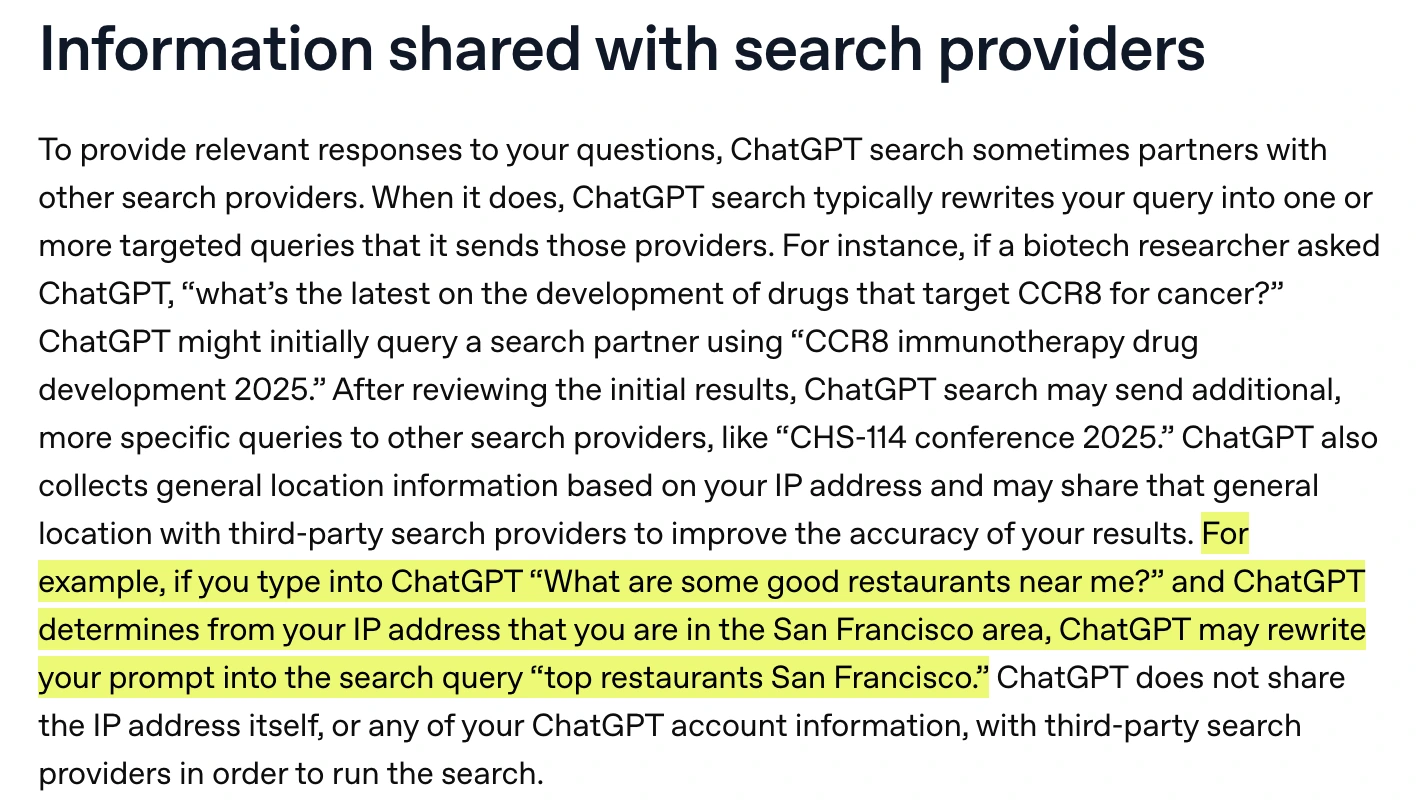
The same help page explains the rest of the process. ChatGPT doesn't search your customer's exact words. It rewrites the question into one or more searches and sends them to search partners, which it names as Microsoft and Shopify. OpenAI's example: someone in San Francisco types "good restaurants near me" and ChatGPT searches "top restaurants San Francisco", using the location it guesses from their IP address.
So ranking in ChatGPT has three parts:
- ChatGPT has to be allowed to read your site.
- Your pages and listings have to come up in the searches ChatGPT writes, wherever it looks.
- What it finds has to answer the question clearly enough to repeat.
Where does ChatGPT get its search results?
ChatGPT pulls from more than one place. In September 2026, Search Engine Land covered research into OpenAI's own retrieval index, known internally as Labrador, which stores full pages along with crawl and publication dates. A follow-up by researcher Tomek Rudzki found ChatGPT also buys results from commercial search scrapers, and draws on licensed sources including Yelp, TripAdvisor and Microsoft's search data.
That's why "rank on Google and ChatGPT will follow" stopped being safe advice. Google rankings still help. They just no longer guarantee you a place.
How to rank in ChatGPT: 8 steps for November 2026
Step 1: Let OAI-SearchBot into your site
OAI-SearchBot is the crawler that builds ChatGPT search. OpenAI's crawler documentation says sites that block it "will not be shown in ChatGPT search answers", and that a robots.txt change takes about 24 hours to reach search.
Check two places, because the help center now names both:
- Your robots.txt. Open yoursite.com/robots.txt and look for
Disallow: /underUser-agent: OAI-SearchBotorUser-agent: *. Our robots.txt checker reads it for you. - Your host, firewall or CDN. A security setting can block OpenAI's IP addresses even when robots.txt allows the bot. On Cloudflare, open AI Crawl Control and check that OAI-SearchBot is allowed.
A good result looks like this. Our GEO checker reads your robots.txt for 15 AI crawlers, and the three that matter for ChatGPT are GPTBot, OAI-SearchBot and ChatGPT-User.
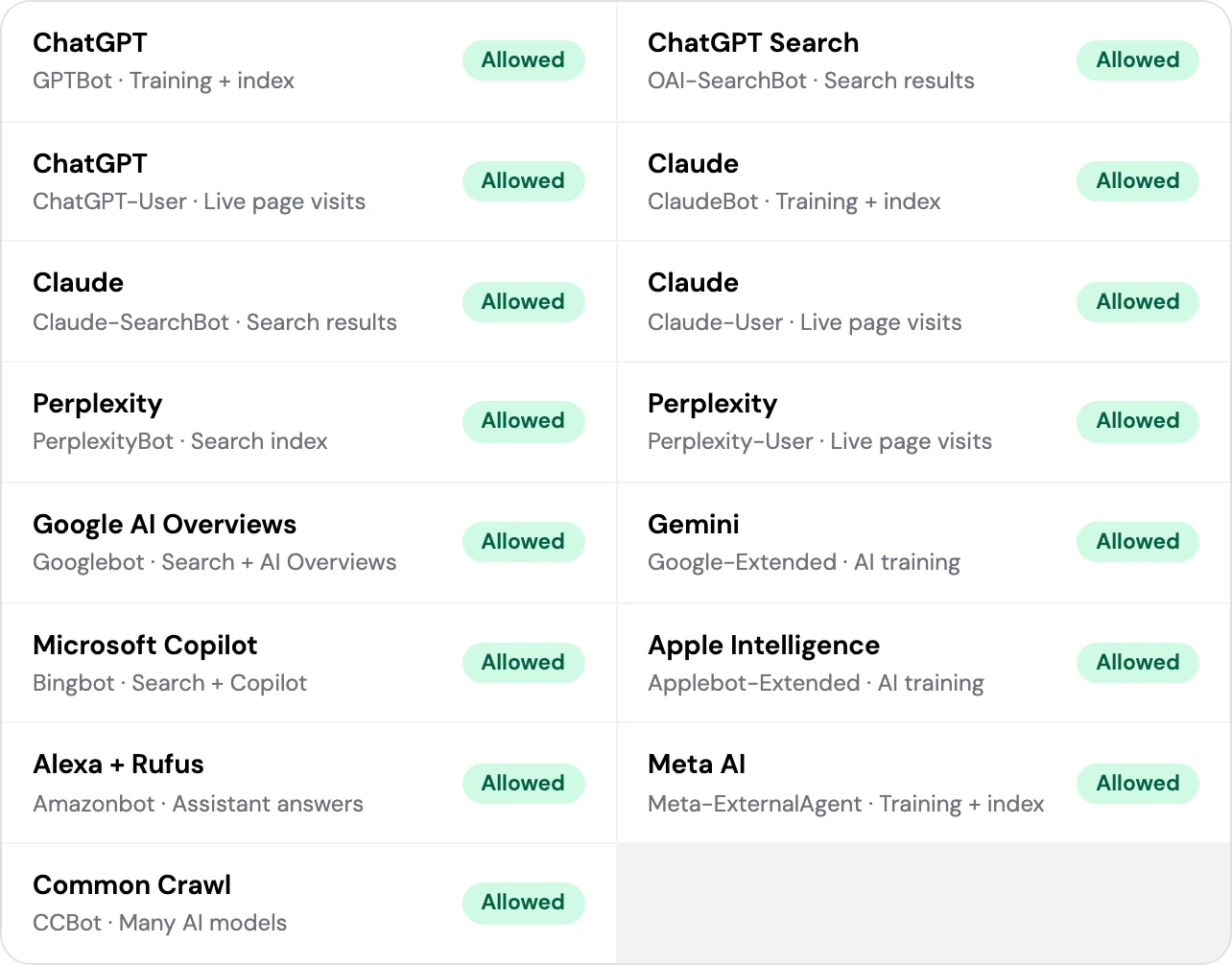
This is the most common reason a business never shows up. When LovedByAI tested websites between 27 and 30 August 2026, 43% were blocking at least one AI crawler, usually without the owner knowing. Here's how to tell if your site is blocking AI crawlers.
GPTBot is a separate choice. It collects training data, and blocking it doesn't remove you from ChatGPT search.
Step 2: Get your site into Bing
Microsoft is one of the two search partners OpenAI names, so a site Bing has never indexed starts at a disadvantage. Add your site to Bing Webmaster Tools (it can import your Google Search Console setup in a few clicks), submit your sitemap, and turn on IndexNow if your SEO plugin offers it, so new and changed pages reach Bing the same day.
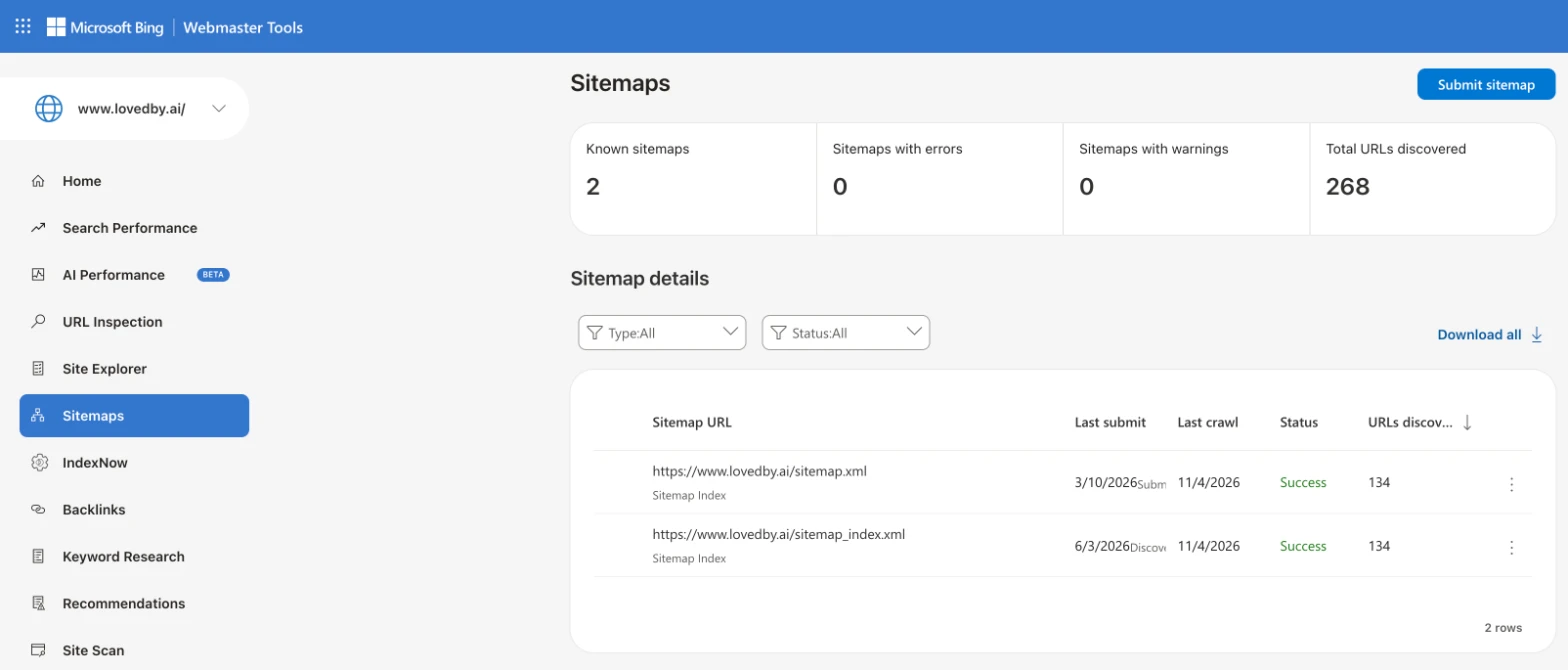
The Sitemaps report is the one to check. Each sitemap should say Success, with a recent last crawl date.
On 30 October 2026, Bing split its AI settings into training (building models) and grounding (the live lookups that put your page, with a link, into an AI answer). Bing starts honouring them on 1 February 2027. If you opt out of anything, opt out of training only. Grounding is the part that sends you visitors.
Step 3: Show up for the searches ChatGPT writes
ChatGPT's searches are shorter and more specific than what people type into it. A question like "who's a good family dentist near me that takes walk-ins?" becomes something closer to "family dentist walk-ins Hove". Write down the 10 questions customers ask you before they buy, then search each one the short way in Google and Bing. If you don't appear in the first page of either, ChatGPT is unlikely to find you there.
You can see some of ChatGPT's real searches. In September, Lily Ray published a filter that finds them in Google Search Console: a long list of queries with impressions, no clicks and a machine-made shape. Our guide on finding AI prompts in Google Search Console walks through it. If ChatGPT is searching for a page you don't have, that's your next page.
For local businesses, location matters more than most guides admit. University of Toronto researchers found in October 2026 that ChatGPT writes the user's city into its own searches, and that a near-me question in one city recommended only 8% of the businesses it recommended in another. Make your service areas plain on your site and your Google Business Profile.
Step 4: Answer the question on the pages people land on
When ChatGPT reads a page, it looks for a passage it can repeat. Give it one:
- Put the answer in the first two sentences under each heading, before the background.
- Make headings the questions customers ask ("How much does a boiler service cost in Leeds?"), not labels ("Pricing").
- Write down the facts ChatGPT repeats when it describes a business: prices or price ranges, areas served, opening hours, years trading, licences and guarantees.
- Keep that text in the page's HTML. Content that only appears after a click or a script may never be read.
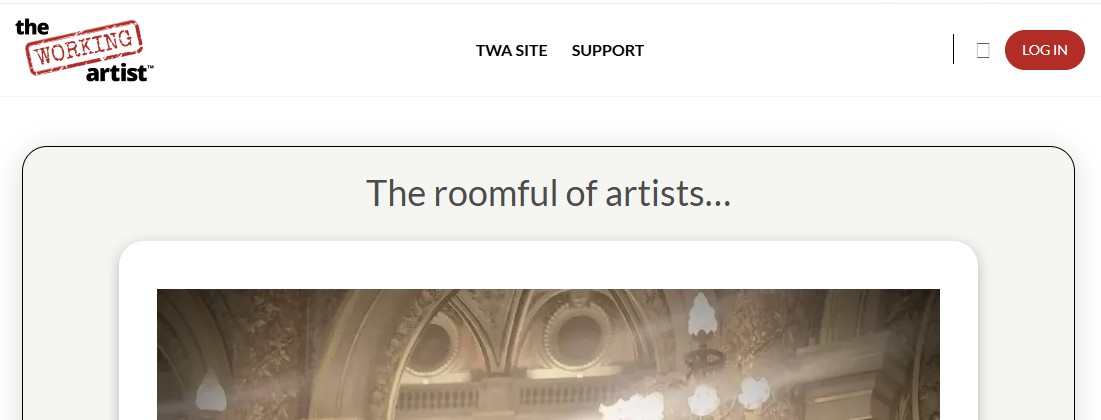
Here's what that looks like on a real page. The Working Artist, an online program for visual artists, had a heading that said nothing about its section:
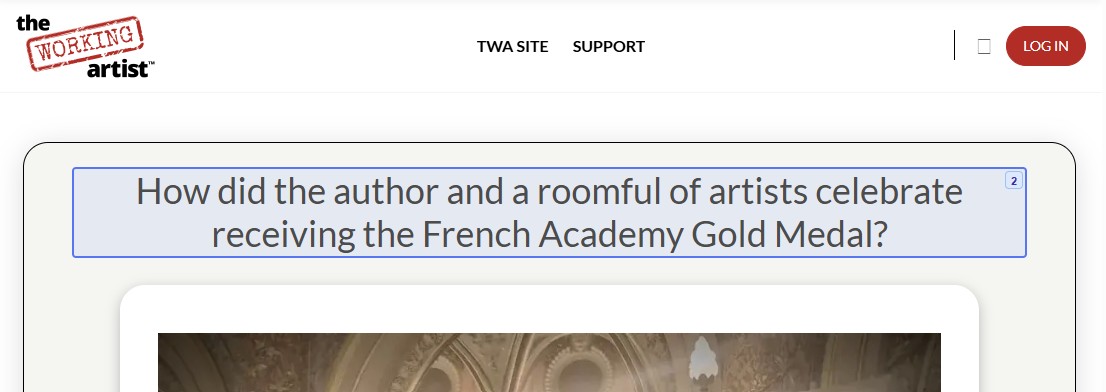
After the rewrite, the heading asks the question the section answers:
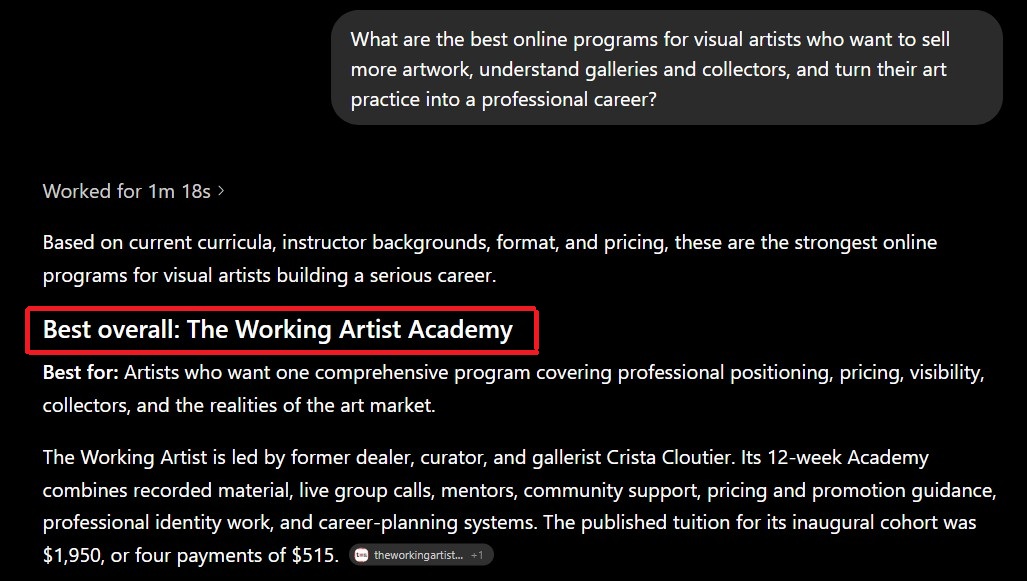
And this is what ChatGPT does with a site that states its facts plainly. It names The Working Artist Academy "Best overall" and repeats the length of the program and its price straight from the site:
The full story is in The Working Artist case study.
Start with the pages ChatGPT already sends people to. In LovedByAI's data on ChatGPT visits between 14 September and 13 October 2026, the homepage drew 42% of a service business's ChatGPT visitors on the average site, and product pages drew 37% on e-commerce sites. Where ChatGPT referral traffic lands has the full breakdown.
Step 5: Make your business details match everywhere ChatGPT looks
ChatGPT checks what your site says against what other sources say. If your website lists one address and Yelp lists another, it has less reason to trust either.
Since ChatGPT draws on licensed listings, those listings are worth an hour of your time:
- Google Business Profile, with the right primary category and your real hours.
- Yelp and, for hospitality, TripAdvisor, which OpenAI licenses directly.
- OpenTable, Resy or Yelp reservations if you run a restaurant. ChatGPT now books tables through those three, per OpenAI's help center.
- Shopify, if you sell online. It's the other search partner OpenAI names.
Structured data (schema markup) helps here as a way to state the same facts in code: your name, address, phone, hours and services. It doesn't rank you by itself. It makes your facts harder to misread. Our local schema blueprint covers the fields that matter.
Step 6: Get mentioned on the pages ChatGPT reads about your category
ChatGPT names businesses that other sites talk about. For a small business, that usually means:
- Reviews that mention the specific service ("fixed our boiler the same day"), not only stars.
- Local press, trade associations, suppliers and partners who list you.
- Being included in "best of" lists, ideally ones written by someone else.
- Helpful answers on Reddit or local forums, written by you, under your own name.
Be careful with the shortcuts. Paid mention packages and bulk Reddit posting are the tactics Google's October guidance and Lily Ray's prediction of the next Google update single out, and ChatGPT reads many of the same pages Google ranks.
Step 7: Keep the pages that matter current
OpenAI's index stores when each page was crawled and published. A page with last year's prices or a 2024 "updated" date gives ChatGPT a reason to pick a fresher one. Check your top five pages once a month and change them when the facts change. Changing the date without changing the page doesn't count.
Step 8: Measure ChatGPT visits, then check the answers yourself
ChatGPT tags the links it sends with utm_source=chatgpt.com, so you can count its visitors in Google Analytics 4. Count by that tag, not the referrer. Since October, almost every ChatGPT visit to the sites we monitor carries the tag, and few carry a chatgpt.com referrer. If GA4 shows nothing, read why ChatGPT traffic doesn't show in Google Analytics.
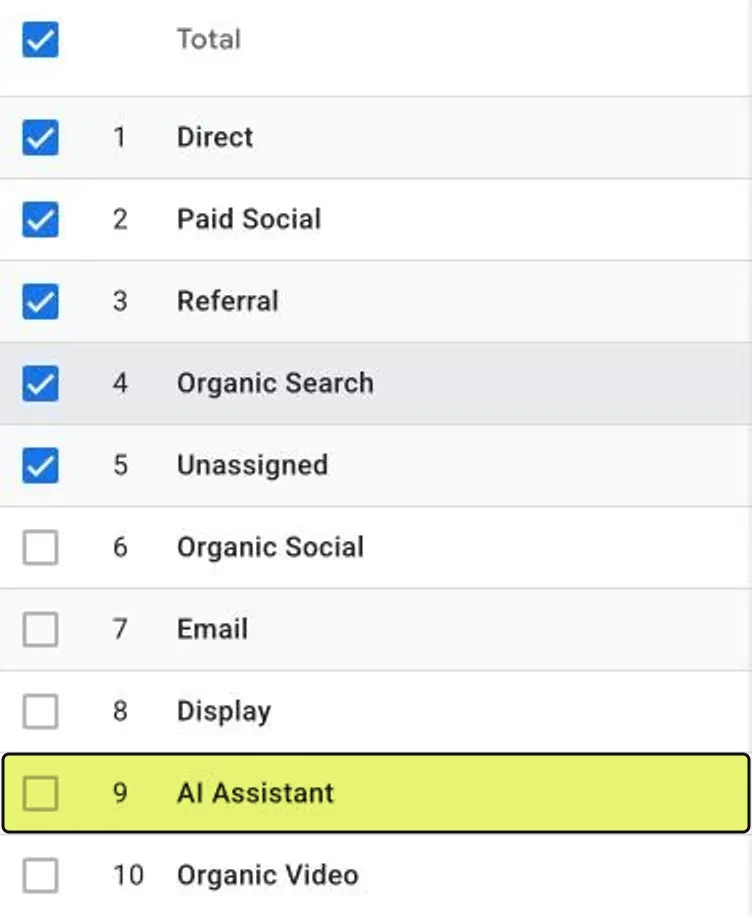
GA4 now has an AI Assistant channel in its default channel group. Open Reports, then Acquisition, then Traffic acquisition, and look for it in the list.
Then ask ChatGPT your customers' questions once a month, logged out, the way a customer in each town you serve would ask them. Answers change from one ask to the next, so look for a pattern across several asks rather than one result. Our free ChatGPT visibility checker runs a first check for you.
What changed in ChatGPT search between September and November 2026?
Most guides on how to rank in ChatGPT were written before these changes, so here they are with the job each one gives you.
| When | What changed | What to do |
|---|---|---|
| September 2026 | Listicles fell from 15.77% to 7.80% of ChatGPT's citations after ChatGPT 5.6, in Lily Ray's citation data | If you publish a "best X" page, make it useful beyond ranking yourself first |
| September 2026 | Research documented OpenAI's own index plus bought and licensed results (Yelp, TripAdvisor) | Treat your listings as search results, not old directories |
| September 2026 | ChatGPT's own searches surfaced in Google Search Console | Read them as a free list of pages to write |
| 1 October 2026 | Google rewrote its helpful content guide around effort and originality, and called fake author profiles deception | Remove made-up authors and bulk AI pages |
| 8 to 15 October 2026 | After GPT-6 launched, ChatGPT links lost their tags for a week, so visits showed as Direct | Annotate those days in GA4 and leave them out of comparisons |
| 15 October 2026 | Cloudflare and OpenAI described a pilot that feeds ChatGPT search new and changed pages | On Cloudflare, check that OAI-SearchBot is allowed |
| 16 October 2026 | A University of Toronto study showed ChatGPT's local answers change city by city | Check answers from each town you serve |
| 28 October 2026 | ChatGPT's live page reads on small business sites dropped again, the third step since August, with visits steady (LovedByAI logs) | Judge ChatGPT by visits, not bot activity |
| 30 October 2026 | Bing split AI training from AI answers (grounding), effective 1 February 2027 | Opt out of training only, if at all |
| Early November 2026 | Screenshots of a ChatGPT Business Hub showing mentions and clicks circulated; OpenAI hasn't announced it | Don't pay anyone to "claim" your business in ChatGPT yet |
The full stories, with sources, are in the September and October editions of AI Search News.
What the November 2026 data means for ranking in ChatGPT
The 28 October drop is the one to understand. In the week of 26 October, ChatGPT opened pages on the typical small business site 49% less than the week before, and the visitors it sent held steady. We don't know why, and OpenAI hasn't said.
It suggests ChatGPT increasingly answers from what OpenAI has already collected about you, through OAI-SearchBot, Bing, scraped results and listings, and less from opening your page while someone waits. A page that was blocked, unindexed or out of date when OpenAI last looked may not get a second look in the moment. Steps 1, 2 and 5 matter more this month than they did in the summer.
What doesn't help you rank in ChatGPT, and what is unproven?
Some advice that ranks well for this question doesn't hold up:
- An llms.txt file won't move you. OpenAI's crawler and help pages don't mention it, and Google says you don't need "AI text files" to appear in its AI features. It does no harm, but it isn't a ranking step.
- A "best of" page that ranks you first is unproven either way. ChatGPT cited listicles about half as often after ChatGPT 5.6, and in a September check of about 100 queries, Lily Ray found Google's AI Overviews left the publishing brand out 83% of the time when they cited its own list. That's a small sample, so treat it as a warning, not a verdict. If you write one, make it honest and useful even with your name taken out.
- Templated pages, one per city, invite trouble. Google named scaled pages as its next target in October. Add an area page only when you have something real to say about that area.
- Paid ChatGPT mention packages buy you a placement on someone else's site, which is the paid mention Google is moving against.
- Stuffing pages with prompts, hiding text or chasing every rewording of a question wastes effort, because ChatGPT rewrites the question anyway. One clear page per real question beats ten near-duplicates.
How long does it take to rank in ChatGPT?
The robots.txt fix is the fast part: about 24 hours for ChatGPT search, per OpenAI. Pages and listings take longer, because ChatGPT has to come across the new version before it can use it. On average, LovedByAI customers see a significant change in AI visibility 6 to 8 weeks after their pages are optimized.
Nobody can promise a position. OpenAI says so itself: placement is not guaranteed. What you control is whether ChatGPT can read you, find you and repeat you.
Where should a small business start to rank in ChatGPT?
If you only have an afternoon, do these four things:
- Check robots.txt and your firewall or CDN for OAI-SearchBot.
- Add your site to Bing Webmaster Tools and submit your sitemap.
- Rewrite the top of your homepage and your best service or product page so the first two sentences answer what customers ask.
- Make your Google Business Profile, Yelp and website say the same name, address, hours and services.
That's the job LovedByAI does for small business sites: the on-page work that helps ChatGPT, Google's AI Overviews and Perplexity read, cite and recommend you, then a count of the AI visits that follow. You can also do all of it by hand with this list. Either way, start with Step 1, because nothing else counts until ChatGPT can get in.